

The Enduring Divide: Unpacking the Distinction Between Virtue and Vice
The human quest for meaning and moral guidance has, for millennia, hinged on a fundamental philosophical puzzle: the distinction between virtue and vice. At its core, this isn't merely an academic exercise but a practical inquiry into what makes a life good or bad, what fosters human flourishing, and what leads to decay. From the ancient Greek philosophers to the great theologians and modern ethicists, understanding the definition and implications of these two opposing forces has shaped our understanding of character, morality, and society itself. This article delves into this crucial divide, exploring how the Great Books of the Western World have illuminated the paths of Virtue and Vice, and why this distinction remains profoundly relevant in our lives today.
Defining the Poles: What are Virtue and Vice?
To truly grasp the significance of their distinction, we must first establish a clear definition for each. Think of them as the two primary directions our moral compass can point.
Virtue: The Path of Excellence
In philosophical discourse, virtue is generally understood as a moral excellence, a disposition of character that manifests in habitually good actions and right feelings. It’s not just doing good occasionally, but being good consistently. As Aristotle explored in his Nicomachean Ethics, virtues are cultivated habits, developed through practice and guided by reason. They represent a mean between two extremes of deficiency and excess.
- Key Characteristics of Virtue:
- Habitual Excellence: Not an isolated act, but a stable disposition.
- Rational Choice: Involves deliberation and a conscious decision to act rightly.
- Aimed at the Good: Contributes to individual and communal well-being.
- Leads to Flourishing (Eudaimonia): The ultimate goal of a virtuous life, often translated as "human flourishing" or "living well."
For instance, courage (a virtue) is the mean between the vice of cowardice (deficiency) and the vice of rashness (excess). Similarly, generosity balances stinginess and extravagance. This pursuit of the Good is central to the concept of virtue.
Vice: The Descent into Deficiency or Excess
Conversely, vice represents a moral failing, a disposition of character that manifests in habitually bad actions and inappropriate feelings. Where virtue builds, vice erodes. It hinders individual flourishing and often harms others. Vices are also cultivated habits, but they are habits of wrongdoing, often stemming from ignorance, weakness of will, or a misguided pursuit of pleasure or power. They represent deviations from the rational mean that defines virtue, leaning either into an extreme of deficiency or excess.
- Key Characteristics of Vice:
- Habitual Failing: A consistent pattern of morally objectionable behavior.
- Irrational Choice: Often driven by impulse, ignorance, or corrupted reason.
- Aimed Away from the Good: Leads to personal and societal harm, contributing to Evil or its absence.
- Impedes Flourishing: Detracts from a life well-lived, causing suffering and regret.
The distinction here is profound: virtue elevates, vice diminishes. One aligns with the pursuit of the Good, the other often facilitates Evil, or at least a life less than good.
The Crucial Distinction: More Than Just Opposites
While it might seem intuitive to view Virtue and Vice as simple opposites, the philosophical distinction goes deeper. It’s about the very structure of our character and the trajectory of our lives.
| Feature | Virtue | Vice |
|---|---|---|
| Nature | Moral excellence, good habit | Moral failing, bad habit |
| Foundation | Reason, deliberation, right desire | Impulse, ignorance, corrupted desire |
| Cultivation | Through practice, education, self-control | Through indulgence, neglect, lack of reflection |
| Impact on Self | Leads to flourishing, inner peace, strength | Leads to suffering, inner turmoil, weakness |
| Impact on Others | Benefits society, fosters trust, justice | Harms society, fosters injustice, mistrust |
| Direction | Towards the Good | Towards Evil (or its absence) |
This table highlights that the distinction isn't merely about good versus bad actions, but about the underlying character that produces those actions. A virtuous person is good, and their actions reflect that. A vicious person is bad, and their actions similarly follow.
Historical Perspectives from the Great Books
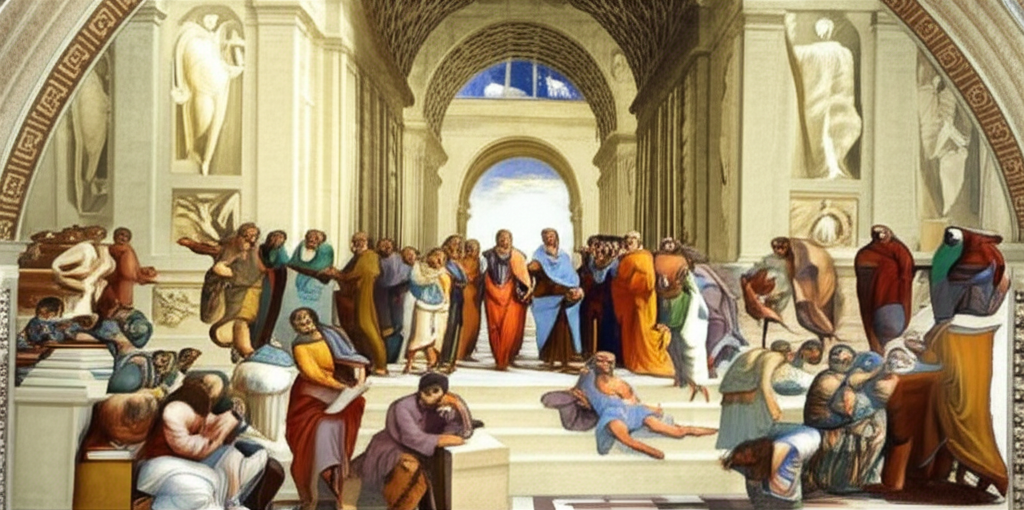
The distinction between Virtue and Vice has been a cornerstone of Western thought, as evidenced in the Great Books.
- Plato's Republic: Plato posited that virtue is knowledge, and vice is ignorance. He believed that a just soul, like a just city, is one where reason rules, spirit supports reason, and appetite is kept in check. Each part of the soul has its own virtue (wisdom for reason, courage for spirit, temperance for appetite), and the overall virtue of justice is achieved when these parts function harmoniously. Vice, then, is a disharmony, an ignorance of what is truly good.
- Aristotle's Nicomachean Ethics: Aristotle provided a more empirical and practical approach. He defined virtue as a mean between two extremes, emphasizing the importance of phronesis (practical wisdom) to discern the appropriate mean in any given situation. For Aristotle, virtues are not innate but developed through habituation. One becomes courageous by performing courageous acts. Vice, similarly, is formed by habitual bad choices.
- Augustine's Confessions and Aquinas's Summa Theologica: With the rise of Christian philosophy, the distinction took on a theological dimension. Augustine viewed sin as a turning away from God, an act of disordered love where lesser goods are preferred over the ultimate Good. Aquinas systematically integrated Aristotelian ethics with Christian theology, defining virtues (both cardinal and theological) as habits that dispose us to live well according to reason and divine law, while vices are habits that incline us towards sin. The ultimate Good became God, and Evil was understood as the absence or privation of that Good.
Why Does This Distinction Still Matter?
In a world often grappling with moral relativism and complex ethical dilemmas, the distinction between Virtue and Vice might seem quaint. Yet, its relevance endures:
- Personal Growth and Character Development: Understanding these concepts provides a framework for self-improvement. It encourages us to identify our moral strengths and weaknesses, and consciously strive for virtues like integrity, compassion, and resilience.
- Societal Well-being: A society populated by virtuous individuals is more likely to be just, peaceful, and prosperous. Conversely, societies where vices like greed, deceit, and cruelty are rampant inevitably suffer.
- Ethical Decision-Making: The philosophical insights into virtue and vice offer tools for navigating difficult choices, helping us to consider not just the immediate consequences of an action, but also what kind of person we are becoming.
- Understanding Human Nature: The ongoing philosophical dialogue about virtue and vice is a continuous exploration of what it means to be human, what constitutes a good life, and how we ought to live together.
The distinction between Virtue and Vice is not merely an ancient philosophical debate; it's a living, breathing framework for understanding ourselves and shaping our world. By engaging with the wisdom of the Great Books, we are reminded that the pursuit of virtue is not just an ideal, but a practical necessity for human flourishing and the common Good.
YouTube Video Suggestions:
-
📹 Related Video: ARISTOTLE ON: The Nicomachean Ethics
Video by: The School of Life
💡 Want different videos? Search YouTube for: "Aristotle Nicomachean Ethics Virtue Ethics Explained"
2. ## 📹 Related Video: PLATO ON: The Allegory of the Cave
Video by: The School of Life
💡 Want different videos? Search YouTube for: "Plato Republic Justice Soul City Explained"