

The Subtle Yet Profound Divide: Unpacking the Distinction Between Tyranny and Oligarchy
In the vast tapestry of political philosophy, few concepts are as crucial, yet frequently misunderstood, as the distinction between tyranny and oligarchy. Both represent perversions of just government, characterized by the self-serving rule of the few or the one, but their internal mechanics and societal impacts diverge significantly. Drawing deeply from the wellsprings of classical thought, particularly the Great Books of the Western World, this article aims to meticulously delineate these two forms of rule, highlighting why their precise understanding remains indispensable for anyone grappling with the nature of power and the pursuit of political virtue.
A Direct Look at the Core Differences
At its heart, the distinction is one of number and motivation. Tyranny is the oppressive rule of a single individual whose primary concern is personal power and gain, often achieved through fear and suppression. Oligarchy, conversely, is the rule of a select few, typically distinguished by wealth or noble birth, who govern exclusively in their own collective interest, marginalizing the broader populace. While both are inherently unjust, the tyrant wields absolute, unchecked power, whereas the oligarchs operate as a collective, albeit a limited and self-serving one.
Understanding Tyranny: The Absolute Rule of One
Tyranny, as articulated by philosophers like Plato and Aristotle, is perhaps the most visceral and easily recognizable form of oppressive government. It is the antithesis of justice, a stark departure from any system aiming for the common good.
Characteristics of Tyranny
- Rule by a Single Individual: The tyrant is a singular figure, holding all reins of power.
- Self-Interest as the Sole Driver: The tyrant's actions are motivated purely by personal gain, wealth, prestige, or the maintenance of their own power, not the welfare of the citizens.
- Suppression and Fear: Tyrannical rule is often maintained through coercion, surveillance, and the systematic suppression of dissent. Free speech, assembly, and political participation are severely curtailed or nonexistent.
- Violation of Law and Custom: The tyrant typically operates above the law, often disregarding established legal frameworks or manipulating them to serve their own ends.
- Instability and Paranoia: Despite their absolute power, tyrants often live in constant fear of overthrow, leading to cycles of purges, executions, and general societal unease.
Plato, in his Republic, paints a vivid picture of the tyrannical soul, driven by insatiable desires and ultimately becoming a slave to its own appetites. Aristotle, in his Politics, further distinguishes tyranny as a perversion of monarchy, where the monarch rules by force for personal benefit, rather than for the good of the polis.
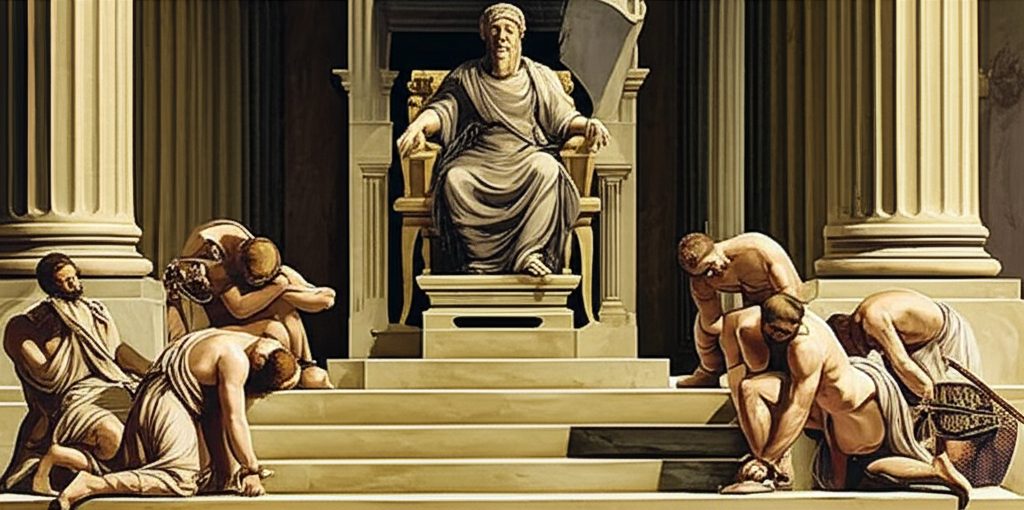
Understanding Oligarchy: The Rule of the Privileged Few
While sharing the characteristic of self-interest, oligarchy presents a different kind of threat. It is the rule of the few, often those distinguished by specific attributes like wealth, family lineage, or military prowess, who consolidate power to protect and advance their own collective interests.
Characteristics of Oligarchy
- Rule by a Select Group: Power resides not in one person, but in a small, exclusive class.
- Wealth as the Primary Criterion: Historically, oligarchies have often been defined by the rule of the rich, where economic status dictates political power. Aristotle famously defined oligarchy as the rule of the wealthy few.
- Self-Interest of the Ruling Class: The oligarchs govern in a way that benefits their own stratum of society, often at the expense of the poor or the middle class. Policies might favor large landowners, specific industries, or tax breaks for the wealthy.
- Exclusionary Practices: Access to political office or influence is restricted to members of the ruling class, often through property qualifications, birthright, or other exclusionary mechanisms.
- Appearance of Legality: Unlike the blatant disregard for law often seen in tyranny, oligarchies may maintain a façade of legality, crafting laws that legitimize their control and privilege.
Aristotle's Politics meticulously analyzes oligarchy as a deviant form of aristocracy. While aristocracy aims for the rule of the "best" for the common good, oligarchy corrupts this ideal by allowing the wealthy "best" to rule solely for their own enrichment.
The Crucial Distinction: Who, Why, and How They Rule
The core distinction between tyranny and oligarchy can be summarized by examining the who, why, and how of their governance.
| Feature | Tyranny | Oligarchy |
|---|---|---|
| Who Rules? | A single individual (the tyrant) | A select few, usually the wealthy or noble |
| Why Do They Rule? | For the personal gain and power of the tyrant | For the collective gain and preservation of the ruling class |
| How Do They Rule? | Through absolute power, fear, and suppression; often above the law | Through laws and institutions designed to maintain their privilege; often with a façade of legality |
| Basis of Power | Force, military might, charisma, manipulation | Wealth, birth, social status, control of economic resources |
| Impact on Law | Disregard or manipulation of existing laws | Creation of laws that favor the ruling minority |
This table underscores that while both forms of government are unjust and serve narrow interests, the nature of the power structure and the mechanisms of control differ profoundly. A tyrant is an individual predator, while an oligarchy is a collective one. The former might inspire outright rebellion against a single figure, while the latter might breed simmering resentment against a systemic injustice.
The Perils of Unchecked Power
Both tyranny and oligarchy highlight the inherent dangers of unchecked power and the absence of a commitment to the common good. A society under a tyrant suffers from the whims of one individual, leading to unpredictable and often brutal oppression. A society under an oligarchy, while potentially more stable than a tyranny, experiences systemic inequality, limited opportunities, and the marginalization of the majority, leading to social stratification and potential civil unrest.
Understanding these historical and philosophical distinctions is not merely an academic exercise. It equips us to critically analyze contemporary political systems, identify potential threats to just government, and advocate for institutions that genuinely serve the welfare of all citizens, rather than the narrow interests of the one or the few. The lessons from the Great Books remind us that vigilance against both the overt oppression of the tyrant and the subtle, systemic injustice of the oligarch is a perpetual duty of citizenship.
📹 Related Video: PLATO ON: The Allegory of the Cave
Video by: The School of Life
💡 Want different videos? Search YouTube for: ""Plato's Republic Tyranny Explained" or "Aristotle's Politics Oligarchy and Tyranny""