

The Distinction Between Tyranny and Oligarchy: A Classical Perspective on Malformed Government
The Perilous Paths of Power
Summary: While both tyranny and oligarchy represent corrupt forms of government, classical philosophy, notably from the Great Books of the Western World, draws a crucial distinction. Tyranny is characterized by the rule of a single individual who governs solely for their own self-interest, often through fear and oppression. Oligarchy, conversely, is the rule of a wealthy few who prioritize their collective economic gain above the common good, leading to systemic inequality. Understanding this distinction is vital for discerning the true nature of various political systems and safeguarding against their perversions.
Unpacking the Malformations of Rule
From the earliest philosophical inquiries into the nature of the state, thinkers have grappled not only with ideal forms of government but also with their inevitable corruptions. The works of Plato and Aristotle, cornerstones of the Great Books of the Western World, provide an enduring framework for analyzing these deviations. Among the most dangerous are tyranny and oligarchy, often conflated but fundamentally distinct in their structure, motivation, and impact on society. To truly grasp the threats they pose, we must dissect their unique characteristics.
Tyranny: The Absolute Rule of One for Self-Interest
Tyranny emerges when the benevolent rule of a monarch (a single ruler governing for the common good) degenerates into a system where absolute power is wielded by one individual for their personal benefit. Aristotle, in his Politics, describes the tyrant as one who rules "despotically over subjects who are his equals or superiors, for his own advantage and not for theirs."
- Key Characteristics of Tyranny:
- Sole Authority: Power is concentrated in the hands of a single ruler.
- Self-Serving Motivation: The tyrant's primary objective is the preservation and expansion of their own power, wealth, and desires, not the welfare of the populace.
- Rule by Fear: Control is often maintained through intimidation, violence, and the suppression of dissent. Laws are arbitrary or non-existent, replaced by the ruler's whim.
- Suppression of Liberty: Individual freedoms are severely curtailed, and citizens are treated as subjects rather than active participants in the state.
- Instability: Despite its absolute nature, tyranny is inherently unstable, often leading to internal strife or external overthrow due to widespread resentment.
A tyrant views the state as their personal possession, and its resources as tools for their gratification. This form of government represents the ultimate perversion of singular rule, transforming a potential protector into an oppressor.
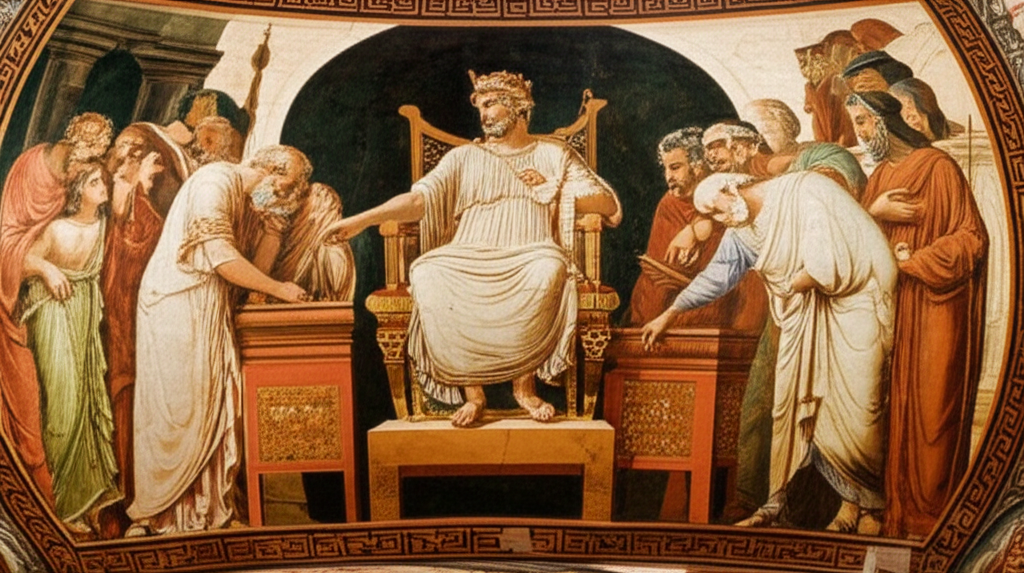
Oligarchy: The Concentrated Power of the Wealthy Few
In contrast to the singular focus of tyranny, oligarchy represents the corruption of aristocracy (rule by the virtuous few for the common good). Here, power is held by a minority group, typically defined by wealth, social standing, or military might, who govern in their collective self-interest. For Aristotle, the defining feature of oligarchy is that "the rulers owe their power to their wealth, and not to the virtue of their character or to the common good."
- Key Characteristics of Oligarchy:
- Rule by a Select Group: Power is concentrated in the hands of a small, exclusive class.
- Economic Motivation: The primary objective of the ruling oligarchs is the accumulation and protection of their own wealth and property, often at the expense of the poor or less privileged.
- Legalized Inequality: Laws and policies are designed to favor the wealthy, creating a system where economic disparities are not only tolerated but often exacerbated by the state.
- Exclusionary Practices: Access to political office, justice, and resources is limited to the ruling class or those who can afford to participate.
- Internal Factionalism: While united by shared economic interests, oligarchies can be prone to internal power struggles among the wealthy elite.
An oligarchy might maintain a façade of legality, with institutions and laws, but these are invariably crafted to serve the narrow interests of the ruling elite, rather than the broader welfare of the citizenry.
The Crucial Distinction: A Comparative Analysis
While both tyranny and oligarchy are classified as corrupt forms of government because they prioritize private interests over the public good, their structural differences are profound.
| Feature | Tyranny | Oligarchy |
|---|---|---|
| Number of Rulers | One (a single individual) | A Few (a select, usually wealthy, minority) |
| Primary Motivation | Ruler's personal gain, power, and desires | Rulers' collective economic gain and class interest |
| Basis of Power | Absolute force, personal charisma, fear | Wealth, property, social status |
| Methods of Control | Arbitrary rule, oppression, violence, spies | Laws favoring the wealthy, property qualifications, economic leverage |
| Impact on Society | Universal oppression, fear, instability | Economic inequality, class division, exploitation of the poor |
| Philosophical Origin | Perversion of Monarchy | Perversion of Aristocracy |
The fundamental distinction lies in who holds the power and what drives their actions. A tyrant is a lone wolf, driven by singular ambition. Oligarchs are a pack, united by shared material interests. Both are predatory, but their hunting grounds and methods differ.
Why the Distinction Matters
Understanding the nuanced distinction between tyranny and oligarchy is not merely an academic exercise. It offers critical insights into the pathologies of government and helps us identify the specific threats to liberty and justice in any political system. A society grappling with a tyrant might focus on restraining individual power, while one facing oligarchy might need to address systemic economic inequality and the undue influence of wealth.
The wisdom gleaned from the Great Books of the Western World reminds us that vigilance against these corruptions is a perennial task. Whether it's the unchecked ambition of a single ruler or the entrenched self-interest of a wealthy elite, both paths lead away from the ideal of a just and flourishing society.
YouTube Video Suggestions:
-
📹 Related Video: ARISTOTLE ON: The Nicomachean Ethics
Video by: The School of Life
💡 Want different videos? Search YouTube for: "Aristotle's Politics forms of government explained"
-
📹 Related Video: PLATO ON: The Allegory of the Cave
Video by: The School of Life
💡 Want different videos? Search YouTube for: "Plato's Republic types of government"