

The Nuanced Distinction Between Tyranny and Oligarchy
In the grand tapestry of political thought, as woven by the ancient Greeks and meticulously preserved within the Great Books of the Western World, few concepts are as critical—or as frequently conflated—as tyranny and oligarchy. While both represent forms of government that deviate from the ideal of justice and the common good, their fundamental distinction lies not merely in the number of rulers, but in their animating principles, objectives, and the very nature of their corruption. Understanding this difference is paramount for anyone seeking to grasp the enduring challenges of political organization.
Unpacking Tyranny: The Rule of One for Selfish Gain
Tyranny is perhaps the most visceral form of corrupt government, characterized by the absolute rule of a single individual who governs solely in their own self-interest, rather than for the welfare of the citizenry. This form of rule is often established through force or popular appeal, only to quickly devolve into oppression.
Key Characteristics of Tyranny:
- Sole Authority: Power is concentrated in the hands of one person.
- Self-Interest: The tyrant prioritizes personal wealth, power, and glory above all else.
- Lawlessness: The tyrant often operates above or outside the established laws, changing them at will to suit their whims.
- Fear as a Tool: Maintaining power relies heavily on instilling fear, suppressing dissent, and eliminating opposition.
- Suppression of Liberty: Individual freedoms, public discourse, and civic participation are severely curtailed or abolished.
- Lack of Accountability: There are no checks or balances on the tyrant's power.
Historically, figures like Dionysius of Syracuse or even more modern despots embody the tyrannical impulse. Their rule is marked by a deep-seated distrust of the populace and a constant vigilance against perceived threats, leading to arbitrary arrests, executions, and the general erosion of civil society.
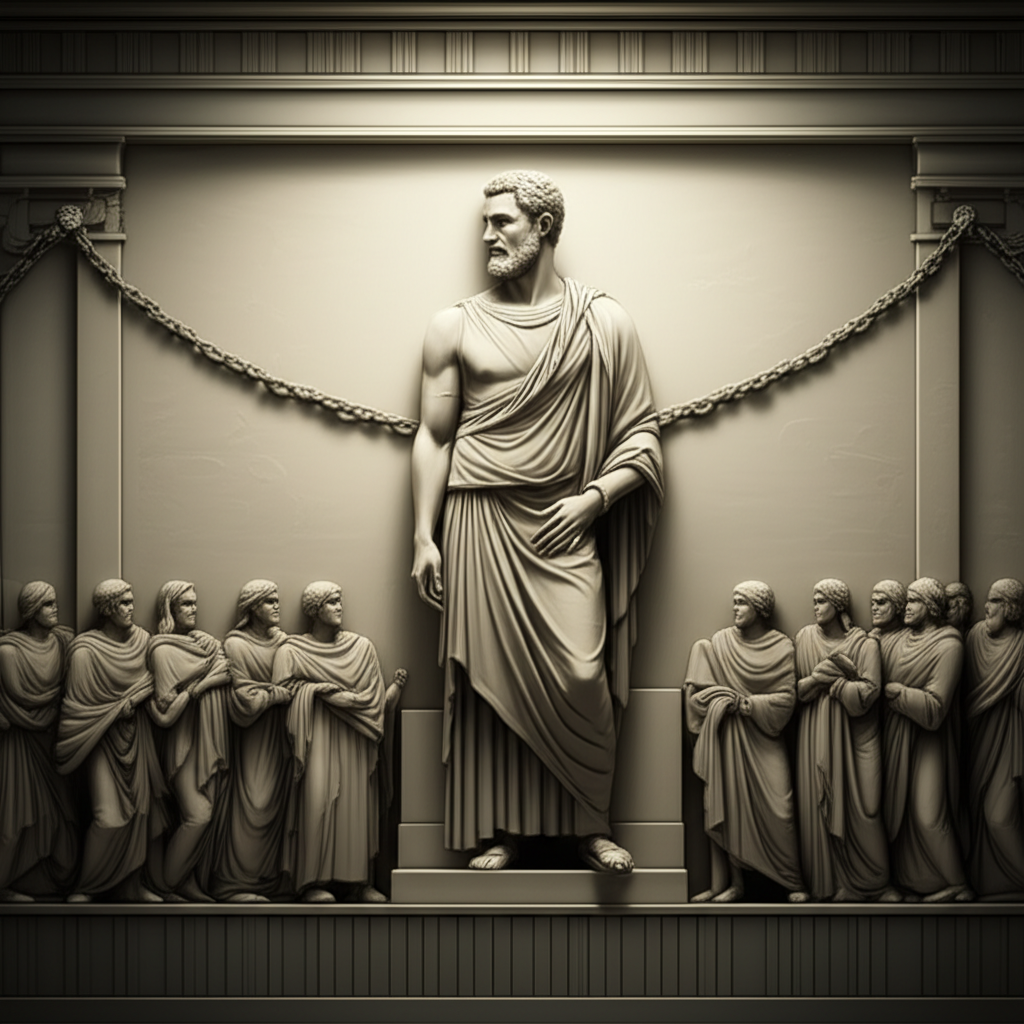
Dissecting Oligarchy: The Rule of the Few for Wealth
In contrast to the singular focus of the tyrant, oligarchy describes a form of government where power is concentrated in the hands of a small, privileged group. The crucial distinction here is that this "few" typically rules not out of a shared commitment to the common good, but primarily for the preservation and advancement of their own economic interests, particularly wealth.
Key Characteristics of Oligarchy:
- Rule by a Select Few: Power is held by a minority group, often determined by birth, wealth, or military power.
- Economic Self-Interest: The primary motivation of the oligarchs is the accumulation and protection of their own riches and property.
- Exclusionary: Access to power, resources, and opportunities is deliberately restricted to those within the ruling class.
- Law as a Tool: Laws are crafted and enforced to benefit the wealthy elite, often at the expense of the poor or middle class.
- Social Stratification: Oligarchies tend to exacerbate existing social and economic inequalities, creating a stark divide between the rulers and the ruled.
- Limited Accountability (within the elite): While there might be internal struggles, the ruling group as a whole is largely unaccountable to the broader populace.
Ancient Sparta, with its strict social hierarchy and emphasis on land ownership for citizenship, or certain historical merchant republics, can be seen as examples where the government was effectively an oligarchy. The decisions made by such a regime would invariably favor the interests of the wealthy landowners or powerful families.
The Critical Distinction: Tyranny vs. Oligarchy
While both systems are fundamentally corrupt and detrimental to the body politic, their internal logic and external manifestations differ significantly.
| Feature | Tyranny | Oligarchy |
|---|---|---|
| Number of Rulers | One | A small group (the few) |
| Core Motivation | Personal power, glory, and self-preservation | Collective wealth, property, and economic advantage |
| Relationship to Law | Above the law; uses law arbitrarily or ignores it | Manipulates or crafts law to benefit the ruling elite |
| Primary Tool | Fear, suppression, direct force | Economic control, systemic exclusion, legislative bias |
| Nature of Oppression | Personal, often arbitrary, direct | Systemic, often indirect, based on class/wealth |
| Succession | Often unstable; relies on force or dynastic claims | More structured, often hereditary or wealth-based |
This table highlights the crucial distinction: a tyrant rules as an individual, for his individual benefit, often through sheer force of will and terror. An oligarchy rules as a collective, for the collective benefit of its members, often through the manipulation of institutions and economic levers.
The Overlap and the Shifting Sands of Power
It's important to acknowledge that in the messy reality of political life, these forms of government are not always neatly compartmentalized. An oligarchy might, for instance, see one of its members seize absolute power, transforming it into a tyranny. Conversely, a tyrant, upon establishing his rule, might empower a select group of loyalists, creating a de facto oligarchy subservient to his will. The Great Books of the Western World frequently explore these fluid transitions, demonstrating how easily one corrupt form can morph into another.
The enduring lesson from these classical analyses is that vigilance is required not just against the obvious evils of a despot, but also against the more insidious corruption of a system that serves only a privileged few. Understanding this distinction allows us to better identify and resist the various ways in which a government can stray from its true purpose: serving the common good of all its citizens.
📹 Related Video: PLATO ON: The Allegory of the Cave
Video by: The School of Life
💡 Want different videos? Search YouTube for: ""Aristotle Politics Book 3: Forms of Government" or "Plato's Republic: The Degeneration of the State""