

Wordsmiths and Truth-Seekers: The Enduring Distinction Between Rhetoric and Dialectic
At the heart of philosophical inquiry and effective communication lies a fundamental distinction between two powerful modes of discourse: rhetoric and dialectic. While both employ language to engage with ideas and audiences, their ultimate aims, methods, and relationships to truth diverge significantly. Rhetoric, broadly understood, is the art of persuasion, focused on moving an audience to a particular viewpoint or action. Dialectic, conversely, is the art of logical argumentation, a rigorous process of questioning and answering aimed at discovering truth through critical examination of concepts. Understanding this distinction, as illuminated by the foundational texts of the Western tradition, is crucial for anyone seeking to navigate the complexities of human communication and thought.
The Art of Persuasion: Understanding Rhetoric
Rhetoric is the skillful use of language to influence, persuade, or motivate an audience. From the ancient Sophists to modern political speeches, its power lies in its ability to shape beliefs and actions through compelling arguments, emotional appeals, and stylistic flair. As articulated by Aristotle in his seminal work, Rhetoric, it is "the faculty of observing in any given case the available means of persuasion."
Key Characteristics of Rhetoric:
- Aim: To persuade an audience to accept a particular point of view, take a specific action, or believe in the speaker's credibility.
- Method: Employs various persuasive techniques, including logical appeals (logos), emotional appeals (pathos), and appeals to character/credibility (ethos). It often involves extended speeches, orations, and carefully crafted prose.
- Audience: Typically a large group, often non-experts, whose opinions or actions are sought. The rhetor adapts their message to the specific audience.
- Relationship to Truth: While rhetoric can certainly be used to advocate for truth, its primary concern is effectiveness in persuasion, not necessarily the absolute veracity of the claims. A rhetor might emphasize certain truths while downplaying others to achieve their persuasive goal.
- Context: Commonly found in law courts, political assemblies, public speaking, advertising, and moral exhortation.
The Sophists, often criticized by Plato, were early masters of rhetoric, teaching citizens how to speak effectively in legal and political settings. Their focus on the practical utility of persuasive language set the stage for much of the later philosophical debates about the nature of truth and belief.
The Pursuit of Truth: Exploring Dialectic
Dialectic, particularly in the Socratic and Platonic tradition, represents a profoundly different approach to language and inquiry. It is a method of philosophical argumentation that proceeds through a structured exchange of ideas, questions, and answers, with the ultimate goal of uncovering truth, clarifying concepts, and resolving contradictions.
Key Characteristics of Dialectic:
- Aim: To discover truth, clarify definitions, expose inconsistencies, and gain deeper understanding of philosophical concepts.
- Method: Typically involves a dialogue between two or more individuals, often in a question-and-answer format (the Socratic method). It relies heavily on logical reasoning, critical analysis, and the systematic testing of hypotheses.
- Audience: Usually a small group of participants, often fellow inquirers or students, who are willing to engage in rigorous intellectual exchange.
- Relationship to Truth: Truth is the central and explicit aim. The dialectician is committed to following the argument wherever it leads, even if it overturns previously held beliefs.
- Context: Primarily found in philosophical inquiry, academic debate, scientific method (in a broader sense of hypothesis testing), and critical self-reflection.
Plato's dialogues, such as The Republic or Gorgias, are prime examples of dialectic in action, showcasing Socrates' relentless questioning to dismantle false assumptions and guide interlocutors toward more coherent understanding.
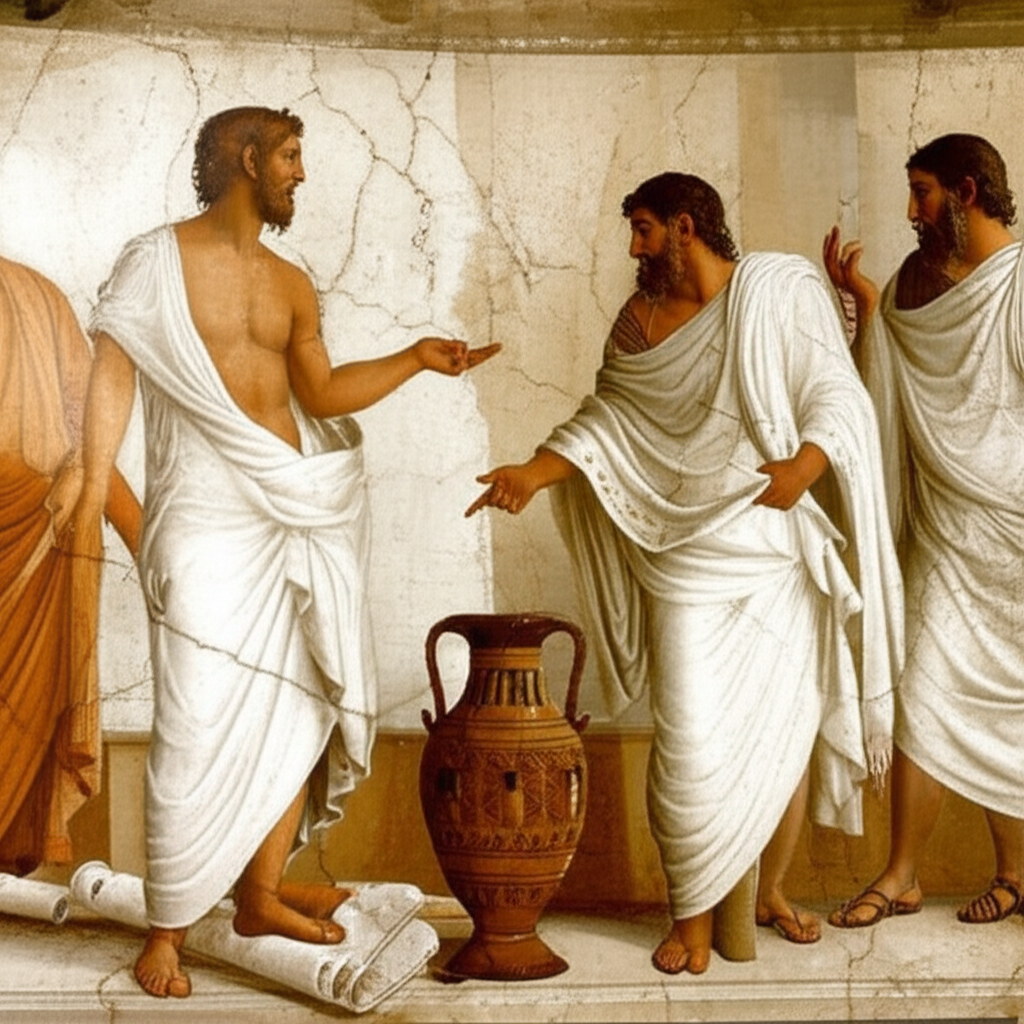
The Core Distinction: A Comparative Analysis
While both rhetoric and dialectic are powerful uses of language and argumentation, their fundamental distinction lies in their orientation and purpose. The table below highlights these contrasting features:
| Feature | Rhetoric | Dialectic |
|---|---|---|
| Primary Aim | Persuasion, influence, action | Discovery of truth, conceptual clarity |
| Method | Extended discourse, oratorical techniques | Question-and-answer dialogue, logical analysis |
| Audience | Large, varied, often non-specialist | Small, engaged participants, fellow inquirers |
| Relationship to Truth | Instrumental; truth is a means to persuasion | Essential; truth is the ultimate end |
| Focus | Doxa (opinion, belief) | Episteme (knowledge, understanding) |
| Nature of Argument | Often one-sided, designed to convince | Two-sided, collaborative, testing ideas |
Plato, in particular, was deeply critical of rhetoric when it was divorced from a commitment to truth, viewing it as a dangerous tool wielded by the Sophists to manipulate public opinion for personal gain. He argued that true knowledge (episteme) could only be attained through rigorous dialectical inquiry, whereas rhetoric often trafficked in mere opinion (doxa). Aristotle, while acknowledging rhetoric's potential for abuse, saw it as a valuable civic art, provided it was used responsibly and grounded in sound reasoning.
The Interplay and Modern Relevance
Despite their clear distinction, rhetoric and dialectic are not always mutually exclusive. A rhetorician may employ dialectical reasoning within a persuasive speech to strengthen their arguments, just as a dialectician might use rhetorical flourishes to make complex truths more accessible. In contemporary discourse, this distinction remains vital.
- In Academia: Researchers engage in dialectical processes to refine theories, while also using rhetorical skills to present their findings persuasively to the wider academic community and public.
- In Politics: Politicians use rhetoric to win elections and pass legislation, but effective policy-making ideally involves a dialectical process of debate, compromise, and critical evaluation of different viewpoints.
- In Everyday Life: We encounter rhetoric in advertising and social media, aiming to persuade us. Developing dialectical skills allows us to critically evaluate these messages, question assumptions, and seek deeper understanding beyond superficial appeals.
Understanding the difference between an argument designed to convince us and an inquiry designed to discover truth is a hallmark of critical thinking. The Great Books of the Western World consistently challenge us to engage with both, recognizing their unique contributions to human understanding and the ongoing conversation about what it means to live thoughtfully.
📹 Related Video: PLATO ON: The Allegory of the Cave
Video by: The School of Life
💡 Want different videos? Search YouTube for: "Plato's Dialectic and the Socratic Method Explained"
📹 Related Video: ARISTOTLE ON: The Nicomachean Ethics
Video by: The School of Life
💡 Want different videos? Search YouTube for: "Aristotle's Rhetoric and the Art of Persuasion"