

Beyond Immediate Gratification: The Profound Distinction Between Pleasure and Happiness
The human pursuit of well-being is as ancient as philosophy itself. Yet, in our modern lexicon, two terms often used interchangeably—pleasure and happiness—represent fundamentally different experiences and states of being. This article aims to clarify this crucial distinction, drawing upon the wisdom of the Great Books of the Western World to illuminate why understanding this difference is not merely an academic exercise, but a vital step towards a truly flourishing life. While pleasure is often fleeting and sensory, happiness, in its profoundest definition, represents a sustained state of flourishing, deeply intertwined with virtue and purpose.
Unpacking the Definitions: Pleasure and Its Transience
To begin, let us establish clear definitions. Pleasure can be understood as a transient, often sensory, positive emotional or physical experience. It is the immediate gratification derived from satisfying a desire, whether it be the taste of a delicious meal, the warmth of a comfortable bed, or the thrill of an exciting event.
Philosophers throughout history have grappled with the nature of pleasure. Epicurus, for instance, advocated for a life aimed at ataraxia (freedom from disturbance) and aponia (absence of pain), viewing pleasure primarily as the absence of discomfort. His school, often misunderstood as purely hedonistic, actually emphasized a modest, contemplative life where simple pleasures were valued, and excessive indulgence was seen as leading to future pleasure and pain.
Key Characteristics of Pleasure:
- Immediate: Experienced in the present moment.
- Sensory/Emotional: Often tied to physical sensations or direct emotional responses.
- Transient: By its very nature, it comes and goes.
- External Triggers: Often stimulated by external factors (food, entertainment, comfort).
Consider the simple joy of biting into a perfectly ripe apple. The crispness, the sweetness – these are undeniable pleasures. But once the apple is consumed, the sensation passes. This transient nature is a hallmark of pleasure; it is a moment, not a state of being.
The Enduring Pursuit: Defining Happiness
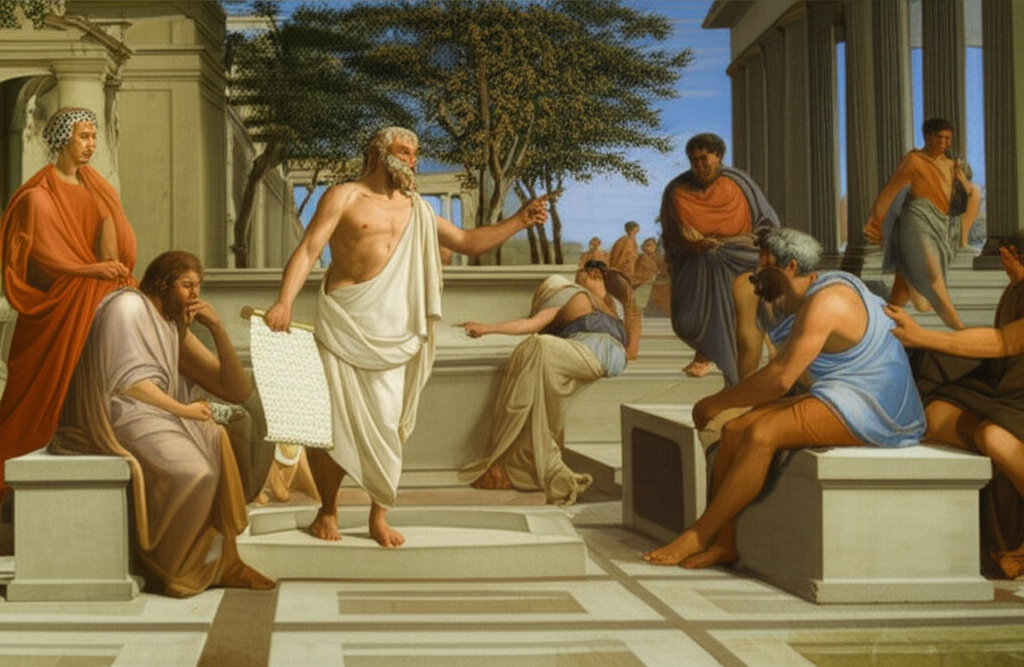
In stark contrast, happiness is a far more complex and enduring state. For many classical thinkers, particularly Aristotle in his Nicomachean Ethics, happiness is not merely a feeling, but a state of eudaimonia – often translated as "human flourishing" or "living well." This isn't about fleeting joy, but about living a life of virtue, purpose, and meaningful activity.
Aristotle argued that true happiness is the ultimate end of human action, something pursued for its own sake, not for the sake of something else. It is achieved through rational activity in accordance with virtue over a complete life. This involves moral excellence, intellectual contemplation, and a life lived in community.
Key Characteristics of Happiness (Eudaimonia):
- Enduring State: Not a momentary feeling, but a sustained condition of well-being.
- Holistic: Encompasses intellectual, moral, and social aspects of life.
- Virtue-Based: Achieved through living virtuously and acting in accordance with reason.
- Purpose-Driven: Involves finding meaning and fulfilling one's potential.
- Internal Locus: Primarily derived from one's character and actions, rather than external stimuli.
The Crucial Distinction: Pleasure as a Component, Not the Whole
The distinction between pleasure and happiness becomes clearer when we recognize their relationship. While pleasure can certainly contribute to happiness, it is not synonymous with it. A life devoid of pleasure would likely be a difficult one, but a life solely in pursuit of pleasure often leads to dissatisfaction, as the constant need for gratification can become a burden.
| Feature | Pleasure | Happiness (Eudaimonia) |
|---|---|---|
| Nature | Transient feeling or sensation | Enduring state of flourishing |
| Source | Often external stimuli, immediate gratification | Internal character, virtuous action, purpose, reflection |
| Duration | Short-lived, momentary | Sustained, long-term |
| Goal | Satisfy a desire, avoid pleasure and pain | Live well, fulfill potential, achieve moral excellence |
| Relationship | Can contribute to happiness, but not sufficient | Encompasses and transcends pleasure |
Consider the athlete who endures rigorous training (which involves discomfort and the absence of immediate pleasure) for the long-term satisfaction and happiness of achieving their athletic goals. Or the student who foregoes immediate social pleasures to study diligently, knowing that the eventual academic success will bring a deeper, more enduring sense of fulfillment. In both cases, short-term pleasure is sacrificed or deferred for a greater, more profound happiness.
The pursuit of happiness, therefore, is not a hedonistic quest for endless pleasant sensations. Instead, it is a journey of character development, meaningful engagement, and the cultivation of a life rich in purpose and virtue. It acknowledges that moments of pleasure and pain are inevitable, but that true well-being transcends these fluctuations.
Conclusion: A Philosophical Compass for Life
Understanding the distinction between pleasure and happiness is more than an academic exercise; it offers a philosophical compass for navigating life's choices. To mistake pleasure for happiness is to chase a phantom, constantly seeking new sensations that, by their very nature, are impermanent. To understand happiness as eudaimonia is to embark on a more challenging but ultimately more rewarding path – one that demands self-reflection, moral courage, and a commitment to living a life of meaning.
The wisdom gleaned from the Great Books reminds us that true flourishing is not found in the fleeting thrill, but in the enduring satisfaction of a life well-lived, a life dedicated to virtue, reason, and the pursuit of our highest potential. This definition of happiness calls us to a deeper engagement with ourselves and the world around us, promising a more profound and lasting sense of contentment.
📹 Related Video: ARISTOTLE ON: The Nicomachean Ethics
Video by: The School of Life
💡 Want different videos? Search YouTube for: "Aristotle Eudaimonia explained, The Philosophy of Happiness vs Pleasure"