

Beyond the Haze: Unpacking the Distinction Between Opinion and Sense
In our quest for understanding, few philosophical distinctions are as fundamental yet frequently conflated as that between opinion and sense. At its core, this distinction delineates between subjective, often unexamined belief and direct, immediate sensory experience. While both play a role in shaping our worldview, neither, on its own, constitutes true knowledge. Grasping this crucial difference, as illuminated by thinkers across the Great Books of the Western World, is the first step towards a more rigorous and reliable apprehension of reality.
The Shifting Sands of Opinion
An opinion is essentially a judgment, a belief, or a viewpoint that may or may not be based on fact or reason. It is inherently subjective and often carries the weight of personal preference, cultural conditioning, or limited information. From Plato's Allegory of the Cave, where the prisoners mistake the shadows for reality, we learn that opinions are often mere reflections, distant from the true forms.
- Subjectivity: My opinion that vanilla is the best ice cream flavour is entirely personal and not empirically verifiable or universally true.
- Variability: Opinions can change with new information, mood, or social influence. They are not fixed.
- Lack of Justification: Often, opinions are held without rigorous evidence or logical argument. They are simply what one thinks.
- Potential for Error: An opinion can be demonstrably false, even if deeply held. History is replete with examples of widely accepted opinions later proven wrong.
The realm of opinion is where much of our daily discourse resides. We share opinions on politics, art, and the weather. While valuable for social interaction and expressing individuality, mistaking opinion for knowledge can lead to intellectual stagnation and a refusal to engage with challenging truths.
The Immediate Data of Sense
Sense, in a philosophical context, refers to our direct apprehension of the world through our sensory organs—sight, hearing, touch, taste, and smell. It is the raw data, the immediate empirical input we receive from our environment. Thinkers like John Locke, within the empiricist tradition, emphasized that all our ideas originate from sensation or reflection upon sensation.
- Directness: Sense is immediate and unmediated. When I see a red apple, the sensation of "redness" and "apple-ness" is direct.
- Empirical Basis: It provides the raw material for our understanding of the physical world. Without sense data, we would have no experience.
- Objectivity (Limited): While sense perception is often considered more "objective" than opinion, it is still subject to limitations and potential deceptions (e.g., optical illusions, sensory deprivation).
- Absence of Judgment: Sense itself does not make judgments; it merely receives stimuli. The interpretation of that stimuli moves into the realm of understanding or opinion.
While sense provides the foundational elements of our experience, it does not, by itself, constitute knowledge. A dog perceives a ball through its senses, but it doesn't know the physics of its trajectory or the cultural significance of the game it's playing.
The Crucial Distinction: Opinion vs. Sense
To clarify, let's delineate the fundamental differences:
| Feature | Opinion | Sense (Perception) |
|---|---|---|
| Nature | Subjective judgment, belief, viewpoint | Direct, immediate sensory experience |
| Source | Internal thought, interpretation, belief | External stimuli, sensory organs |
| Foundation | Often unexamined premises, personal bias | Raw empirical data, physical interaction |
| Verifiability | Difficult; often based on agreement/rhetoric | Potentially verifiable through shared experience |
| Truth Claim | Claims to truth, but often without basis | Provides data; does not inherently claim truth |
| Dependence | Can exist without direct sensory input | Requires direct sensory input (or memory thereof) |
Opinion is a statement about something, an interpretation or belief. Sense is the direct experience of something. You might have an opinion about the taste of durian fruit (perhaps based on hearsay), but until you sense it through taste and smell, you haven't directly experienced it. Even then, your opinion about it might differ from your raw sense experience, as your judgment is layered upon the immediate perception.
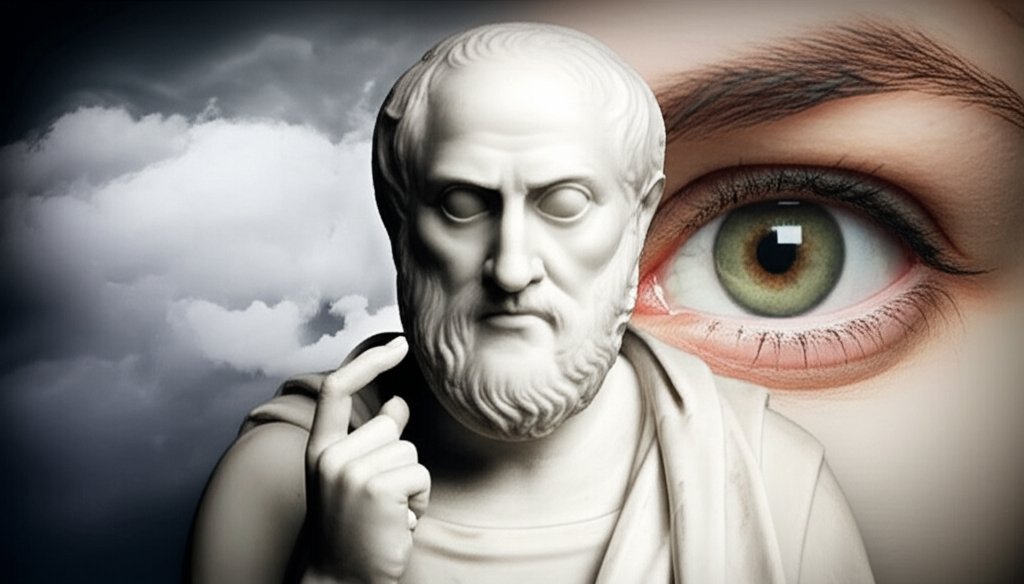
The Ascent to Knowledge: Transcending Both
If opinion is too subjective and sense too raw, where then does true knowledge reside? Philosophers from Plato to Kant have grappled with this, generally concluding that knowledge is a higher state that synthesizes and transcends both.
- Plato's Ideal: For Plato, true knowledge (episteme) meant apprehending the eternal, unchanging Forms, moving beyond the fleeting shadows of opinion and the imperfect data of sense. It was attained through rigorous dialectic and reason.
- Aristotle's Empiricism with Reason: Aristotle, while valuing empirical observation (sense), insisted that knowledge required understanding causes and principles, achieved through logical reasoning applied to sensory data. It wasn't just seeing a tree, but understanding its species, growth, and purpose.
- Justified True Belief: A common modern definition, stemming from Plato's Theaetetus, posits that knowledge is "justified true belief." This means:
- Belief: You must believe it to be true (an opinion).
- Truth: The belief must actually be true (align with reality).
- Justification: You must have good reasons or evidence for your belief (moving beyond mere opinion, integrating and interpreting sense data).
Knowledge is not merely accumulating sense data, nor is it simply holding a firm opinion. It is the coherent, reasoned understanding that arises when we critically examine our sense perceptions, filter out the biases of our opinions, and construct a justified, verifiable account of reality. It requires intellectual discipline, a willingness to question, and a commitment to evidence and logical consistency.
The Path Forward
Understanding the distinction between opinion and sense is not an academic exercise for its own sake. It is crucial for navigating our complex world, for discerning truth from falsehood, and for fostering intellectual humility. It empowers us to move beyond superficial beliefs and raw, uninterpreted experiences towards a richer, more robust form of understanding—genuine knowledge. By critically engaging with the world, we transform the immediate data of sense and the subjective assertions of opinion into justified insights that stand the test of reason.
📹 Related Video: PLATO ON: The Allegory of the Cave
Video by: The School of Life
💡 Want different videos? Search YouTube for: "Plato's Allegory of the Cave explained"
📹 Related Video: What is Philosophy?
Video by: The School of Life
💡 Want different videos? Search YouTube for: "Epistemology: What is Knowledge?"