

The Enduring Distinction Between Opinion and Sense
A Compass for the Mind in a Sea of Beliefs
In an age awash with information, where every individual voice can echo globally, the distinction between mere opinion and genuine sense has never been more vital. This article explores the profound philosophical chasm separating subjective belief from reasoned understanding, drawing deeply from the intellectual currents of the Great Books of the Western World. We aim to illuminate why discerning this difference is not merely an academic exercise, but a fundamental prerequisite for the pursuit of knowledge, intellectual integrity, and ultimately, a more coherent grasp of reality.
The Shifting Sands of Opinion
An opinion is, at its core, a belief or judgment not necessarily grounded in fact or certainty. It is the realm of doxa, as Plato termed it, a domain characterized by personal conviction, popular consensus, or unexamined assumption. Opinions are often:
- Subjective: They belong to the individual holding them, reflecting personal taste, experience, or bias.
- Variable: Opinions can change with mood, circumstance, or exposure to new, often superficial, information.
- Lacking in Proof: While an opinion might be passionately held, it often lacks the rigorous evidence or logical deduction required for broader acceptance.
- Prone to Fallacy: Opinions can be easily swayed by emotional appeals, logical fallacies, or the influence of charismatic figures.
Consider the everyday: "Coffee tastes better than tea," or "Blue is the best color." These are quintessential opinions, unassailable in their subjectivity, yet offering little in the way of universal truth. More dangerously, opinions often masquerade as knowledge in political discourse or social media, where assertions are presented as facts without substantiation. The danger lies not in having opinions, but in mistaking them for something more substantial, something that carries the weight of objective truth.
The Solid Ground of Sense
In contrast, "sense" in this philosophical context refers to a reasoned understanding, an insight, or a coherent grasp of truth that transcends individual subjectivity. It is the product of careful thought, logical inference, and often, empirical observation. When we speak of making sense of something, we are seeking:
- Objectivity: A perspective that strives to be independent of personal bias, aiming for universal applicability.
- Coherence and Logic: An understanding that fits within a rational framework, adhering to principles of consistency and sound reasoning.
- Evidence and Justification: A basis in observable facts, verifiable data, or compelling logical arguments.
- Stability: Unlike fleeting opinions, a reasoned sense of something tends to be robust, capable of withstanding scrutiny and critical examination.
From Aristotle's systematic categorization of reality to Descartes's search for "clear and distinct ideas," philosophers have tirelessly sought to move beyond mere opinion towards a more profound sense of the world. This pursuit is not about eliminating personal perspective, but about building frameworks of understanding that are intersubjectively verifiable and rationally defensible.
Table: Opinion vs. Sense – A Philosophical Contrast
| Feature | Opinion | Sense |
|---|---|---|
| Nature | Subjective belief, personal judgment | Objective understanding, reasoned insight |
| Basis | Feeling, intuition, unexamined assumption | Logic, evidence, coherence, critical thought |
| Stability | Variable, fleeting, easily swayed | Stable, robust, enduring under scrutiny |
| Goal | Expression of personal preference/conviction | Pursuit of truth, knowledge |
| Verification | Difficult, often irrelevant | Possible through rational argument or empirical test |
| Platonic Term | Doxa (Belief/Appearance) | Episteme (Knowledge/Understanding) |
Why the Distinction Matters: From Plato's Cave to Modern Discourse
The distinction between opinion and sense is not a semantic quibble; it is fundamental to how we navigate reality, make decisions, and construct a shared understanding of the world.
- The Pursuit of Knowledge: As Plato vividly illustrates in his Allegory of the Cave, mistaking shadows (opinions) for reality (sense/knowledge) keeps us imprisoned. True knowledge requires us to turn our gaze away from mere appearances towards the intelligible forms, the underlying reasons and truths.
- Effective Decision-Making: Whether in personal life, governance, or scientific inquiry, decisions based on well-founded sense are far more likely to lead to desirable outcomes than those driven by ill-informed opinion or prejudice.
- Intellectual Honesty and Critical Thinking: Recognizing the difference fosters intellectual humility and encourages a rigorous approach to claims of truth. It compels us to ask: "Is this merely my belief, or is there a sound reason for it?"
- Safeguarding Against Manipulation: In an era of "alternative facts" and information overload, the ability to discern sense from opinion is a crucial defense against demagoguery and manipulation. It empowers individuals to question, analyze, and demand justification.
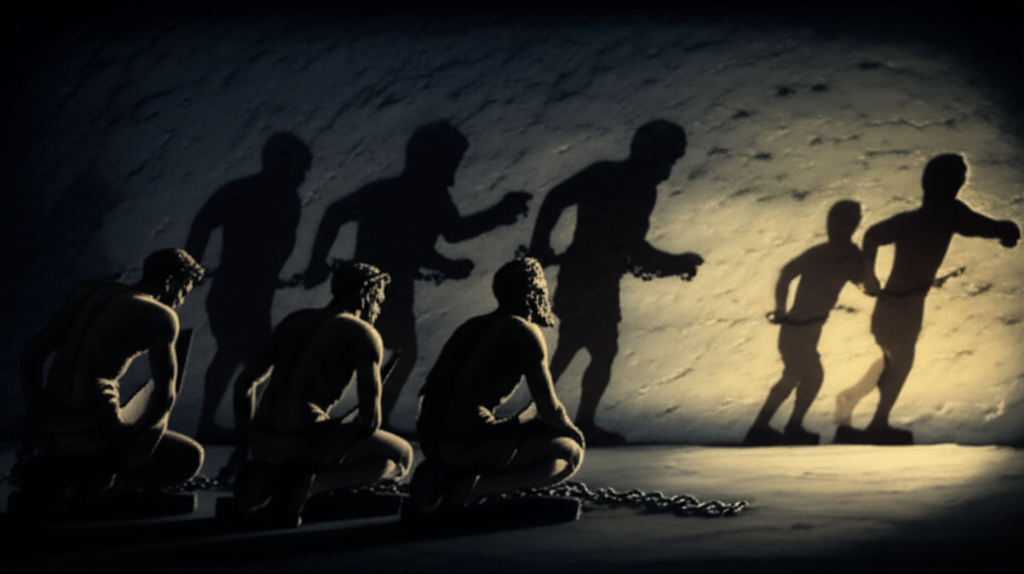
The journey from opinion to sense is often arduous, demanding intellectual discipline, a willingness to challenge one's own preconceptions, and an open mind to rational argument. It is the very essence of philosophical inquiry, a continuous striving to move beyond what merely seems to be, towards what is.
Cultivating Sense in a World of Opinions
How then do we cultivate sense? It begins with a commitment to critical inquiry, a willingness to engage with diverse perspectives, and a dedication to the rigorous examination of evidence.
- Question Everything: Adopt a Socratic stance. Why do I believe this? What evidence supports it? What are the counter-arguments?
- Seek Justification: Demand reasons, not just assertions. Understand the logical steps that lead to a conclusion.
- Engage with Diverse Sources: Don't limit yourself to echo chambers. Read, listen, and debate with those who hold different views, not to convert, but to understand the basis of their perspectives.
- Embrace Nuance: Recognize that complex issues rarely have simple, black-and-white answers. Sense often lies in appreciating the subtleties and interconnections.
- Study Logic and Argumentation: Familiarize yourself with the tools of rational thought – deductive and inductive reasoning, identifying fallacies, constructing sound arguments.
The distinction between opinion and sense is not about intellectual snobbery; it is about recognizing the different epistemic weights of various claims. While our opinions contribute to the rich tapestry of human experience, our collective progress and individual flourishing depend on our ability to transcend them when seeking knowledge and truth.
Conclusion: The Enduring Quest for Clarity
The philosophical journey, as illuminated by the Great Books, is a perpetual quest for clarity, for moving beyond the fleeting and subjective to embrace the enduring and objective. The distinction between opinion and sense serves as an indispensable guide in this endeavor. It reminds us that while everyone is entitled to their opinions, not all opinions are equally valid when it comes to understanding reality. The pursuit of sense is the pursuit of knowledge, a disciplined and rewarding endeavor that empowers us to build more robust understandings, make wiser choices, and ultimately, live more thoughtfully examined lives.
**## 📹 Related Video: PLATO ON: The Allegory of the Cave
Video by: The School of Life
💡 Want different videos? Search YouTube for: ""Plato's Allegory of the Cave explained" or "Epistemology: Knowledge vs. Belief""**