

The Elusive Divide: Unpacking the Distinction Between Mind and Soul
From the ancient philosophers pondering the essence of life to modern neuroscientists mapping the brain, humanity has grappled with the nature of our inner selves. At the heart of this enduring inquiry lies a profound distinction between the concepts of mind and soul. While often used interchangeably in everyday language, philosophy, particularly in its metaphysical explorations, reveals a rich and complex history of attempting to delineate these two fundamental aspects of being. This article delves into the historical evolution and contemporary relevance of this crucial philosophical divide, drawing insights from the "Great Books of the Western World" to illuminate why this separation continues to challenge and fascinate us.
I. Ancient Whispers: Early Conceptions of Soul and Thought
The earliest philosophical traditions did not always draw a sharp line between mind and soul as we might today. Often, the "soul" encompassed a broader range of functions, including what we now attribute to the mind.
Plato's Dualism: The Soul as Immortal Reason
For Plato, as explored in dialogues like the Phaedo and Republic, the soul was paramount. He posited a clear distinction between the immortal, rational soul and the mortal, imperfect body. The soul was the seat of reason, character, and moral choice, capable of apprehending eternal Forms and truths. It was not merely a life-giving principle but the very essence of a person's identity and intellect. Here, the rational aspect of the soul largely functions as what we might call the mind.
Aristotle's Entelechy: Soul as the Form of the Body
Aristotle, Plato's student, offered a more integrated view, detailed in De Anima (On the Soul). He saw the soul not as a separate entity imprisoned in the body, but as the "form" of the body—its animating principle or entelechy. He identified different types of souls:
- Nutritive Soul: Shared by plants, responsible for growth and reproduction.
- Sentient Soul: Shared by animals, responsible for sensation and movement.
- Rational Soul: Unique to humans, responsible for thought, reason, and intellect.
While Aristotle's distinction was between faculties rather than separate substances, his rational soul clearly aligns with what we understand as the mind. Yet, it was still inextricably linked to the body, as the "actuality" of a body that potentially has life.
II. The Cartesian Chasm: A Definitive Distinction
The most influential and radical distinction between mind and soul in Western philosophy arose with René Descartes in the 17th century, a pivotal figure often referenced in the "Great Books."
Descartes' Radical Separation: Res Cogitans vs. Res Extensa
Descartes, through works like Meditations on First Philosophy, established a stark dualism:
- Mind (Res Cogitans): Defined as a thinking substance, unextended, indivisible, and the seat of consciousness, thought, and self-awareness. For Descartes, "I think, therefore I am" solidified the mind's independent existence.
- Body (Res Extensa): Defined as an extended substance, divisible, occupying space, and operating mechanically.
This clear distinction created the infamous "mind-body problem": how do these two fundamentally different substances interact? Descartes located the interaction in the pineal gland, though this explanation proved problematic. His work profoundly shaped subsequent philosophy, isolating the mind as the primary subject of philosophical inquiry into consciousness, while the soul began to take on more spiritual or theological connotations, distinct from the scientific study of thought.
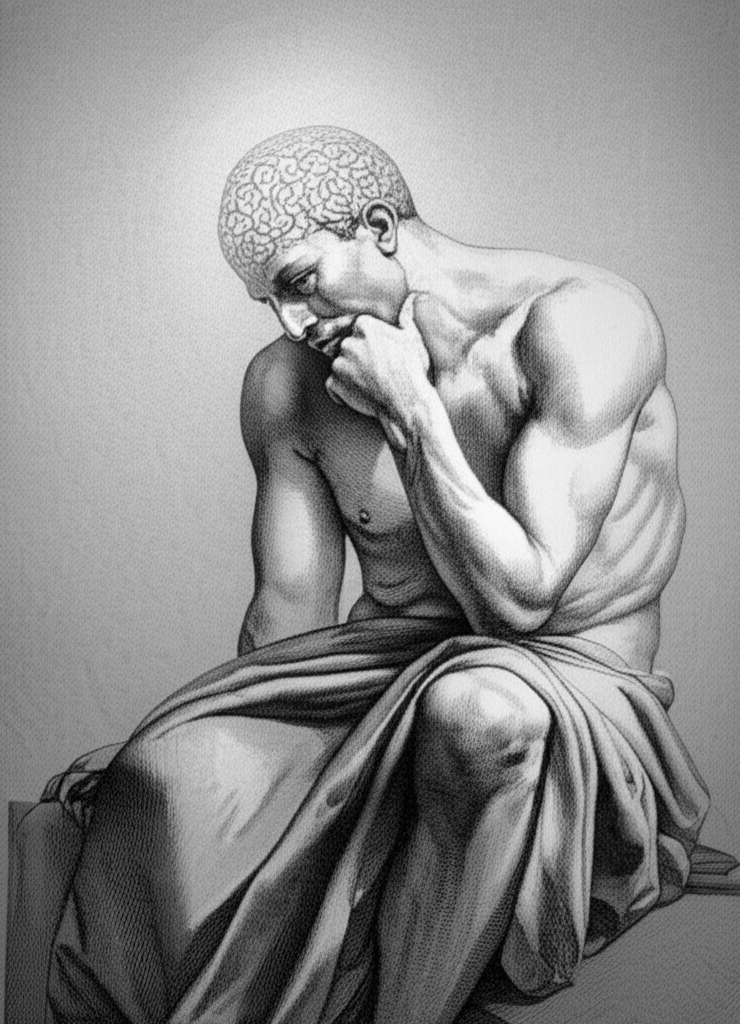
III. Beyond Descartes: Evolving Understandings
Post-Cartesian philosophy has continued to wrestle with the implications of this distinction, leading to diverse perspectives on the mind and soul.
The Soul's Enduring Mystique
Despite the rise of scientific inquiry into the brain, the concept of the soul has persisted, often retaining its metaphysical and spiritual weight.
- It is frequently associated with an individual's unique essence, spirit, or personal identity that transcends physical existence.
- In many religious and spiritual traditions, the soul is considered immortal, capable of existing independently of the body, and connected to a divine or cosmic order.
- The distinction here is often that the soul is not merely a faculty of thought, but the very core of one's being, their ultimate destiny, or their connection to something beyond the material.
The Mind's Scientific Ascent
The mind, especially in the wake of Descartes, became the domain of psychology, cognitive science, and neuroscience.
- The mind is increasingly understood as the emergent property of brain activity, encompassing consciousness, perception, memory, emotion, and decision-making.
- Scientists explore the neural correlates of consciousness, seeking to understand how physical brain processes give rise to subjective experience.
- The distinction from the soul here is that the mind is often viewed as intrinsically linked to, or even identical with, the brain.
IV. Why This Distinction Still Matters: A Metaphysical Inquiry
The philosophical distinction between mind and soul is not merely an academic exercise; it carries profound implications for our understanding of ourselves and the universe. This is where metaphysics truly shines.
- Personal Identity: If our mind is just brain activity, and our brain changes over time, what makes us the same person? Does the soul provide a more stable, enduring core of identity?
- Free Will and Agency: If the mind is purely a product of physical processes, are our choices truly free, or are they predetermined? Does the existence of a non-physical soul offer a different foundation for agency?
- The Nature of Reality: The distinction forces us to confront fundamental questions about what constitutes existence. Is reality purely material (monism), or does it encompass both physical and non-physical aspects (dualism)? The answer profoundly shapes our worldview and our place within the cosmos.
- Ethics and Morality: Our understanding of the soul can influence our views on human dignity, the sanctity of life, and what happens after death, all of which have ethical ramifications.
Conclusion: An Ongoing Philosophical Journey
The distinction between mind and soul remains one of philosophy's most enduring and challenging problems. From Plato's ideal forms to Descartes' cogito, and through centuries of scientific and spiritual inquiry, thinkers have sought to define, separate, or reconcile these profound aspects of human experience. While science increasingly elucidates the workings of the mind, the soul continues to occupy a unique space in metaphysics, spirituality, and our quest for meaning. This ongoing dialogue underscores the richness of philosophical inquiry and its vital role in helping us understand the elusive divide within ourselves.
📹 Related Video: PLATO ON: The Allegory of the Cave
Video by: The School of Life
💡 Want different videos? Search YouTube for: ""Mind-Body Problem Explained Philosophy" "Plato Aristotle Soul Metaphysics""