

The Art of Sound Thought: Untangling Logic and Dialectic
In the vast landscape of philosophy, two foundational pillars often stand side-by-side, yet serve distinct purposes in our quest for understanding: Logic and Dialectic. While both are indispensable tools for rigorous reasoning and intellectual progress, they represent different approaches to inquiry and truth-seeking. Simply put, Logic primarily concerns itself with the form of valid arguments and the principles of correct inference, aiming to ensure our conclusions follow necessarily from our premises. Dialectic, on the other hand, is a more dynamic and expansive process, an art of philosophical discussion and critical inquiry that often involves the interplay of opposing ideas to arrive at a deeper, more comprehensive truth. As we delve into the rich traditions preserved in the Great Books of the Western World, understanding this distinction is crucial for appreciating the nuanced evolution of thought.
Logic: The Foundation of Valid Reasoning
Logic, from the Greek logos (word, reason, discourse), is the systematic study of valid inference. Its primary goal is to establish principles that allow us to differentiate between correct and incorrect reasoning. When we speak of logic, we are often referring to the formal structures of arguments, irrespective of their specific content.
Key Characteristics of Logic:
- Focus on Form: Logic examines the structure of an argument to determine its validity. An argument is valid if its conclusion must be true whenever its premises are true.
- Truth Preservation: The core function of logic is to preserve truth. If you start with true premises and follow logical rules, your conclusion will also be true.
- Deductive and Inductive Reasoning:
- Deductive Logic: Moves from general principles to specific conclusions. If the premises are true, the conclusion is guaranteed to be true (e.g., All men are mortal; Socrates is a man; Therefore, Socrates is mortal).
- Inductive Logic: Moves from specific observations to general conclusions. The conclusion is probable, but not certain (e.g., Every swan I've seen is white; Therefore, all swans are white).
- Avoidance of Fallacies: Logic provides the framework to identify and avoid errors in reasoning, known as fallacies.
Aristotle's Organon, a cornerstone of Western thought found within the Great Books, laid much of the groundwork for formal logic, particularly in his development of syllogistic reasoning. His work provided a systematic way to analyze arguments, making logic an essential tool for any serious philosophical or scientific endeavor.
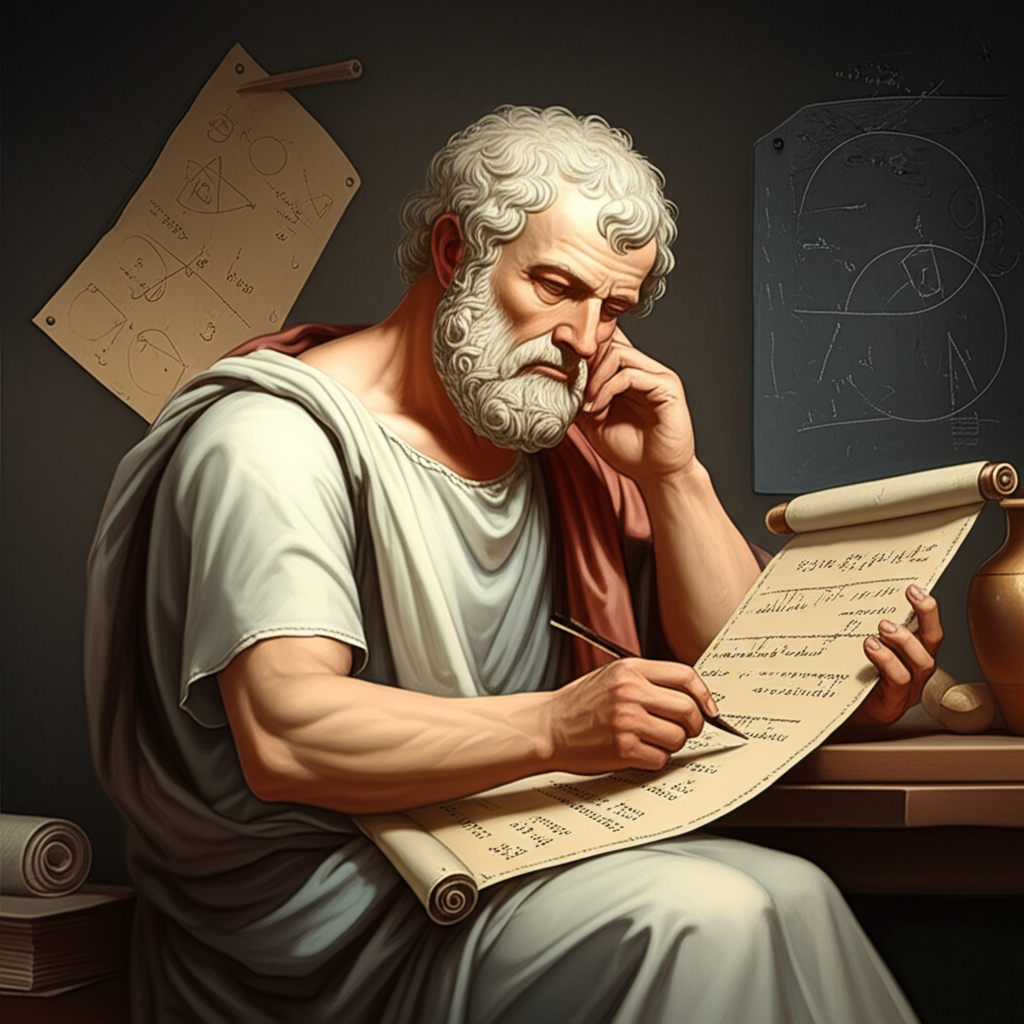
Dialectic: The Art of Philosophical Inquiry
Dialectic, also rooted in ancient Greek philosophy (from dialegesthai, to converse), refers to a method of philosophical argument that involves a process of dialogue, debate, and the exchange of ideas. Unlike logic's focus on formal validity, dialectic is often concerned with the discovery of truth, the clarification of concepts, and the resolution of contradictions through critical engagement.
Key Characteristics of Dialectic:
- Dialogue and Debate: The Socratic method is a prime example of dialectic, where truth is sought through a question-and-answer process, often revealing inconsistencies in initial beliefs.
- Exploration of Opposing Viewpoints: Dialectic thrives on the tension between thesis and antithesis, aiming for a synthesis that transcends the initial positions. Plato's dialogues, central to the Great Books, beautifully exemplify this dynamic process.
- Conceptual Clarification: Through rigorous back-and-forth, vague concepts are refined, assumptions are challenged, and deeper meanings are uncovered.
- Evolution of Understanding: The goal is not just to prove a point, but to achieve a more comprehensive and nuanced understanding of a subject. G.W.F. Hegel later developed a complex system of dialectic, viewing it as the driving force of historical and conceptual development.
The Interplay and Distinction: Logic vs. Dialectic
While distinct, logic and dialectic are not mutually exclusive; in fact, they often complement each other within the broader pursuit of philosophy. A dialectical discussion, to be productive, must still employ sound reasoning – that's where logic comes in. Conversely, dialectic can help refine the premises upon which logical arguments are built, ensuring they are conceptually robust.
Here's a breakdown of their primary distinctions:
| Feature | Logic | Dialectic |
|---|---|---|
| Primary Goal | To ensure validity and soundness of arguments | To discover truth, clarify concepts, resolve contradictions |
| Methodology | Formal analysis, systematic rules, inference | Dialogue, debate, thesis-antithesis-synthesis |
| Focus | Form and structure of arguments | Content, ideas, underlying assumptions |
| Nature | Analytical, prescriptive (rules for correct reasoning) | Exploratory, critical, constructive (process of inquiry) |
| Outcome | Valid conclusions from given premises | Deeper understanding, refined concepts, new insights |
| Key Figures | Aristotle, Boole, Frege | Socrates, Plato, Hegel |
Ultimately, logic provides the essential toolkit for ensuring our reasoning is structured correctly, preventing us from drawing false conclusions from true premises. Dialectic, on the other hand, is the engine of philosophical progress, pushing us to question, explore, and evolve our understanding of the world and ourselves. Both are indispensable for anyone engaging seriously with philosophy and the enduring questions that have captivated thinkers throughout history.
YouTube Video Suggestions:
-
📹 Related Video: What is Philosophy?
Video by: The School of Life
💡 Want different videos? Search YouTube for: ""Logic vs Dialectic philosophy explanation""
2. ## 📹 Related Video: PLATO ON: The Allegory of the Cave
Video by: The School of Life
💡 Want different videos? Search YouTube for: ""Plato's Dialectic explained Socrates method""