

Unveiling the Chasm: The Profound Distinction Between God and Angel
The cosmic tapestry, as woven through millennia of philosophical and theological thought, often presents a hierarchy of being that can, at first glance, appear complex. Among the most fundamental distinctions we grapple with is that between God and angels. While both reside in realms beyond our immediate material perception and possess extraordinary capabilities, their natures are fundamentally different. This article aims to illuminate that critical distinction, moving beyond superficial similarities to grasp the profound ontological chasm that separates the Creator from His highest creations. It's a journey into the very essence of existence, challenging us to refine our understanding of divine omnipotence and created intelligence.
The Divine Source: God as Esse Ipsum – Being Itself
At the apex of all existence, according to the vast majority of Western theological and philosophical traditions, stands God. The defining characteristic of God is not merely that He exists, but that He is existence itself. This concept, often articulated by thinkers like Thomas Aquinas in the Summa Theologica, posits God as Esse Ipsum Subsistens – subsistent being itself.
- Uncreated and Eternal: God is without beginning or end, utterly uncaused and self-sufficient. He is the ultimate ground of all being, the Prime Mover, as Aristotle might describe.
- Infinite and Omnipotent: God's power, knowledge, and presence are boundless. He is omnipotent (all-powerful), omniscient (all-knowing), and omnipresent (present everywhere). There are no limits to His essence or attributes.
- Transcendent and Immanent: God exists beyond the created universe (transcendent) yet also sustains and acts within it (immanent). He is not a part of the universe but its ultimate source and sustainer.
- Perfect and Immutable: God is pure actuality, utterly perfect and incapable of change or improvement. His essence is simple, not composed of parts, and entirely good.
This understanding of God establishes an absolute singularity. There is no other being that shares this uncreated, infinite, and self-existent nature. This is the cornerstone of monotheistic theology, setting God apart as the ultimate reality.
Angelic Beings: Created Intelligences and Divine Messengers
In stark contrast to the uncreated nature of God, angels are unequivocally created beings. They are finite spirits, brought into existence by God to fulfill specific roles within the divine order. Across the Great Books of the Western World, from biblical narratives to the philosophical treatises of Augustine and Aquinas, angels are consistently depicted as ministers of God's will.
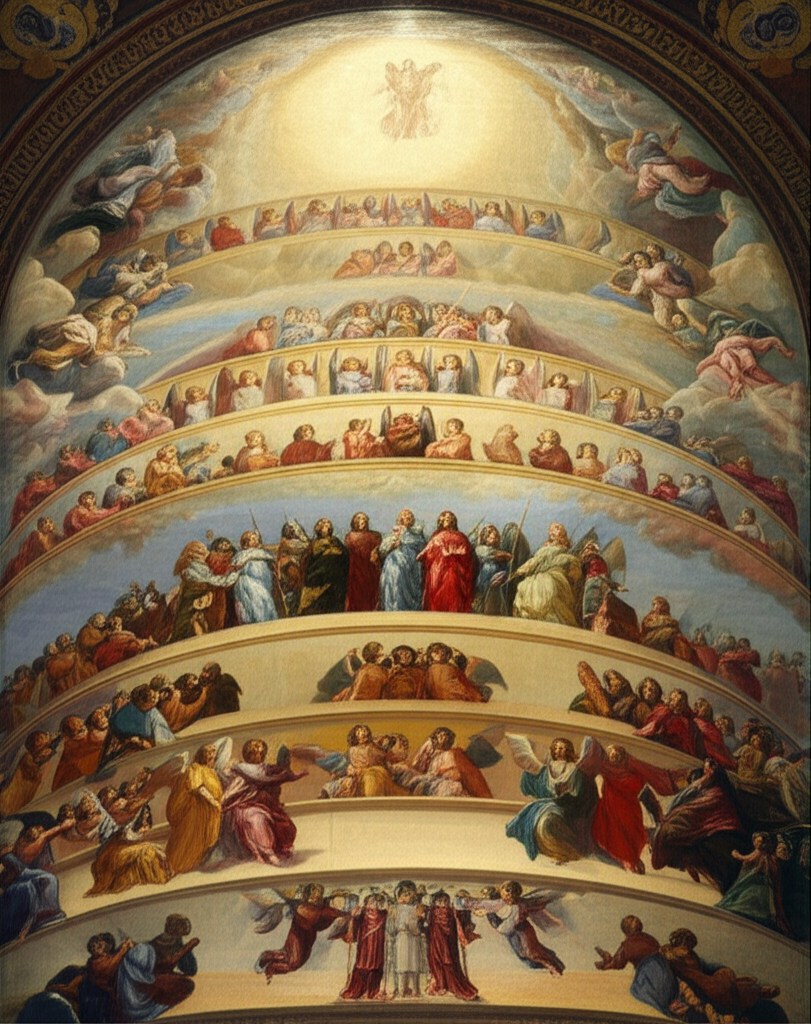
- Created and Finite: Angels have a beginning; they were brought into existence by God. While immortal (they do not die), they are not eternal in the sense of being without a start. Their power, knowledge, and presence, while vast compared to humans, are strictly limited by their created nature.
- Pure Spirits: Angels are generally understood as pure intellectual substances, spiritual beings without physical bodies. They can, however, assume bodily forms to interact with the material world, as seen in various scriptural accounts.
- Intelligent and Possessing Free Will: Angels possess intellect and will, allowing them to know and choose. This includes the capacity for both obedience and rebellion, as evidenced by the fall of some angels (demons).
- Ministers and Messengers: The very word "angel" (from the Greek angelos) means "messenger." Their primary function is to serve God, convey His messages, and execute His will. They can act as guardians, intercessors, or agents of divine judgment.
- Hierarchical Order: As explored extensively by Dionysius the Areopagite and later elaborated by Aquinas, angels exist in various choirs or orders (e.g., Seraphim, Cherubim, Thrones, Dominions, Powers, Virtues, Principalities, Archangels, Angels), each with distinct attributes and responsibilities.
The Irreducible Distinction: A Comparative View
To truly appreciate the chasm between God and angel, it's helpful to enumerate their fundamental differences in a clear, comparative manner. This isn't merely an academic exercise; it's crucial for understanding the ontological structure of reality as presented in foundational philosophical and theology texts.
Here's a breakdown of the key distinctions:
| Attribute | God | Angel |
|---|---|---|
| Nature of Being | Uncreated, Self-Existent | Created, Dependent |
| Origin | Without beginning or end (Eternal) | Has a beginning (Immortal) |
| Power | Omnipotent (All-Powerful) | Limited, though great |
| Knowledge | Omniscient (All-Knowing) | Finite, though vast and intuitive |
| Presence | Omnipresent (Everywhere) | Localized, though capable of swift movement |
| Essence | Pure Actuality, Being Itself (Esse) | Created Spirit, a being with an essence |
| Perfection | Absolutely Perfect, Immutable | Perfect in their created nature, but mutable (e.g., capable of falling) |
| Relationship to Will | Source of all Will, His Will is Law | Possesses Free Will, Obeys or Rejects God's Will |
| Worship | The sole object of worship | Worshippers of God, not to be worshipped |
This table underscores that while angels are glorious, powerful, and intelligent spiritual beings, they are still fundamentally creatures. They derive their existence, power, and knowledge from God, whereas God is the ultimate source, deriving nothing from another.
Philosophical and Theological Implications
Understanding this profound distinction is more than a matter of categorizing celestial beings; it profoundly shapes our worldview. It informs our understanding of:
- Divine Sovereignty: It reinforces God's absolute authority and unique position as the ultimate reality, the ground of all being.
- Cosmic Order: It establishes a clear hierarchy within creation, where every being, from the smallest particle to the highest angel, finds its place and purpose in relation to the Creator.
- Humanity's Place: By understanding the nature of angels, we gain perspective on our own created nature, our limitations, and our potential in relation to both God and other spiritual beings.
- The Nature of Worship: It clarifies that worship is reserved solely for God, as only He possesses the uncreated, infinite, and perfect attributes worthy of ultimate adoration.
In essence, the distinction between God and angel is the distinction between the Uncreated and the created, the Infinite and the finite, the Source and that which flows from it. It is a foundational concept in theology that invites us to contemplate the majesty of the divine and the intricate beauty of the cosmos He has brought into being.
YouTube: "Aquinas Angels Summa Theologica"
YouTube: "Nature of God Philosophy Theology"
📹 Related Video: What is Philosophy?
Video by: The School of Life
💡 Want different videos? Search YouTube for: "The Distinction Between God and Angel philosophy"