

The Crucial Divide: Unpacking the Distinction Between Experience and Sense
The journey of human understanding, from our earliest perceptions to the most profound insights, begins with a fundamental division often overlooked in casual thought: the distinction between sense and experience. Far from being interchangeable terms, these concepts represent two distinct stages in how we gather and process information, ultimately shaping our knowledge of the world. At its core, sense refers to the immediate, raw data delivered by our sensory organs – the fleeting impression of a color, the momentary sound, the isolated touch. Experience, on the other hand, is the organized accumulation and interpretation of these sensory inputs over time, leading to understanding, practical wisdom, and the formation of concepts. Grasping this nuanced difference is paramount for anyone seeking to comprehend the philosophical underpinnings of how we come to know anything at all.
The Primacy of Sensory Input: What is "Sense"?
At its most basic, sense is the direct apprehension of external stimuli through our five senses: sight, hearing, touch, taste, and smell. It's the unadulterated "what is" before our minds begin to categorize, compare, or interpret. Think of it as the input stream – a pure, unmediated signal.
- Immediate and Transient: A flash of red, the sudden warmth of a flame, the single note of a piano. These are momentary phenomena.
- Particular and Isolated: Each sensory input is distinct and confined to its specific instance. We sense this particular shade of blue, not "blueness" in general.
- Passive Reception: In its most fundamental form, sensing is a receptive act. Our eyes receive light, our ears receive sound waves.
Without sense, there would be no data to process. It is the necessary starting point, the raw material from which all further understanding is built. However, relying solely on sense would leave us in a state of perpetual novelty, unable to learn or predict.
Beyond Raw Data: Forging "Experience" from Sensation
If sense is the individual brick, then experience is the wall constructed from many bricks, arranged according to a design. Experience emerges when we begin to organize, compare, and retain sensory inputs, recognizing patterns and relationships over time. It transforms fleeting sensations into meaningful understanding.
Consider the following aspects of experience:
- Accumulated and Organized: It's not just seeing red once, but seeing many red objects, remembering them, and understanding what "red" signifies across different contexts.
- Active Interpretation: Experience involves the mind actively working with sensory data – connecting past sensations with present ones, forming memories, and drawing inferences.
- Generalization and Practical Knowledge: From repeated sensations, we gain practical knowledge. For instance, touching many hot stoves teaches us the general principle: "hot stoves burn." This isn't just a sense of heat; it's an experienced understanding of cause and effect.
- The Role of Memory: Memory is the bridge that turns individual senses into coherent experience. Without the ability to recall and relate past sensations, experience would be impossible.
The Philosophical Lineage: Insights from the Great Books
The distinction between sense and experience has been a cornerstone of Western philosophy, explored by thinkers whose works comprise the Great Books of the Western World. Their insights illuminate how this fundamental divide underpins our pursuit of knowledge.
Aristotle: From Sensation to Art and Science
Aristotle, in works like Metaphysics and Posterior Analytics, provides a foundational account. He argues that animals possess sensation and memory. Humans, however, go further. From many memories of the same thing comes a single experience. He famously states: "from experience, or from the universal now stabilized in its entirety within the soul... there comes the principle of art and science."
- Sense: Immediate perception (e.g., seeing this sick person).
- Memory: Retention of past senses (e.g., remembering that sick person).
- Experience: The synthesis of many memories, leading to a practical universal (e.g., knowing that this type of herb helped those sick people).
- Art/Science: The further abstraction from experience to universal principles and causes (e.g., understanding why that herb works, formulating a general theory of medicine).
Empiricists: Locke and Hume on Impressions and Ideas
Later empiricists like John Locke and David Hume further refined this distinction. Locke, in An Essay Concerning Human Understanding, argued that all our knowledge begins with experience, which he divided into sensation (our perception of external objects) and reflection (our perception of the operations of our own mind). For Locke, the mind is a tabula rasa (blank slate) upon which sense impressions write.
Hume, in A Treatise of Human Nature, made a similar, yet more radical, distinction between "impressions" (vivid, immediate perceptions, akin to sense) and "ideas" (faint images of impressions in thinking and reasoning, akin to experience or memory). He emphasized that all ideas are ultimately derived from impressions.
Kant: The Synthesis of Intuition and Concept
Immanuel Kant, in his Critique of Pure Reason, offered a profound synthesis. For Kant, both pure sensation ("intuitions") and organizing principles ("concepts") are necessary for knowledge. He famously declared: "Thoughts without content are empty, intuitions without concepts are blind."
- Intuitions: The raw, unorganized manifold of sensory data (our "sense").
- Concepts: The active categories of the understanding that organize and interpret these intuitions (part of what makes "experience" meaningful).
Without the structuring power of the mind (experience), raw sense data would be a chaotic blur. Without sense data, our conceptual frameworks would be empty.
Philosophical Perspectives on Sense and Experience
| Philosopher | Core Idea of "Sense" | Core Idea of "Experience" | Relationship to Knowledge |
|---|---|---|---|
| Aristotle | Immediate, particular perceptions; raw data. | Accumulated memories leading to practical understanding. | Foundation for practical knowledge (art) and theoretical knowledge (science). |
| Locke | "Sensation" – direct perception of external objects. | "Reflection" – perception of mind's operations; organized sensations. | All knowledge originates from experience (sensation and reflection). |
| Hume | "Impressions" – vivid, immediate perceptions. | "Ideas" – fainter copies of impressions, used in thought. | Ideas are derived from impressions; limits our knowledge to what is sensed. |
| Kant | "Intuitions" – the raw, unorganized manifold of sensation. | The mind's active organization of intuitions through concepts. | Knowledge arises from the synthesis of intuitions (sense) and concepts (experience). |
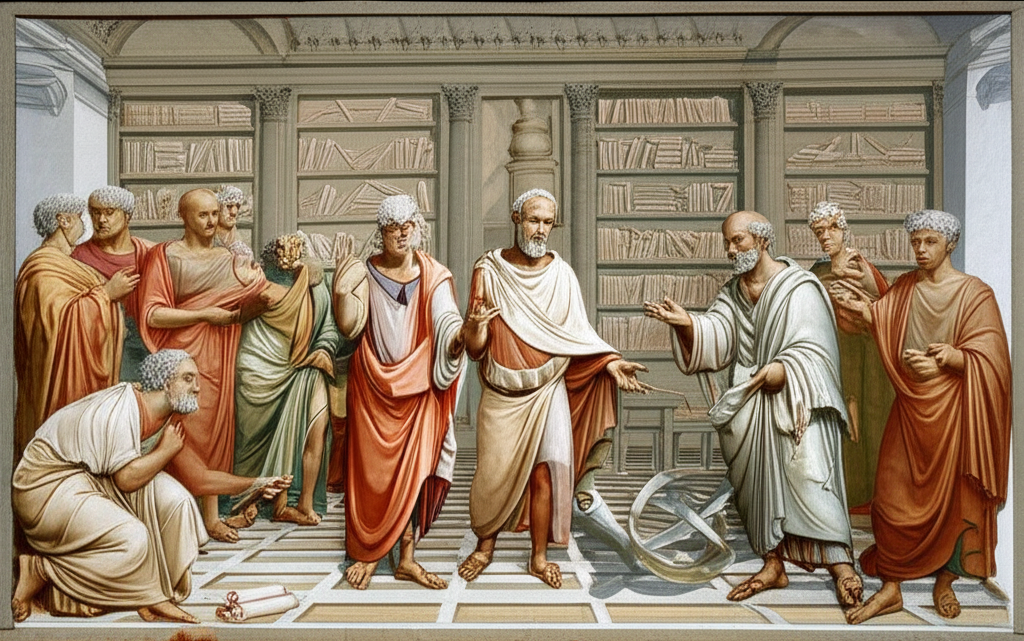
Why This Distinction Matters for Knowledge
Understanding the distinction between sense and experience is not merely an academic exercise; it has profound implications for how we approach and value different forms of knowledge:
- Empirical Foundation: It underscores that all our empirical knowledge ultimately rests on sensory input. Without the capacity to sense, we would be entirely cut off from the external world.
- The Role of Reason: It highlights the active role of the mind in organizing and interpreting data. Experience isn't just passive reception; it's a cognitive process that involves memory, comparison, and abstraction.
- Limits of Knowledge: It helps us recognize the limitations of purely sensory data. A single sensation tells us little; it's only through repeated experience and the formation of general principles that we gain robust knowledge.
- Practical vs. Theoretical Knowledge: It differentiates between practical knowledge (knowing how to do something, gained through experience) and theoretical knowledge (knowing why something is the case, often built upon experience but requiring further abstraction).
Conclusion: A Foundation for Understanding
The distinction between sense and experience is a cornerstone of epistemology, revealing the intricate processes by which we move from raw data to meaningful knowledge. Sense provides the immediate, isolated fragments of reality, while experience is the grand tapestry woven from these fragments, imbued with patterns, relationships, and understanding. From Aristotle's observations of human learning to Kant's synthesis of intuition and concept, the Great Books of the Western World consistently demonstrate that true knowledge is not merely sensed, but actively experienced and comprehended. To truly understand how we know, we must first appreciate this fundamental divide.
YouTube Video Suggestions:
-
📹 Related Video: ARISTOTLE ON: The Nicomachean Ethics
Video by: The School of Life
💡 Want different videos? Search YouTube for: ""Aristotle on Sense Perception and Experience Explained""
-
📹 Related Video: What is Philosophy?
Video by: The School of Life
💡 Want different videos? Search YouTube for: ""John Locke Empiricism and Tabula Rasa Philosophy""