

Unveiling the Nuance: The Profound Distinction Between Being and Existence
At first glance, the words "being" and "existence" might seem interchangeable, mere synonyms for the state of being present or being real. However, within the realm of philosophy, this seemingly subtle semantic difference blossoms into a profound and fundamental distinction, one that underpins centuries of metaphysical inquiry and existential contemplation. To conflate the two is to overlook a rich tapestry of thought that seeks to understand not just what is, but how and why it is, and what it means to truly be. This article aims to clarify this crucial divergence, drawing from the wellspring of Western philosophical tradition.
Defining Our Terms: Existence
When we speak of existence, we are often referring to the empirical, the observable, the tangible. To exist, in its most common definition, means to be present in the world, to occupy a space, to be perceptible, or to have a factual reality. A tree exists; a thought exists; a physical law exists. It answers the question, "Is it there?" or "Is it real?"
- Empirical Reality: Existence often pertains to things that can be perceived through our senses or inferred through logical deduction based on empirical evidence.
- Particularity: It usually refers to individual entities, specific instances, or concrete phenomena.
- Facticity: To exist is to be a fact of the world, a definite something that can be pointed to or described.
Defining Our Terms: Being
Being, on the other hand, is a far more expansive and elusive concept. It transcends mere presence and delves into the very nature of what it means to be. It is the fundamental ground of all reality, encompassing not just what is, but also the potential for what can be, the essence of things, and the very act of being-as-such. The study of Being is known as ontology, a core branch of philosophy.
- Universality: Being often refers to the overarching category that encompasses all that is, was, or ever could be.
- Essence and Nature: It probes what something is in its fundamental character, beyond its mere presence. What is the being of a tree? What is the being of humanity?
- Potentiality and Actuality: Being can encompass both what is actualized (existent) and what is merely possible or potential.
- Transcendental: It speaks to the conditions that make existence possible, the underlying reality that gives rise to all existing things.
The Crucial Distinction: Why It Matters
The distinction between these two concepts is not just academic wordplay; it's a cornerstone for understanding deeper philosophical questions about reality, knowledge, and meaning. Consider the following table which highlights their key differences:
| Feature | Existence | Being |
|---|---|---|
| Scope | Particular, concrete, actualized | Universal, fundamental, potential & actual |
| Question | "Is it there?" "Is it real?" | "What does it mean to be?" "What is its nature?" |
| Focus | The fact of presence | The mode or essence of presence |
| Relationship | A specific instance or manifestation of Being | The overarching reality that permits existence |
| Philosophical Link | Empiricism, Phenomenology | Ontology, Metaphysics, Existentialism |
Philosophical Explorations from the Great Books
Many of the seminal texts within the Great Books of the Western World grapple with this very distinction, albeit using different terminology and approaches.
Aristotle and Aquinas: Essence and Existence
In the works of Aristotle, particularly his Metaphysics, we find the seeds of this distinction. He explores substance and its various categories, delving into what makes a thing what it is (its essence) and its actual presence in the world (its existence). For Aristotle, primary substances (like an individual human) are the fundamental realities, embodying both their essence and their existence.
Thomas Aquinas, deeply influenced by Aristotle, further refined this. For Aquinas, in all created things, essence (what a thing is) and existence (that a thing is) are distinct. Only in God, the ultimate Being, are essence and existence perfectly identical. This means that for anything else, its existence is something added to its essence, a gift from God. A unicorn, for example, has an essence (its definition as a mythical horse with a horn), but it lacks existence.
Heidegger: Being vs. Beings
Perhaps no philosopher brought the distinction between Being (Sein) and beings (Seiendes) into such sharp focus as Martin Heidegger in his monumental Being and Time. For Heidegger, most of Western philosophy had fallen into the "forgetfulness of Being," focusing solely on individual beings (existing entities) rather than the fundamental question of Being itself.
Heidegger argued that Dasein (human being) is unique because it is the being for whom its own Being is an issue. We are not just present-at-hand like a rock; we are being-in-the-world, engaged with our existence and constantly questioning its meaning. He sought to reawaken the question of Being, seeing it as the most primordial and significant inquiry.
Sartre: Existence Precedes Essence
In a different vein, Jean-Paul Sartre, a prominent figure in Existentialism, famously declared that for humans, "existence precedes essence." This means that unlike a crafted object (whose essence, its definition and purpose, is determined before it exists), humans are first thrown into existence, and only then do they define themselves through their choices and actions. We exist first, and through our freedom and responsibility, we create our essence or our Being. This is a powerful inversion of traditional metaphysical thought and underscores the active role of the individual in shaping their own reality.
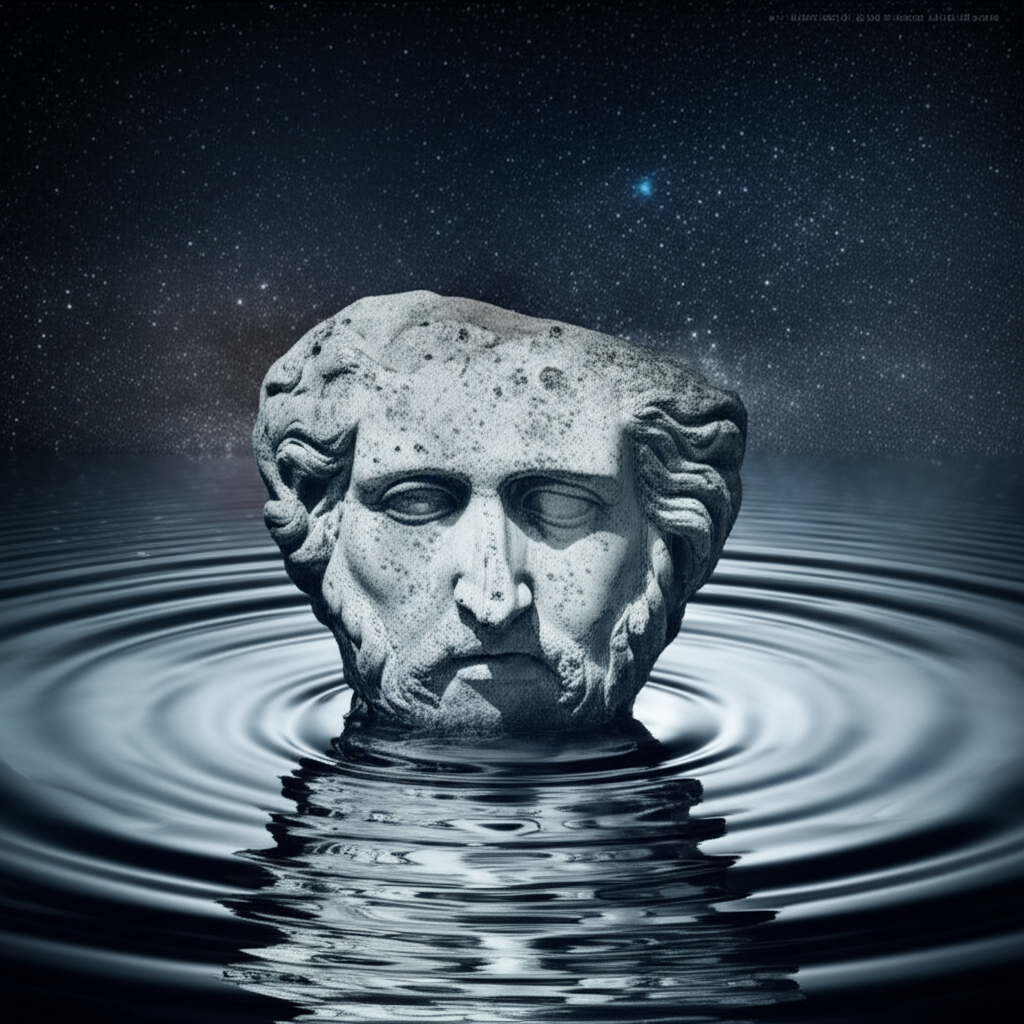 within a cosmic, perhaps infinite, context (being). The interplay of solid form and ethereal reflection highlights the interplay of the concrete and the abstract in philosophical inquiry.)
Why This Distinction Continues to Resonate
Understanding the distinction between Being and Existence is not merely an intellectual exercise. It profoundly impacts how we approach fundamental questions:
- Metaphysics: How do we understand the ultimate nature of reality? Is it fundamentally composed of existing things, or is there a deeper ground of Being?
- Epistemology: How do we gain knowledge? Do we know things primarily through their existence, or through grasping their essence or Being?
- Ethics and Human Condition: If existence precedes essence, what are our responsibilities? How do we define meaning in a world where our Being is not predetermined?
This distinction invites us to look beyond the surface of what merely is and to delve into the profound depths of what it means to be. It pushes us to question, to contemplate, and to engage with the world and our place within it with greater intellectual rigor and philosophical insight.
Further Exploration: YouTube Suggestions
-
📹 Related Video: ARISTOTLE ON: The Nicomachean Ethics
Video by: The School of Life
💡 Want different videos? Search YouTube for: "Heidegger Being and Time explained"
-
📹 Related Video: EXISTENTIALISM: The Philosophy of Freedom
Video by: The School of Life
💡 Want different videos? Search YouTube for: "Existentialism vs Ontology difference"