

Unpacking the Essence: The Philosophical Distinction Between Art and Utility (Labor)
At planksip, we often grapple with concepts that seem intuitively clear but become complex upon closer examination. One such concept is the fundamental distinction between art and utility, or labor. While both involve human creativity and effort, their core purpose and value often diverge significantly. This article aims to provide a clear definition of each, exploring why differentiating them isn't merely an academic exercise but crucial for understanding human endeavor, value, and the very nature of creation. We'll delve into the philosophical underpinnings, drawing insights from the rich tapestry of the Great Books of the Western World, to illuminate why a tool, no matter how beautifully crafted, serves a different master than a masterpiece.
The Defining Lines: What is Art? What is Utility?
To truly grasp the separation, we must first establish a working definition for each term.
The Realm of Art: Purpose Without Immediate Use
Art, in its purest philosophical sense, is often understood as creation primarily for its own sake – for aesthetic contemplation, emotional expression, or intellectual stimulation. Its value is intrinsic, residing in the experience it evokes or the ideas it communicates, rather than in its direct practical application.
- Intrinsic Value: Art is valued for being, not just for doing.
- Aesthetic Experience: It appeals to our senses, emotions, and intellect, often prompting reflection.
- Freedom of Expression: The artist's primary drive is often self-expression or the exploration of an idea.
- Contemplation: Art invites us to pause, observe, and interpret, offering a window into different perspectives.
- No Immediate Practical Function: A painting doesn't feed you, a symphony doesn't shelter you, yet their absence leaves us poorer.
Think of Plato's discussions on beauty and ideal forms; while he was wary of mimetic art's ability to distract from truth, he implicitly acknowledged art's unique power to move and shape the soul, independent of mundane needs.
The Domain of Utility and Labor: Purpose for Practical Use
Utility, on the other hand, refers to the quality of being useful or practical. Labor, in this context, is the effort expended to create something with utility. This realm is characterized by instrumental value – things are valued for what they do or the needs they fulfill.
- Instrumental Value: Utility is valued for its function, for what it achieves.
- Practical Application: It solves a problem, fulfills a need, or makes a task easier.
- Goal-Oriented Production: Labor is directed towards a specific, often predetermined, practical outcome.
- Efficiency and Functionality: The success of a utilitarian object or act is often measured by how well it serves its purpose.
- Meeting Needs: From agriculture to architecture, the focus is on sustaining life and improving living conditions.
Aristotle, in his Nicomachean Ethics, distinguishes between poiesis (making or production, often with an end product separate from the activity) and praxis (action or doing, where the end is in the activity itself). While poiesis can include art, it also encompasses craft and production aimed at utility. The craftsman making a chair is engaged in poiesis with a clear utilitarian goal.
The Overlap and The Essential Distinction
Here's where it gets interesting, and sometimes confusing. Many objects possess both aesthetic qualities and practical functions. A beautifully designed chair, a well-crafted tool, or an elegant piece of architecture can be admired for its form while serving its purpose. So, where does the distinction lie?
The key is often in the primary intention and the ultimate value we place on the object or activity.
| Feature | Art (Primary Intention) | Utility/Labor (Primary Intention) |
|---|---|---|
| Core Purpose | Aesthetic contemplation, expression, meaning | Practical function, problem-solving, need-fulfillment |
| Value System | Intrinsic, experiential | Instrumental, functional |
| Measurement | Impact, originality, beauty, depth | Efficiency, effectiveness, reliability |
| Motivation | Creative impulse, exploration, communication | Necessity, improvement, sustenance |
| End Goal | The experience itself, the idea conveyed | The practical result, the fulfilled need |
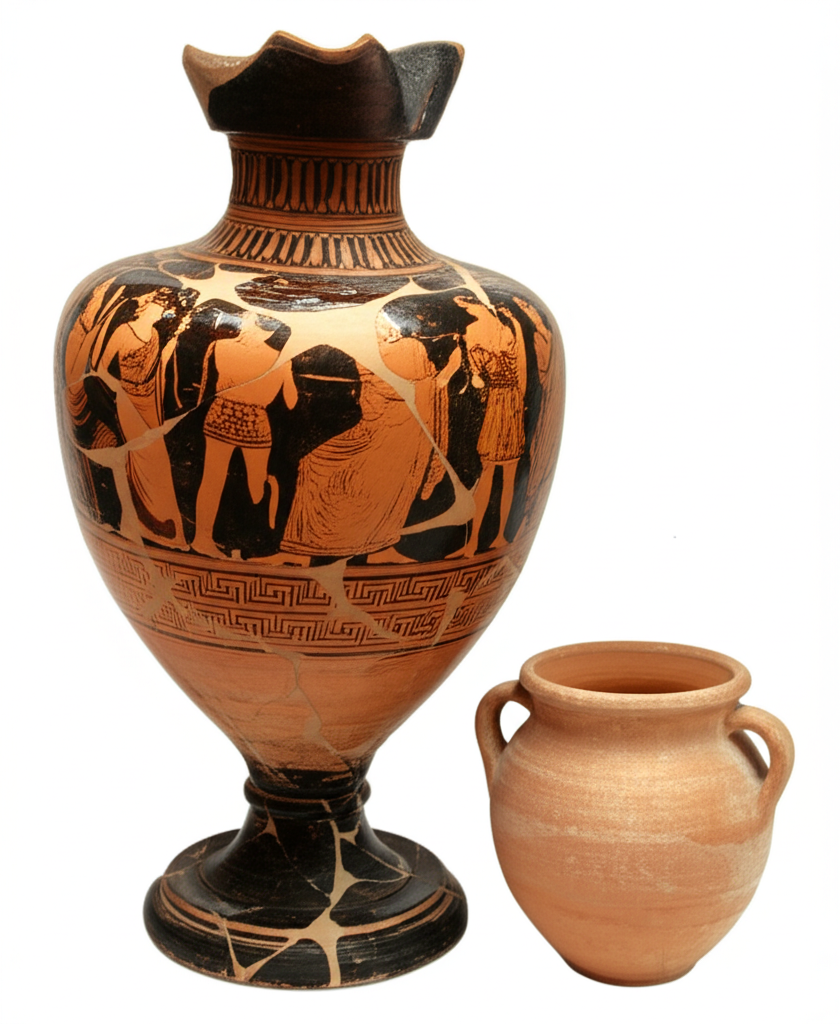
Consider a master carpenter from the medieval guilds, whose work might be discussed in the Great Books. He crafts a sturdy table (utility). He might also carve intricate designs into its legs (artistic embellishment). The table's primary definition is utilitarian – to hold things. The carving, while part of the table, serves an aesthetic purpose. If the carving were removed and displayed alone, it would be art. If the table were so elaborately carved that it became unusable, its utility would diminish, and its artistic merit would rise, shifting its primary classification.
Why Does This Distinction Matter?
Recognizing the distinction between art and labor is not just an academic exercise; it has profound implications for how we:
- Value Human Endeavor: It helps us appreciate different forms of human creativity and effort, acknowledging that not all value can be quantified by practical output or monetary gain.
- Understand Societal Roles: It informs our understanding of the roles of artists, artisans, and laborers within a community, each contributing uniquely to the human experience.
- Critique and Appreciate: It provides a framework for critical analysis, allowing us to judge a work of art by aesthetic criteria and a utilitarian object by functional criteria, without conflating the two.
- Preserve Culture: It highlights the importance of preserving both functional knowledge (crafts, engineering) and expressive culture (fine arts) as distinct but equally vital components of human heritage.
- Define Human Flourishing: As philosophers from Aristotle to Kant have explored, a truly flourishing life often involves more than just meeting basic needs; it also encompasses the pursuit of beauty, meaning, and self-expression – the very essence of art.
Conclusion: A Differentiated Appreciation
The distinction between art and utility (labor) is fundamental to a nuanced understanding of human creation. While the lines can blur, and beautiful craftsmanship often elevates utility, the core philosophical definition rests on primary intention and ultimate value. Art seeks to move, to express, to be; utility seeks to serve, to function, to do. By appreciating this difference, we not only gain clarity in our philosophical discourse but also cultivate a richer, more comprehensive appreciation for the diverse tapestry of human ingenuity and purpose.
📹 Related Video: PLATO ON: The Allegory of the Cave
Video by: The School of Life
💡 Want different videos? Search YouTube for: ""Plato on Art and Beauty Philosophy""
📹 Related Video: ARISTOTLE ON: The Nicomachean Ethics
Video by: The School of Life
💡 Want different videos? Search YouTube for: ""Aristotle Techne and Poiesis Explained""