

Bridging the Chasm: The Enduring Distinction Between Art and Science
The distinction between art and science is one of the most fundamental discussions in the philosophy of knowledge. While both endeavors represent humanity's innate drive to understand, interpret, and shape the world around us, their methods, aims, and the very nature of the knowledge they produce diverge significantly. This article explores these core differences, drawing upon the rich intellectual heritage found within the Great Books of the Western World, to illuminate why, despite occasional overlaps, these two disciplines remain distinct yet equally vital pillars of human inquiry.
The Divergent Aims: Understanding vs. Experience
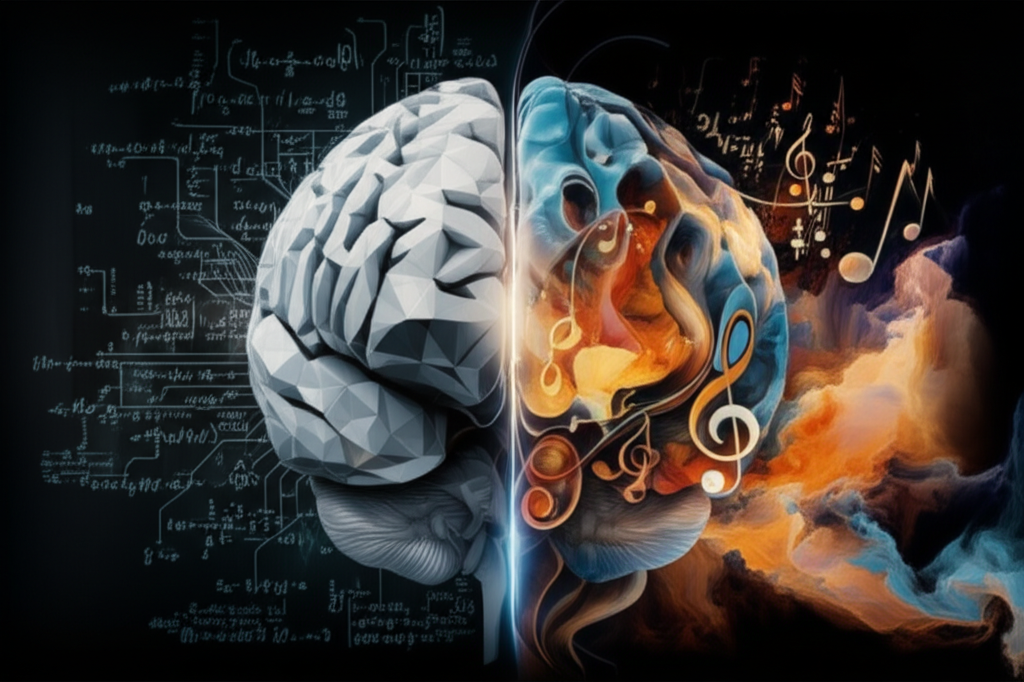
At their heart, art and science pursue different ultimate goals. Science, as epitomized in works like Aristotle's Physics or the astronomical observations discussed in Ptolemy's Almagest, fundamentally seeks to understand the natural world through empirical observation, logical deduction, and the formulation of universal laws. Its aim is to explain how things work, to predict phenomena, and to build a coherent, verifiable model of reality. The knowledge it yields is objective, testable, and aims for universal applicability.
Art, on the other hand, as explored in Plato's Ion or Aristotle's Poetics, is often concerned with expression, interpretation, and the evocation of experience. Its aim is not necessarily to explain the world but to represent it, to explore the human condition, to challenge perceptions, or to create beauty. The knowledge derived from art is often subjective, experiential, and deeply personal, resonating with our emotions, intuitions, and sense of meaning. It seeks to tell us what it means to be human, to live, to perceive.
Aims Compared:
- Science:
- Goal: Objective explanation, prediction, discovery of universal laws.
- Focus: The external world, quantifiable data, causality.
- Output: Theories, models, verifiable facts, technological applications.
- Art:
- Goal: Subjective expression, interpretation, evocation of experience, creation of meaning.
- Focus: The internal world, human experience, aesthetics, emotion.
- Output: Works that inspire, challenge, reflect, and emotionally connect.
Methodologies and Modes of Inquiry
The paths artists and scientists traverse to reach their respective goals are equally distinct. Scientific methodology, refined over centuries and central to the Enlightenment thinkers like Francis Bacon, emphasizes systematic observation, experimentation, hypothesis testing, and rigorous analysis. It demands falsifiability – the possibility of proving a theory wrong – and relies on replication and peer review to build consensus and ensure validity. The scientific process is iterative, self-correcting, and strives for impartiality.
Artistic methodology, conversely, is far less standardized and often relies on intuition, imagination, and personal vision. From the meticulous craft of a Renaissance painter to the spontaneous improvisation of a musician, the artistic process is deeply intertwined with creativity and subjective interpretation. While technique and discipline are crucial, the ultimate measure of an artwork's success often lies in its ability to resonate, provoke thought, or move an audience, rather than its adherence to empirical verification.
Methodological Differences:
| Feature | Science | Art |
|---|---|---|
| Primary Tool | Experimentation, Observation, Logic | Intuition, Imagination, Skill, Emotion |
| Verification | Empirical evidence, Falsifiability | Aesthetic resonance, Cultural impact |
| Process | Systematic, Analytical, Replicable | Creative, Expressive, Unique |
| Truth Claim | Objective, Universal, Provisional | Subjective, Interpretive, Evocative |
The Nature of Knowledge: Objective Laws vs. Experiential Insight
The fundamental distinction ultimately lies in the nature of the knowledge each discipline seeks to impart. Scientific knowledge is propositional – it asserts facts about the world that can be true or false, such as "E=mc²" or "the Earth orbits the Sun." This knowledge is cumulative, building upon previous discoveries to refine our understanding of objective reality. It is the kind of knowledge that allows us to build bridges, cure diseases, and send rockets to space.
Artistic knowledge, however, is often more akin to understanding or insight. It's not about propositional truths but about deepening our perception, expanding our empathy, or revealing new perspectives on the human condition. When we read Shakespeare, listen to Beethoven, or gaze upon a Rembrandt, we gain a form of knowledge that is qualitative, emotional, and often ineffable. It teaches us about love, loss, beauty, and despair in ways that scientific equations cannot. It informs our spirit and our subjective experience of being.
Intersections and Complementarity
Despite their clear distinction, art and science are not entirely alien to one another. Throughout history, they have often influenced and inspired each other. Scientific illustration, for instance, demands artistic skill to accurately render complex biological structures. The aesthetic principles of design are crucial in engineering and architecture. Conversely, scientific discoveries, from the vastness of the cosmos to the intricacies of DNA, have often served as profound inspirations for artistic creation. Think of the awe-inspiring astronomical maps of the Renaissance or the abstract art inspired by quantum physics.
Figures like Leonardo da Vinci perfectly embody a historical period where the lines were blurred, yet even his scientific notebooks and artistic masterpieces, while often informing each other, served different purposes and employed different methodologies for their respective goals. The distinction isn't about superiority but about recognizing their unique and irreplaceable contributions to the full spectrum of human knowledge and flourishing. Both are essential for a complete and rich understanding of our existence.
YouTube Video Suggestions:
-
📹 Related Video: ARISTOTLE ON: The Nicomachean Ethics
Video by: The School of Life
💡 Want different videos? Search YouTube for: "The Art of Science vs The Science of Art"
-
📹 Related Video: PLATO ON: The Allegory of the Cave
Video by: The School of Life
💡 Want different videos? Search YouTube for: "Neil deGrasse Tyson on Art and Science"