

Bridging the Chasm: Unpacking the Distinction Between Art and Science
While both Art and Science represent fundamental modes of human inquiry and creation, their core definition, methodologies, and ultimate aims diverge significantly. Science systematically seeks objective knowledge and universal truths through empirical observation and verifiable experimentation, aiming to understand the world as it is. Art, conversely, explores subjective experience, emotion, and interpretation, often creating new realities or perspectives that resonate on a personal, aesthetic, or emotional level. Understanding this distinction is crucial for appreciating the unique contributions each makes to our comprehensive grasp of existence.
Two Paths to Understanding: Defining Our Terms
As a species, we are driven by an insatiable curiosity – a profound urge to understand the world around us and our place within it. For millennia, this quest for knowledge has manifested primarily through two powerful, yet often contrasted, human endeavors: Art and Science. While they sometimes intertwine, their fundamental definition and operational principles offer a rich landscape for philosophical exploration.
Let's begin by considering their foundational approaches.
The Scientific Lens: Objective Truth and Empirical Inquiry
Science, at its heart, is a systematic enterprise that builds and organizes knowledge in the form of testable explanations and predictions about the universe. It is characterized by:
- Objectivity: Striving to eliminate personal bias, focusing on observable, measurable phenomena.
- Empiricism: Relying on evidence gathered through observation or experimentation.
- Verifiability: Theories and hypotheses must be testable and repeatable by others.
- Universality: Seeking principles and laws that apply universally, independent of individual perspective.
Think of the scientific method – formulating hypotheses, conducting experiments, analyzing data, and drawing conclusions. This process, championed by figures from Aristotle's systematic observations to Bacon's inductive reasoning, as explored in the Great Books of the Western World, aims for a singular, verifiable truth. The knowledge gained is propositional: facts about the world.
The Artistic Gaze: Subjective Experience and Creative Expression
Art, on the other hand, is a much broader and more fluid concept, often defying rigid definition. It is primarily concerned with human expression, emotion, aesthetics, and the creation of forms that evoke a response. Key aspects include:
- Subjectivity: Deeply rooted in individual experience, interpretation, and emotional resonance.
- Expression: A means for artists to communicate inner thoughts, feelings, or observations.
- Interpretation: Invites diverse readings and personal connections from its audience.
- Aesthetics: Often, though not exclusively, concerned with beauty, form, and sensory experience.
From the epic poetry of Homer to the dramatic works of Shakespeare, from the philosophical dialogues of Plato (who famously grappled with the nature of imitation and truth in Art) to the intricate tapestries of medieval Europe, Art presents us not with facts, but with experiences, perspectives, and emotional truths. The knowledge here is often experiential, intuitive, or emotive.
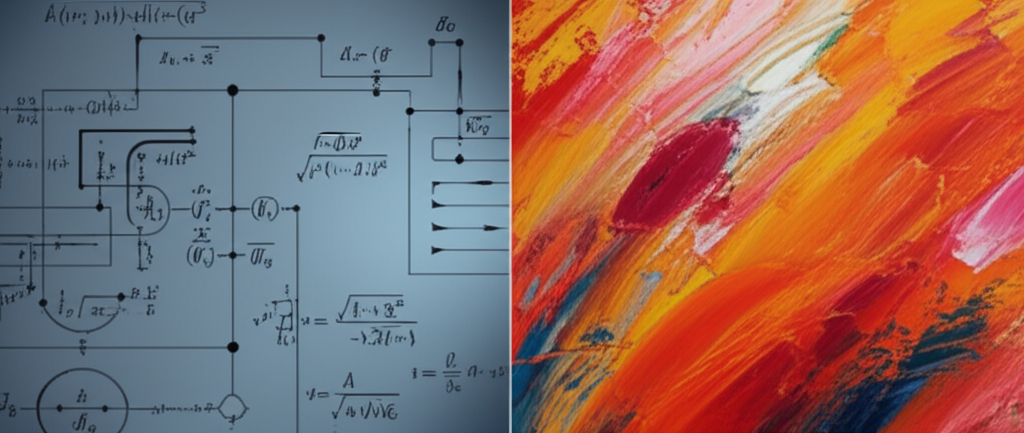
Points of Divergence: Goals, Methods, and Outcomes
To truly appreciate the distinction, let's consider a direct comparison:
| Feature | Science | Art |
|---|---|---|
| Primary Goal | To explain, predict, and understand the objective world. | To express, evoke, interpret, and create subjective experience. |
| Methodology | Empirical observation, experimentation, logical deduction, peer review. | Intuition, imagination, skill, interpretation, emotional response. |
| Nature of Truth | Objective, verifiable, universal, factual. | Subjective, interpretive, experiential, emotional. |
| Knowledge Type | Propositional (facts, theories, laws). | Experiential, aesthetic, emotive, philosophical. |
| Value Derived | Utility, understanding, technological advancement. | Beauty, insight, catharsis, cultural commentary, emotional connection. |
| Relation to Reality | Seeks to describe and model existing reality. | Often creates new realities or reinterprets existing ones. |
This table, of course, simplifies a nuanced relationship. There are scientific illustrations that are undeniably artistic, and artistic endeavors that employ scientific principles (e.g., perspective in Renaissance painting, acoustics in music). Yet, their definitions of purpose remain distinct.
The Ancient Roots of Distinction
Even in the classical world, as we read in the Great Books, philosophers wrestled with these ideas. While they didn't use our modern terms "science" and "art" with the same precise boundaries, the seeds of distinction were sown. Aristotle, for instance, differentiated between episteme (scientific knowledge, theoretical understanding) and techne (skill, craft, practical knowledge often associated with artistic creation). Plato, in his Republic, questioned the mimetic nature of Art, viewing it as an imitation of an imitation, thus less true than the Forms, which were the ultimate objects of philosophical and proto-scientific inquiry. These early philosophical explorations highlight a persistent human need to categorize and understand different ways of knowing.
Why Does the Distinction Matter?
Understanding the distinction between Art and Science isn't about declaring one superior to the other. It's about recognizing the unique and invaluable contributions each makes to the entirety of human knowledge and experience. Science offers us the blueprint of the universe, the definition of its physical laws, and the means to manipulate it. Art provides the color, the emotion, the subjective resonance that gives meaning to our existence within that universe. Both are essential for a complete and rich understanding of what it means to be human.
YouTube Suggestions:
-
📹 Related Video: PLATO ON: The Allegory of the Cave
Video by: The School of Life
💡 Want different videos? Search YouTube for: ""The Art and Science of Leonardo da Vinci""
2. ## 📹 Related Video: What is Philosophy?
Video by: The School of Life
💡 Want different videos? Search YouTube for: ""Philosophy of Science vs Philosophy of Art""


