

Unraveling the Threads: The Philosophical Distinction Between Art and Poetry
Summary:
While often intertwined and sharing a common wellspring of human creativity, the distinction between Art and Poetry is a rich ground for philosophical inquiry. This article aims to clarify their fundamental definitions, exploring how their chosen mediums, modes of expression, and sensory engagements carve out unique territories in the landscape of human endeavor. Drawing upon classical thought, we will navigate the subtle yet significant differences that allow us to appreciate each for its inherent nature, even as they frequently inform and inspire one another.
The Elusive Definition of Art: A Broad Canvas of Human Expression
The definition of Art is notoriously broad, encompassing a vast spectrum of human creations. From the earliest cave paintings to contemporary digital installations, art traditionally refers to the expression or application of human creative skill and imagination, typically producing works to be appreciated primarily for their beauty or emotional power. However, "art" also extends to performance (dance, theatre), sound (music), and even conceptual forms.
Philosophically, discussions on art often trace back to thinkers found in the Great Books of the Western World. Plato, for instance, viewed art primarily as mimesis, an imitation of reality, often several steps removed from ultimate truth. Aristotle, in contrast, saw art, particularly tragedy, as having a valuable cathartic effect and a means of understanding universal truths through particular instances. What unites these diverse perspectives is the medium – be it paint, stone, sound, or movement – that allows for a sensory engagement, appealing to sight, sound, or touch. Art's power lies in its capacity to transform materials into meaningful expressions, engaging us directly through our senses.
Poetry: The Art of Language and Imagination
Poetry, on the other hand, carves its niche through a singular, yet incredibly versatile, medium: language. It is an art form where human language is used for its aesthetic and evocative qualities in addition to, or in lieu of, its ostensible meaning. Poetry employs rhythm, meter, rhyme, imagery, metaphor, and other literary devices to evoke emotions, convey ideas, or tell stories in a concentrated and imaginative way.
From Homer's epics to Sappho's lyrics, the definition of poetry has always centered on its unique manipulation of words. As explored in Aristotle's Poetics, poetry, like other arts, is a form of imitation, but its specific power lies in its capacity to construct worlds, explore inner landscapes, and distill complex human experiences into precise, resonant linguistic structures. It appeals primarily to the intellect and the imagination, often through an internal "hearing" or visualization prompted by the words themselves. Poetry, then, is the art of language, where words are not merely vehicles for information but are crafted objects in themselves.
The Core Distinction: Medium and Sensory Engagement
The most salient distinction between Art (in its broader sense) and Poetry lies in their primary medium and the way they engage our senses.
- Art (Broad Sense): Often relies on tangible, visual, auditory, or performative mediums. A painting is seen, a sculpture is felt (visually, if not physically), a piece of music is heard, a dance is witnessed. Its impact is often immediate and multi-sensory. The artist works with physical materials or movements.
- Poetry: Exclusively uses language – written or spoken words. Its sensory engagement is primarily intellectual and imaginative. While spoken poetry has an auditory component, the core experience of poetry, even when read silently, involves the mind's processing of language, conjuring images, sounds, and feelings internally. The poet works with the abstract, symbolic nature of words.
Consider the act of creation: a painter mixes pigments, a sculptor molds clay, a musician arranges notes. A poet, however, arranges words, choosing them not just for their dictionary meaning but for their sound, rhythm, etymology, and associative power. This fundamental difference in medium leads to distinct modes of expression and reception.
Overlaps and Intersections: Where the Lines Blur
It is crucial to acknowledge that the distinction is not always absolute. Poetry is often referred to as an "art form," recognizing its place within the broader category of creative expression. Furthermore, there are fascinating overlaps where the boundaries playfully blur:
- Visual Poetry: Where the arrangement of words on a page forms a visual image (e.g., concrete poetry), making the text itself an object of visual art.
- Ekphrasis: Poetry that describes or responds to a work of visual art, translating one artistic medium into another.
- Performance Poetry: Where the vocal delivery, intonation, and physical presence of the poet become part of the artistic experience, bridging the gap between linguistic and performative art.
These instances highlight that while their primary modes are distinct, Art and Poetry frequently enrich each other, demonstrating the interconnectedness of human creativity and the fluid nature of artistic categories.
Philosophical Perspectives on Their Relationship
Throughout the Great Books of the Western World, philosophers have grappled with the nature of art and poetry, often placing poetry in a unique, sometimes elevated, position within the arts.
- Plato, despite his criticisms of art as imitation potentially misleading us from truth, recognized the profound persuasive power of poetry, particularly in shaping character and civic virtue (or vice). He saw its ability to move the soul as both a gift and a potential danger, necessitating careful censorship in his ideal republic.
- Aristotle, in his Poetics, systematically analyzed tragedy and epic poetry, establishing critical concepts like plot, character, thought, diction, song, and spectacle. He viewed poetry not merely as imitation but as a means to explore universal truths and provide catharsis, an emotional purging beneficial to the audience. For Aristotle, poetry was more philosophical and serious than history because it dealt with what might happen (the universal), rather than just what has happened (the particular).
- Hegel, in his Aesthetics, positioned poetry as the most supreme of the romantic arts, precisely because its medium (language) is the most spiritual and abstract, allowing for the purest expression of the Idea. Unlike painting or sculpture, which are tied to physical representation, poetry can transcend the material, making it a direct conduit for thought and spirit.
These thinkers, each in their own way, underline the specific attributes that give poetry its unique character and profound impact, even when acknowledging its place within the broader domain of art.
Summary of Distinctions
To further clarify the distinction, let's consider a comparative summary of their key characteristics:
| Feature | Art (Broad Sense) | Poetry |
|---|---|---|
| Primary Medium | Visual (paint, sculpture, photography), Auditory (music), Physical (dance), Digital | Language (words, sentences, stanzas, sounds) |
| Sensory Focus | Primarily external senses: Sight, Sound, Touch | Primarily internal: Intellect, Imagination, Emotional resonance |
| Expression | Direct representation, abstract forms, performance, symbolic imagery | Evocative language, metaphor, rhythm, symbolism, narrative, lyrical modes |
| Tangibility | Often physical objects or observable performances | Primarily conceptual/linguistic; manifests physically as text or sound waves |
| Core Definition | Expression of skill/imagination through diverse sensory mediums | The art of language used for its aesthetic and evocative qualities |
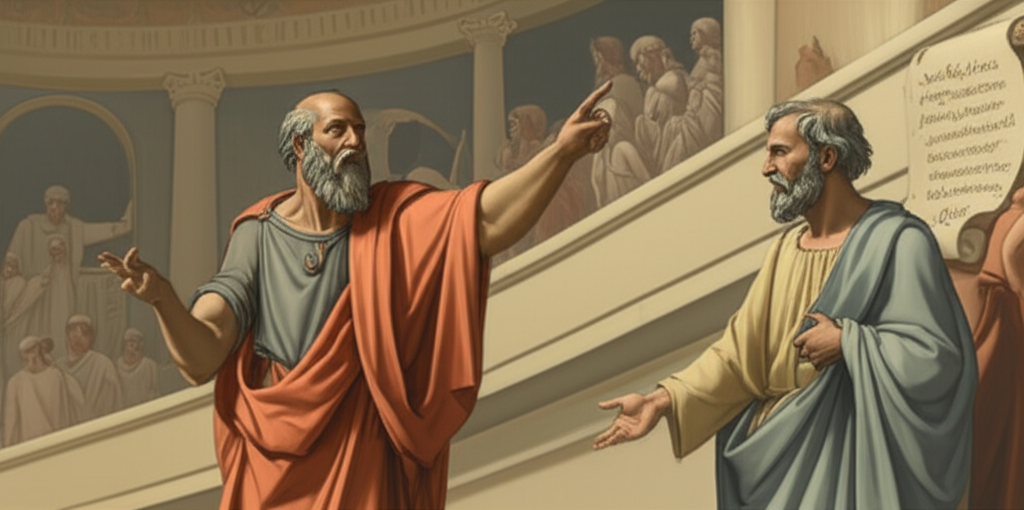
Conclusion: A Shared Pursuit, Distinct Paths
The distinction between Art and Poetry, while nuanced, is philosophically significant. While poetry is undeniably an art form, its unique reliance on language as its primary medium sets it apart from many other artistic expressions. Understanding this definitional difference allows us to appreciate the specific ways each enriches human experience – one through a tapestry of sensory engagement with diverse materials, the other through the profound, evocative power of carefully chosen words. Both are essential pillars of human culture, reflecting our enduring quest for meaning, beauty, and connection, each navigating distinct paths towards the same transcendent horizon of human understanding.
📹 Related Video: PLATO ON: The Allegory of the Cave
Video by: The School of Life
💡 Want different videos? Search YouTube for: ""Aristotle Poetics explained" or "Plato's philosophy of art and mimesis""
📹 Related Video: What is Philosophy?
Video by: The School of Life
💡 Want different videos? Search YouTube for: ""What is poetry philosophy" or "Hegel Aesthetics explained""