

The Unveiling: Disentangling Art and Poetry
While often intertwined in the tapestry of human creativity, the distinction between art and poetry is not merely semantic but deeply philosophical. At its core, this essay argues that while both are profound forms of human expression designed to evoke, communicate, and transform, their fundamental definition diverges primarily in their medium, mode of engagement, and historical philosophical reception. Understanding this separation allows for a richer appreciation of their unique powers and contributions to our intellectual and emotional landscape.
Defining Our Terms: The Core Identities
Before we can dissect their differences, a clear understanding of what we mean by 'art' and 'poetry' is essential.
What is Art? A Canvas of Possibility
Art, in its broadest sense, refers to the expression or application of human creative skill and imagination, typically in a visual form such as painting, sculpture, music, or architecture, producing works to be appreciated primarily for their beauty or emotional power. From the ancient Greek technē, encompassing craft and skill, to modern conceptual pieces, art engages our senses through diverse physical media. Its definition is expansive, covering a spectrum of human endeavors that shape, color, sound, and form into meaningful experiences.
What is Poetry? The Word Made Flesh
Poetry, on the other hand, is a specific form of literary art that uses language—its sounds, rhythms, and meanings—to evoke emotions, ideas, or tell stories, often with an emphasis on imaginative and aesthetic qualities. It is a highly concentrated and structured form of linguistic expression, relying on metaphor, simile, imagery, and often meter and rhyme to achieve its effects. The very essence of poetry lies in its manipulation of words, transforming them from mere communicative tools into vehicles of profound aesthetic and intellectual experience.
The Medium is the Message: A Fundamental Distinction
The most immediate and apparent distinction lies in their primary medium of expression.
-
Art's Diverse Palette: Art can manifest through a myriad of physical forms. A sculptor works with stone, wood, or metal; a painter with pigment and canvas; a musician with sound waves; a dancer with the human body in motion. The sensory input is direct and often immediate—a visual spectacle, an auditory experience, a tactile form. The Great Books of the Western World often discuss art in terms of mimesis (Plato, Aristotle), where the artist imitates reality, or as a craft requiring specific skills and materials.
-
Poetry's Linguistic Core: Poetry, conversely, is inextricably bound to language. Its medium is words, arranged with deliberate intent. It operates through the abstract symbols of letters and sounds, which coalesce into meaning. While a poem might describe a visual scene, it does so through the reader's interpretation of language, not through direct visual representation. Aristotle's Poetics meticulously dissects the elements of poetic composition, focusing on plot, character, thought, diction, song, and spectacle, but always within the framework of linguistic narrative and dramatic presentation.
Modes of Expression: How They Speak to Us
Beyond the medium, their methods of conveying meaning and evoking response differ significantly.
| Feature | Art (Visual/Auditory) | Poetry (Linguistic) |
|---|---|---|
| Primary Medium | Visuals, sounds, physical forms, movement | Language (words, phrases, sentences) |
| Direct Engagement | Sensory (sight, sound, touch) | Intellectual and imaginative (through linguistic interpretation) |
| Ambiguity | Can be open to interpretation, often through symbolism | Often relies on deliberate ambiguity, metaphor, double meanings |
| Temporality | Can be instantaneous (a glance) or sustained (a performance) | Typically sequential (reading) but can be experienced as a whole |
| Representation | Often aims to represent or abstract reality directly | Represents reality through linguistic constructs and evocative imagery |
-
Art's Direct Impact: A painting can assault the senses with color and form, a sculpture demands physical presence, music directly affects mood. The communication is often non-verbal, relying on composition, aesthetics, and the emotional resonance of the sensory input. The definition of beauty, as explored by thinkers like Kant, often centers on this direct aesthetic judgment.
-
Poetry's Evocative Power: Poetry works through the delicate interplay of words. It conjures images in the mind, evokes feelings through rhythm and sound, and challenges intellect through complex metaphors and allusions. Its power lies not just in what it says, but how it says it—the choice of a single word can alter the entire emotional landscape of a stanza. Plato, despite his critique of poets in The Republic, acknowledged their persuasive and emotional power, even if he deemed it potentially dangerous for the ideal state.
Philosophical Underpinnings: Purpose and Perception
The philosophical traditions, particularly those found within the Great Books of the Western World, have often approached art and poetry with distinct lenses.
-
The Philosophy of Art: Discussions around art often revolve around aesthetics, beauty, truth, and imitation. Plato questioned the truth-value of art, seeing it as an imitation of an imitation, far removed from ideal forms. Aristotle, in contrast, viewed mimesis as a natural human impulse and a source of learning and pleasure, particularly in tragedy's ability to effect catharsis. Later philosophers like Hegel considered art's role in manifesting the Absolute Spirit, while others focused on its social and political functions.
-
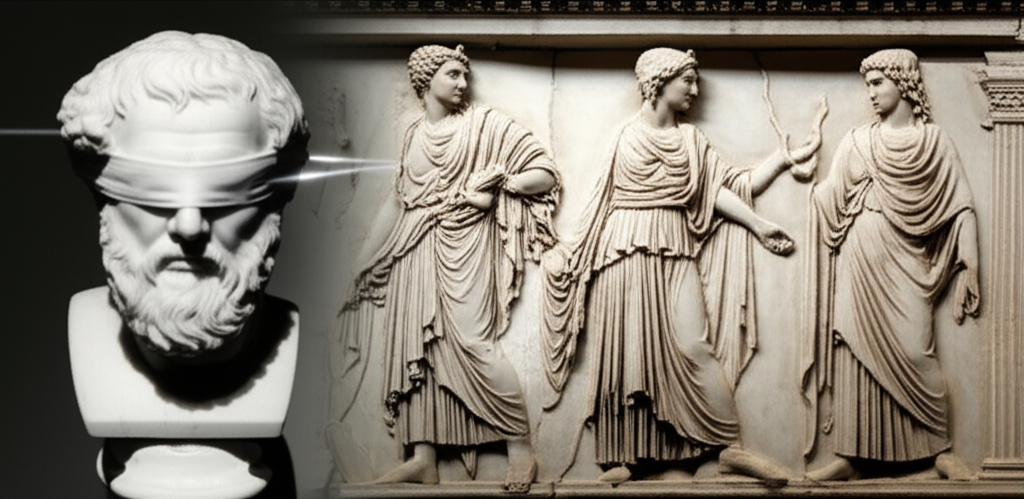
The Philosophy of Poetry: The philosophical engagement with poetry often zeroes in on language, rhetoric, inspiration, and moral instruction. Plato's famous critique wasn't against all art, but specifically against poets who, he argued, appealed to emotion over reason and presented false images of virtue. Aristotle's Poetics provided the foundational analysis of poetic structure and dramatic principles. The power of poetry to shape thought, inspire action, and articulate profound truths has been a recurring theme, often examined alongside rhetoric and logic. The very definition of truth, when conveyed poetically, becomes a subject of intense philosophical scrutiny.
Overlap and Intersections: Where the Lines Blur
While the distinction is clear, it is equally important to acknowledge the rich areas of overlap. A poem can be profoundly "artistic" in its structure and imagery, and a piece of visual art can be deeply "poetic" in its evocative quality and narrative depth. Concrete poetry blurs the lines by making the visual arrangement of words part of its meaning. Performance art often incorporates linguistic elements alongside visual and auditory ones. Music, often considered a form of art, shares with poetry an emphasis on rhythm, meter, and emotional evocation. These intersections demonstrate the fluidity of human creativity and remind us that categories are often tools for understanding, not rigid boundaries.
Conclusion: Appreciating the Nuance
Ultimately, the distinction between art and poetry is not about declaring one superior to the other, but about appreciating their unique strengths and the distinct ways they enrich human experience. Art, in its myriad forms, communicates through direct sensory engagement with diverse media, appealing to our aesthetic judgment and emotional responses. Poetry, by contrast, wields the unparalleled power of language, crafting meaning, emotion, and insight through the precise and evocative arrangement of words. Recognizing this fundamental definition and the philosophical considerations that underpin each allows us to engage with both, not as interchangeable entities, but as complementary pillars of our intellectual and cultural heritage.
YouTube Video Suggestions:
-
📹 Related Video: PLATO ON: The Allegory of the Cave
Video by: The School of Life
💡 Want different videos? Search YouTube for: ""Plato Aristotle Philosophy of Art Poetry Mimesis Catharsis""
2. ## 📹 Related Video: What is Philosophy?
Video by: The School of Life
💡 Want different videos? Search YouTube for: ""What is Poetry Philosophy of Language Metaphor""