

Navigating the Labyrinth: Discerning Opinion from Truth
The distinction between opinion and truth is not merely an academic exercise; it's a fundamental challenge that shapes our understanding of the world, our decisions, and our very pursuit of knowledge. While opinions are subjective beliefs, often influenced by personal experience, emotion, or limited information, truth aspires to an objective, verifiable reality that holds regardless of individual perspective. Understanding this crucial difference, and the dialectic methods we employ to bridge the gap, is essential for robust philosophical inquiry and informed living.
The Shifting Sands of Opinion
An opinion is, at its heart, a belief or judgment that is not necessarily based on fact or knowledge. It’s what we think or feel about something. Opinions are often:
- Subjective: They belong to an individual or a group.
- Variable: They can change over time, with new information, or simply with a change of mood.
- Untested: They don't always require rigorous proof or evidence.
- Influenced by Bias: Personal experiences, cultural background, and emotional states frequently color our opinions.
Consider the simple statement, "Chocolate ice cream is the best." This is a quintessential opinion. It reflects a personal preference, cannot be objectively proven or disproven, and holds no universal claim. While opinions are vital for personal expression and can even guide collective action, mistaking them for truth can lead to significant misunderstandings and flawed conclusions.
The Enduring Quest for Truth
In contrast, truth aims for a correspondence with reality. It seeks to describe things as they objectively are, independent of human perception or sentiment. Philosophers throughout the ages, from the ancient Greeks whose works fill the Great Books of the Western World to contemporary thinkers, have grappled with its nature. While definitions vary, common characteristics of truth include:
- Objectivity: It exists independently of our beliefs or desires.
- Universality: If something is true, it is true for everyone, everywhere (at least within its specific context).
- Verifiability: It can, in principle, be supported by evidence, logic, or empirical observation.
- Invariance: It does not change based on who believes it or how many believe it.
For instance, "The Earth revolves around the Sun" is a truth established through scientific observation and verifiable evidence. It holds true regardless of whether one believes it or not. The pursuit of truth has driven scientific discovery, ethical frameworks, and our understanding of existence itself.
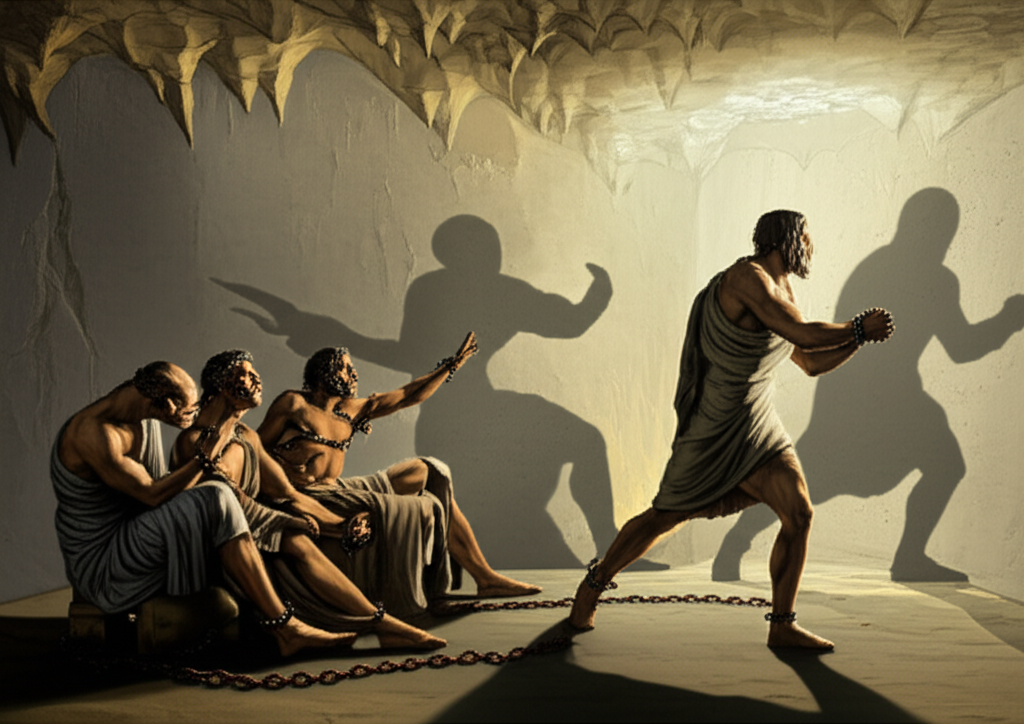
The Bridge: From Opinion to Knowledge
The journey from mere opinion to substantiated truth often passes through the realm of knowledge. Knowledge is not just accumulated facts; it is justified true belief. As explored in texts like Plato's Theaetetus, true knowledge requires:
- Belief: You must believe the proposition to be true.
- Truth: The proposition must actually be true.
- Justification: You must have good reasons or evidence for believing it to be true.
Without justification, a true belief might simply be a lucky guess or an unfounded opinion that happens to align with reality. The process of acquiring knowledge involves scrutinizing opinions, testing hypotheses, and seeking robust evidence to elevate a belief from mere personal conviction to a justified understanding of reality.
The Path: The Power of Dialectic
How do we move from the comfortable confines of our opinions towards the often-challenging landscape of truth? This is where the dialectic method becomes indispensable. Rooted deeply in the Socratic tradition found in the Great Books, dialectic is a method of inquiry where two or more people with differing points of view engage in a reasoned argument intended to establish the truth of a matter.
The process typically involves:
- Presentation of a Thesis: An initial opinion or proposition is stated.
- Antithesis/Critique: This proposition is challenged, questioned, and scrutinized through logical argument and counter-examples.
- Synthesis: Through this rigorous back-and-forth, a new, more refined understanding emerges, often closer to the truth than the initial thesis or antithesis.
| Aspect | Opinion | Truth |
|---|---|---|
| Nature | Subjective belief, personal judgment | Objective reality, verifiable fact |
| Basis | Emotion, personal experience, limited data | Evidence, logic, empirical observation |
| Stability | Variable, open to change | Invariant, universal (within its context) |
| Goal | Expression of preference | Correspondence with reality |
| Method | Assertion | Justification, proof, dialectic |
The dialectic isn't about winning an argument; it's about collaboratively chipping away at falsehoods and misconceptions to reveal a more accurate understanding. It forces us to confront our biases, examine our assumptions, and strengthen our justifications, making it a powerful tool in the pursuit of knowledge and truth.
The Ongoing Endeavor
The distinction between opinion and truth is not always clear-cut, and the journey from one to the other is often fraught with difficulty. Yet, the commitment to this distinction is what defines philosophical inquiry and critical thought. By embracing the rigor of dialectic and striving for justified knowledge, we move beyond the echoes of our own subjective chambers towards a more profound and shared understanding of existence.
📹 Related Video: PLATO ON: The Allegory of the Cave
Video by: The School of Life
💡 Want different videos? Search YouTube for: ""Plato's Allegory of the Cave explained philosophy""
📹 Related Video: SOCRATES ON: The Unexamined Life
Video by: The School of Life
💡 Want different videos? Search YouTube for: ""The Socratic Method and the search for truth""