

The Enduring Divide: Discerning Opinion from Truth
The human mind is a fascinating landscape, brimming with beliefs, convictions, and insights. Yet, not all that occupies our thoughts holds the same weight or validity. At the heart of philosophical inquiry, particularly as illuminated by the foundational texts within the Great Books of the Western World, lies the crucial distinction between Opinion and Truth. This article delves into this fundamental difference, exploring how we navigate the often-murky waters between subjective belief and objective reality, and why this discernment is not merely an academic exercise but a cornerstone of genuine Knowledge.
Understanding the Nature of Opinion
An Opinion is, at its core, a belief or judgment that rests on grounds insufficient to produce complete certainty. It is subjective, often influenced by personal experience, emotion, cultural background, and incomplete information. Opinions are plentiful and easy to form; everyone has them on nearly every conceivable topic, from the best coffee to the meaning of life.
Characteristics of Opinion:
- Subjectivity: Opinions are personal. What one person believes to be true, another may not, without either being necessarily "wrong" in their personal conviction.
- Variability: Opinions can change over time, often swayed by new information, personal growth, or shifting perspectives.
- Fallibility: An opinion can be mistaken. It does not necessarily align with reality.
- Lack of Universal Agreement: It is rare for opinions to command universal assent, precisely because they are not grounded in objective, verifiable evidence.
- Basis in Experience or Feeling: Opinions often arise from individual encounters, preferences, or emotional responses rather than rigorous logical deduction or empirical proof.
Consider, for example, the opinion that "classical music is superior to jazz." This is a matter of aesthetic preference, not an objective statement that can be proven or disproven by universal criteria.
The Pursuit of Truth
In stark contrast, Truth refers to that which is in accordance with fact or reality. It is an objective state of affairs, independent of individual perception or belief. The pursuit of truth has been the driving force behind much of philosophy, science, and intellectual endeavor throughout history. Philosophers from Plato, with his world of Forms, to Aristotle, with his emphasis on empirical observation and logical deduction, have grappled with the nature of truth and how humanity might apprehend it.
Characteristics of Truth:
- Objectivity: Truth exists independently of our beliefs or feelings. The Earth revolves around the Sun, regardless of whether anyone believes it or not.
- Universality: A truth, once established, should be universally applicable and verifiable under the same conditions.
- Invariance: Truth does not change based on personal preference or cultural context. While our understanding of truth may evolve, the truth itself remains constant.
- Verifiability/Demonstrability: Truths are often supported by evidence, logic, and consistent observation, allowing for verification by others.
- Coherence: Truths tend to cohere with other established truths, forming a consistent and logical framework of understanding.
For instance, "2 + 2 = 4" is a mathematical truth; "water is composed of hydrogen and oxygen" is a scientific truth. These statements are not subject to personal preference.
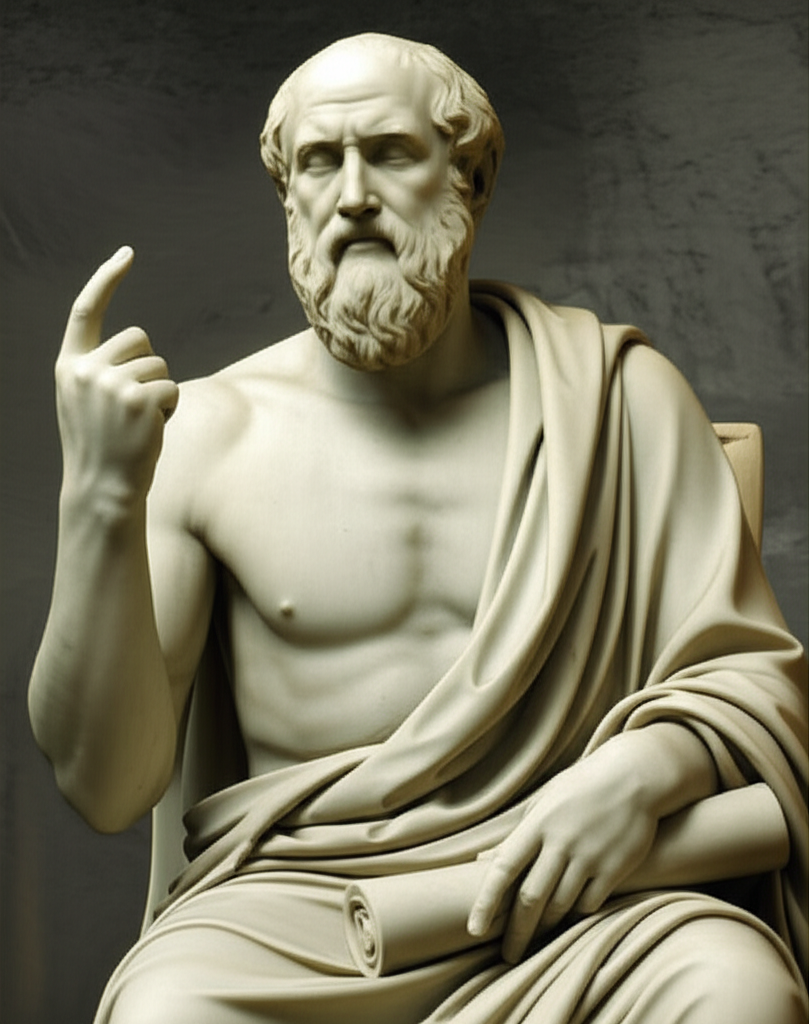
The Bridge to Knowledge: Dialectic and the Path Beyond Opinion
The journey from mere Opinion to genuine Truth is often facilitated by Knowledge. Knowledge is justified true belief; it is when our beliefs align with reality and are supported by sound reasoning or evidence. This transition is not always straightforward and often requires rigorous intellectual effort.
One of the most powerful tools for moving beyond opinion towards knowledge, as championed by figures like Socrates and Plato in the Great Books, is the Dialectic. The dialectical method involves a structured exchange of ideas through dialogue, questioning, and critical analysis. It aims to expose contradictions in arguments, clarify concepts, and ultimately arrive at a more robust understanding of truth.
The Dialectical Process:
- Presentation of an Opinion: An initial idea or belief is put forth.
- Questioning and Critique: Through rigorous questioning, the underlying assumptions, logical consistency, and evidentiary support of the opinion are examined.
- Identification of Contradictions/Flaws: Inconsistencies or weaknesses in the opinion are brought to light.
- Refinement or Rejection: The opinion is either refined to address the flaws or rejected in favor of a more coherent and consistent understanding.
- Emergence of a Stronger Proposition: The process ideally leads to a more truthful or well-justified belief, moving closer to knowledge.
Through this method, what begins as a subjective opinion can be tested against reason and evidence, gradually transforming into a more objective and verifiable understanding. It is the process of moving from the shadows of the cave (Plato's Allegory) towards the light of true understanding.
Why the Distinction Matters
The ability to distinguish between opinion and truth is paramount for several reasons:
- Informed Decision-Making: Basing decisions on truth rather than mere opinion leads to more effective and beneficial outcomes in personal life, governance, and science.
- Intellectual Integrity: Upholding this distinction fosters intellectual honesty and a commitment to rigorous inquiry.
- Effective Communication: Clear communication relies on understanding whether we are sharing subjective views or presenting objective facts.
- Societal Progress: Advancements in science, ethics, and social justice often stem from challenging prevailing opinions with verifiable truths.
- Avoiding Manipulation: Recognizing the difference helps individuals resist manipulation by rhetoric that presents opinions as facts.
In an age saturated with information, the capacity to critically assess claims and discern the difference between a well-reasoned, evidence-backed truth and a casually held, subjective opinion is more vital than ever. It is the very foundation upon which genuine understanding and wisdom are built.
Conclusion
The distinction between Opinion and Truth is a cornerstone of philosophical thought and a crucial skill for navigating the complexities of the world. While opinions are invaluable for expressing individuality and fostering debate, they must not be mistaken for the objective, universal, and verifiable nature of truth. The journey from one to the other, often guided by the Dialectic and the relentless pursuit of Knowledge, is what empowers us to build a more rational and well-understood reality. As readers of the Great Books of the Western World know, this quest is not just an intellectual exercise, but a lifelong endeavor to see the world as it truly is.
📹 Related Video: PLATO ON: The Allegory of the Cave
Video by: The School of Life
💡 Want different videos? Search YouTube for: ""Plato's Allegory of the Cave explained""
📹 Related Video: What is Philosophy?
Video by: The School of Life
💡 Want different videos? Search YouTube for: ""Epistemology: What is Knowledge?""