

The Unfolding Path to Understanding: Embracing the Dialectic Method of Philosophical Inquiry
The dialectic method stands as a cornerstone of philosophical inquiry, a time-honored approach to dissecting complex ideas and forging a path toward deeper knowledge. At its core, it is a dynamic process of reasoning through dialogue and critical examination, moving from assertion and counter-assertion to a more refined understanding. This article explores the essence, evolution, and enduring relevance of the dialectic, demonstrating why it remains indispensable for anyone genuinely committed to intellectual pursuit.
A Summary of Dialectical Engagement
The dialectic method is fundamentally a conversational or argumentative exchange between two or more people with differing viewpoints, designed to establish truth through reasoned argument. It involves the rigorous questioning of assumptions, the identification of contradictions, and the synthesis of opposing ideas into a more coherent and comprehensive understanding. Far from mere debate, the dialectic is a collaborative ascent towards knowledge, pushing the boundaries of individual thought through collective critical reasoning.
The Genesis of Philosophical Dialogue: Socratic and Platonic Dialectic
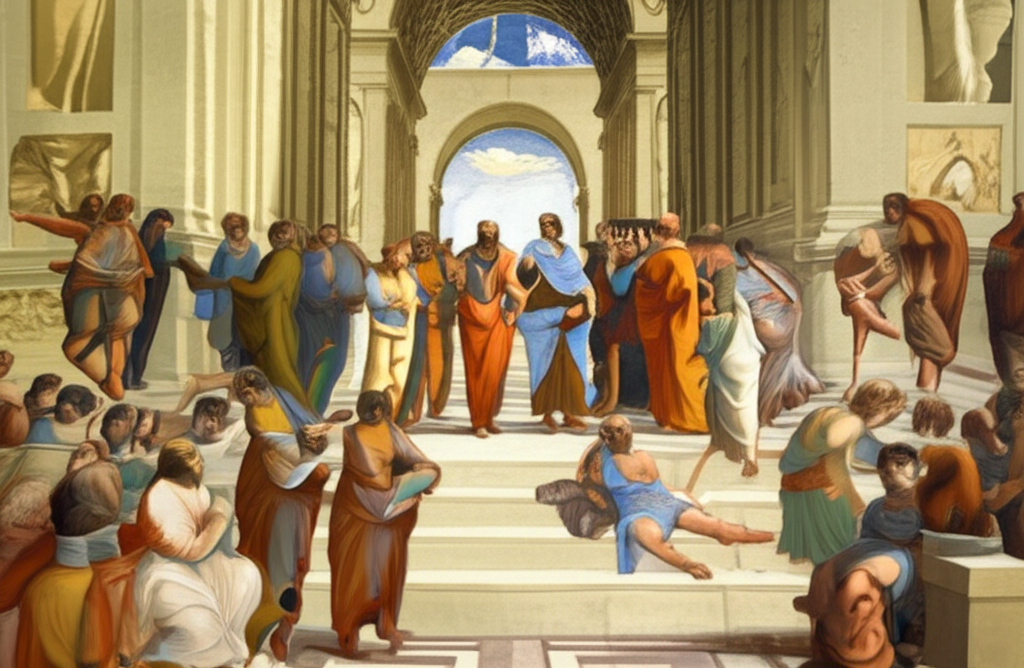
The roots of the dialectic method are deeply embedded in ancient Greek philosophy, most famously exemplified by Socrates and meticulously documented by his student, Plato, whose dialogues form a significant portion of the Great Books of the Western World.
The Socratic Elenchus: Unveiling Ignorance
Socrates' contribution, often termed the elenchus, was a method of questioning designed to expose contradictions in an interlocutor's beliefs, thereby leading them to recognize their own ignorance. This wasn't an act of humiliation but a necessary first step towards genuine knowledge. By systematically challenging definitions and assumptions, Socrates compelled individuals to scrutinize their unexamined opinions.
- Process:
- A question is posed (e.g., "What is justice?").
- An initial definition or belief is offered.
- Socrates asks further questions, drawing out implications of the definition.
- Contradictions or inconsistencies are revealed, demonstrating the inadequacy of the initial belief.
- The process repeats, leading to a deeper, albeit often aporetic (puzzling), understanding.
This relentless reasoning process was crucial for clearing away false knowledge and preparing the mind for true insight.
Plato's Ascent to the Forms: The Dialectic of Division and Collection
Plato further developed the dialectic beyond mere refutation. For him, the dialectic was the highest form of intellectual activity, the very method by which philosophers could ascend from the realm of sensory experience to grasp the eternal, unchanging Forms – the true objects of knowledge.
Platonic dialectic often involved:
- Collection: Bringing together diverse particulars under a single concept.
- Division: Systematically breaking down a broad concept into its constituent parts, identifying its true essence and its relation to other Forms.
Through this meticulous process of intellectual classification and synthesis, Plato believed one could achieve genuine understanding of reality itself, moving beyond mere opinion to certain knowledge.
The Dialectic in Modern Thought: Hegel's Grand Narrative
Centuries later, the dialectic found a profound reinterpretation in the work of Georg Wilhelm Friedrich Hegel, another titan from the Great Books of the Western World. For Hegel, the dialectic was not merely a method of argument but the fundamental structure of reality itself, a driving force behind history, thought, and the evolution of knowledge.
Thesis, Antithesis, Synthesis: A Dynamic Progression
Hegel's dialectic is often simplified to the triad of thesis, antithesis, and synthesis:
| Stage | Description | Outcome |
|---|---|---|
| Thesis | An initial idea, concept, or historical movement. | Represents an incomplete or partial truth. |
| Antithesis | The inherent contradiction or opposing force that arises from the thesis. | Challenges the thesis, revealing its limitations. |
| Synthesis | A resolution that incorporates elements of both thesis and antithesis. | A new, more comprehensive idea that transcends and preserves the previous stages. |
This synthesis then becomes a new thesis, perpetuating an ongoing process of development toward absolute knowledge. For Hegel, this dynamic interplay was how consciousness, society, and philosophy itself progressed. It's a continuous process of reasoning and self-correction, constantly refining our understanding of the world.
The Enduring Power of Dialectical Reasoning
The dialectic method, in its various forms, remains an indispensable tool for philosophical inquiry for several critical reasons:
- Fosters Critical Thinking: It demands rigorous analysis, challenging us to look beyond surface appearances and question deeply held beliefs.
- Promotes Intellectual Humility: By exposing contradictions, it teaches us the limits of our current knowledge and encourages openness to new perspectives.
- Drives Deeper Understanding: It moves beyond simple acceptance or rejection, seeking to integrate diverse viewpoints into a more nuanced and comprehensive knowledge.
- Combats Dogmatism: By its very nature, the dialectic resists static conclusions, encouraging continuous re-evaluation and the dynamic pursuit of truth.
In an age often characterized by fragmented information and echo chambers, the dialectic offers a powerful antidote, reminding us that genuine knowledge is often forged in the crucible of thoughtful engagement and robust reasoning. It is the intellectual engine that propels philosophy forward, ensuring that our search for understanding remains vibrant, challenging, and ever-evolving.
📹 Related Video: SOCRATES ON: The Unexamined Life
Video by: The School of Life
💡 Want different videos? Search YouTube for: ""Socratic Method Explained" and "Hegel Dialectic Explained""