

The Dialectic Method of Philosophical Inquiry: A Path to Deeper Understanding
The dialectic method stands as a cornerstone of philosophical inquiry, offering a rigorous and systematic approach to exploring complex ideas, challenging assumptions, and ultimately advancing human knowledge. At its heart, it is a process of reasoned argumentation and counter-argumentation, a dialogue between opposing viewpoints that seeks to transcend initial limited perspectives and arrive at a more comprehensive truth. This method, central to Western philosophy since antiquity, is not merely a debate technique but a powerful tool for critical reasoning and the construction of robust understanding.
Unveiling Truth Through Contention: An Introduction to the Dialectic
For centuries, the most profound thinkers have recognized that genuine understanding often emerges not from passive acceptance, but from active engagement with differing perspectives. The dialectic method formalizes this engagement, transforming intellectual conflict into a fertile ground for discovery. It is a dynamic process where a proposition (thesis) is met with an opposing argument (antithesis), and through a critical examination of both, a new, more refined understanding (synthesis) is forged. This synthesis then often becomes a new thesis, perpetuating the cycle of inquiry towards ever-deeper levels of knowledge.
The Socratic Genesis: Questioning as the Midwife of Knowledge
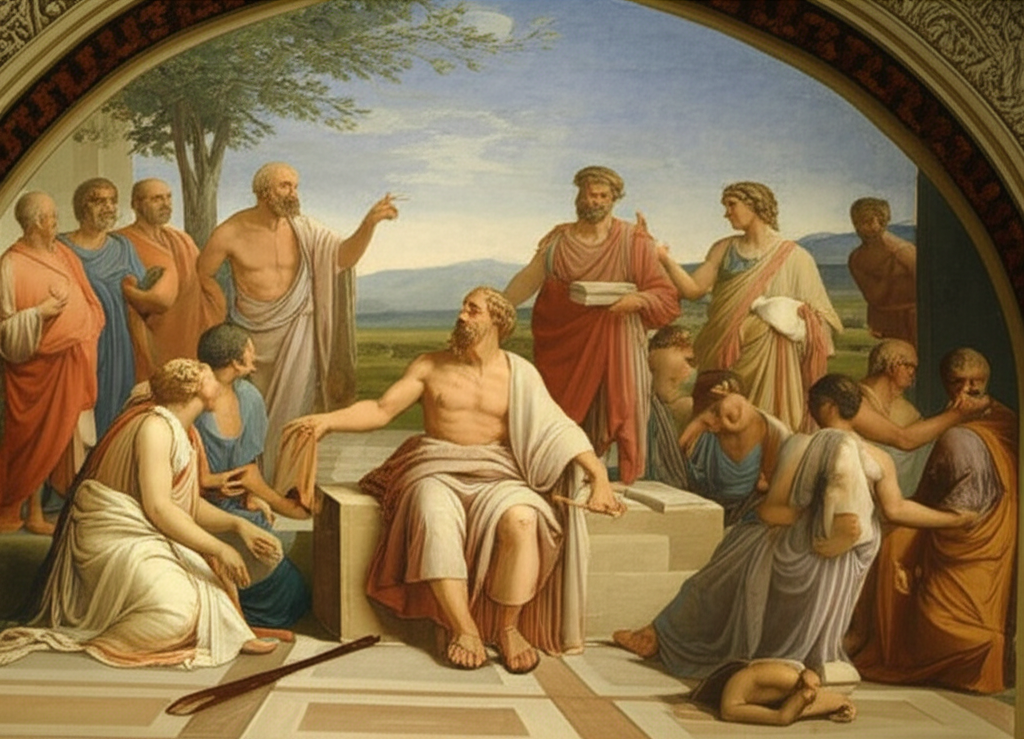
Our journey into the dialectic must begin with Socrates, the ancient Athenian philosopher whose relentless questioning laid the groundwork for this method. As chronicled in Plato's dialogues, Socrates engaged his interlocutors in a process of elenchus – a cross-examination designed to expose inconsistencies and fallacies in their beliefs. He didn't offer answers directly; instead, he skillfully guided individuals to discover the limitations of their own knowledge and, in doing so, to embark on a path toward genuine understanding.
- Socrates' Contribution:
- Elenchus: A method of questioning used to expose contradictions in an argument.
- Maieutic: The art of "midwifery," helping others "give birth" to their own ideas and truths.
- Purpose: To clear away false beliefs and ignorance, paving the way for true knowledge.
This Socratic method emphasized the importance of self-examination and the rigorous scrutiny of one's own presuppositions, a fundamental aspect of all subsequent dialectic traditions.
Plato's Refinement: The Ascent to the Forms
Plato, Socrates' most famous student, further developed the dialectic into a systematic method for ascending from mere opinion (doxa) to true knowledge (episteme) of the Forms. For Plato, the dialectic was the highest form of intellectual activity, enabling the philosopher to move beyond the changing, sensory world to grasp the unchanging, eternal essences – the Forms. Through rigorous intellectual dialogue and conceptual analysis, one could strip away the particularities of experience to arrive at universal truths.
The Platonic Dialectic in Practice:
Imagine a discussion about "justice." Initial definitions might be based on personal experience or societal norms. Through dialectic inquiry, these definitions are challenged, their inconsistencies revealed, and the participants are compelled to seek a more abstract, universal understanding of justice itself, moving closer to the Form of Justice.
Hegel and the Grand Synthesis: A Historical Unfolding
Centuries later, Georg Wilhelm Friedrich Hegel transformed the dialectic into a grand historical process. For Hegel, reality itself, and the history of human thought, unfolds dialectically. His famous triad of thesis, antithesis, and synthesis describes how an initial idea or state of affairs (thesis) inevitably generates its opposite (antithesis), and the tension between them leads to a higher, more complex resolution (synthesis). This synthesis then becomes a new thesis, driving the progression of spirit and knowledge through history.
Key Components of the Hegelian Dialectic:
| Component | Description | Example (Simplified) |
|---|---|---|
| Thesis | An initial proposition, idea, or state of affairs. | The idea of "Freedom" as individual liberty. |
| Antithesis | The direct opposition or negation of the thesis, revealing its limitations. | The idea that absolute individual liberty can lead to chaos and lack of order. |
| Synthesis | A new, higher level of understanding that reconciles the thesis and antithesis, incorporating elements of both. | The idea of "Ordered Freedom" where individual liberty is balanced by societal laws and responsibilities. |
Hegel's dialectic is a powerful framework for understanding not only philosophical development but also social, political, and cultural evolution, demonstrating how reasoning progresses through conflict and resolution.
The Enduring Power of Dialectical Reasoning
Today, the dialectic method remains an indispensable tool in philosophy and beyond. It underpins critical thinking, effective argumentation, and the pursuit of objective knowledge. Whether in academic discourse, legal arguments, scientific debate, or even everyday problem-solving, the ability to engage with opposing viewpoints, identify underlying assumptions, and synthesize new understandings is crucial.
The dialectic encourages:
- Intellectual Humility: Recognizing the limits of one's own knowledge.
- Critical Analysis: Scrutinizing arguments for logical fallacies and inconsistencies.
- Open-Mindedness: Willingness to consider and integrate diverse perspectives.
- Progressive Understanding: Moving beyond initial positions to more refined and robust conclusions.
It is through this structured engagement with difference that philosophy continues to push the boundaries of human reasoning and expand our collective knowledge.
📹 Related Video: SOCRATES ON: The Unexamined Life
Video by: The School of Life
💡 Want different videos? Search YouTube for: ""Socratic Method Explained""
📹 Related Video: What is Philosophy?
Video by: The School of Life
💡 Want different videos? Search YouTube for: ""Hegel Dialectic Philosophy""