

The Enduring Power of the Dialectic Method in Philosophical Inquiry
The pursuit of truth, the refinement of understanding, and the very progression of human thought owe an immeasurable debt to the dialectic method. As a central pillar of philosophy, this ancient yet perpetually relevant approach provides a rigorous framework for reasoning and the systematic acquisition of knowledge. It is not merely a conversational technique but a profound intellectual journey, one that has shaped the Western intellectual tradition from its very inception, as beautifully chronicled within the venerable pages of the Great Books of the Western World.
What is the Dialectic Method? A Summary
At its core, the dialectic method is a process of intellectual exchange or discourse between two or more people holding different points of view about a subject, who wish to establish the truth of the matter through reasoned arguments. It involves the critical examination of ideas, the identification of contradictions, and the subsequent synthesis of new, more robust conclusions. Far from a mere debate, it is a collaborative ascent towards deeper understanding, driven by logic and critical thought.
The Historical Roots: From Socrates to Hegel
The lineage of the dialectic is long and distinguished, evolving significantly across different philosophical epochs. Understanding its development is crucial to appreciating its multifaceted nature.
Socratic Elenchus: The Art of Questioning
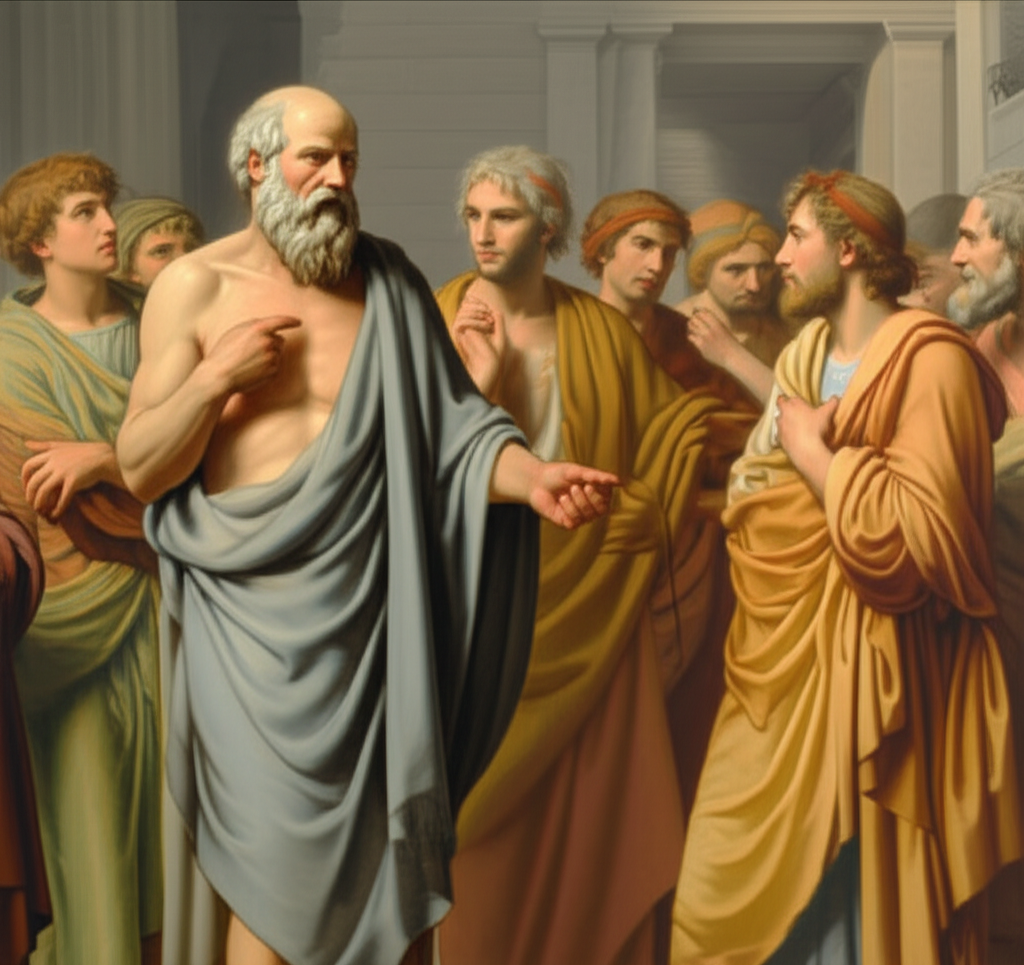
The earliest and perhaps most iconic form of the dialectic is attributed to Socrates. His method, often referred to as the elenchus, involved a series of probing questions designed to expose contradictions in a person's beliefs, thereby leading them to acknowledge their own ignorance. This was not done out of malice, but from a profound conviction that recognizing one's lack of knowledge is the first step toward genuine wisdom. Through this rigorous cross-examination, Socrates aimed to purify concepts and arrive at more precise definitions of virtues like justice, courage, and piety.
Plato's Ascent: From Opinion to Forms
Socrates' most famous student, Plato, further developed the dialectic, elevating it to a method for ascending from mere opinion (doxa) to true knowledge of the eternal Forms. In Plato's philosophy, the dialectic is the highest form of intellectual activity, enabling the philosopher to grasp the universal essences that underpin the sensible world. This involved a process of both collection (identifying commonalities among particulars) and division (distinguishing different kinds within a genus), leading the mind towards the ultimate Good.
Hegel's Dynamic: Thesis, Antithesis, Synthesis
Centuries later, Georg Wilhelm Friedrich Hegel transformed the dialectic into a dynamic process of historical and conceptual development. For Hegel, reality itself unfolds dialectically, through a continuous interplay of opposing forces. A thesis (an initial idea or state) gives rise to an antithesis (its inherent contradiction or opposition), and their conflict is resolved in a synthesis (a higher, more comprehensive understanding) that incorporates elements of both. This synthesis then becomes a new thesis, perpetuating the cycle of progress in knowledge and consciousness.
Key Stages of Dialectical Inquiry
While the specific manifestations vary, certain common elements characterize the dialectic method across its historical forms:
- Presentation of an Initial Idea (Thesis): A concept, proposition, or belief is put forth.
- Critical Examination and Counter-Argument (Antithesis): This idea is subjected to rigorous questioning, scrutiny, and the presentation of opposing viewpoints or inherent contradictions. This stage emphasizes logical reasoning and the identification of flaws.
- Identification of Contradictions: Discrepancies, inconsistencies, or limitations within the initial idea or between competing ideas are brought to light.
- Resolution and Synthesis: Through a process of reasoned argument and analysis, a new, more refined, or comprehensive understanding emerges. This synthesis often transcends the limitations of the initial ideas, incorporating their valid elements while overcoming their flaws.
- Iteration and Further Inquiry: The newly synthesized idea can itself become a new thesis, initiating another round of dialectical inquiry, driving a continuous pursuit of deeper knowledge.
Why the Dialectic Matters: The Pursuit of Knowledge and Reasoning
The enduring significance of the dialectic method lies in its power to:
- Refine Concepts: It forces a precise articulation of ideas, stripping away ambiguity and vagueness.
- Expose Assumptions: By challenging premises, it uncovers hidden assumptions that might undermine an argument.
- Foster Critical Thinking: It cultivates the ability to analyze, evaluate, and construct robust arguments.
- Advance Knowledge: By systematically resolving contradictions, it pushes the boundaries of understanding, leading to new insights and theories.
- Promote Intellectual Humility: The Socratic legacy reminds us that true wisdom often begins with acknowledging the limits of our current knowledge.
📹 Related Video: PLATO ON: The Allegory of the Cave
Video by: The School of Life
💡 Want different videos? Search YouTube for: ""Plato's Dialectic Method Explained""
📹 Related Video: PLATO ON: The Allegory of the Cave
Video by: The School of Life
💡 Want different videos? Search YouTube for: ""Hegel's Dialectic: Thesis, Antithesis, Synthesis Simplified""
Conclusion: A Timeless Tool for Philosophical Progress
From the bustling Athenian agora to the towering intellectual systems of German Idealism, the dialectic method has served as an indispensable tool for philosophical inquiry. It is more than just a technique; it embodies a fundamental commitment to reasoning, critical engagement, and the relentless pursuit of deeper knowledge. In an age saturated with information, the discipline of dialectical thought remains crucial for discerning truth from fallacy, fostering intellectual growth, and navigating the complexities of our shared human experience. It is a testament to the power of structured thought, a legacy we continue to draw upon in our ongoing quest for understanding.