

Unpacking "Experience": A Journey Through Perception and Understanding
Summary: The term "experience" is far more complex than its everyday usage suggests, particularly within philosophy. At its core, the philosophical definition of experience delves into how we encounter, perceive, and interpret the world through our senses and cognitive faculties, forming the very foundation of our knowledge. From ancient Greek inquiries into perception to modern phenomenology, understanding "experience" is crucial for grasping how we come to know anything at all. This article explores its multifaceted nature, drawing on centuries of philosophical inquiry to illuminate its profound significance.
What Exactly Is Experience? The Philosophical Quest for Definition
In casual conversation, "experience" might refer to a past event, a skill acquired, or even a feeling. "I experienced a great concert," or "She has years of experience in coding." While these uses are valid, philosophy demands a much deeper, more fundamental definition. When philosophers talk about experience, they're often referring to the direct apprehension of reality through our senses and consciousness – the raw data and the processing of that data that shapes our understanding.
This isn't just semantics; it's about the very source code of our reality. Is reality given to us, or do we construct it through our experience? This fundamental question has driven philosophical discourse for millennia, echoing through the pages of the Great Books of the Western World.
The Historical Tapestry of Experience: From Sensation to Understanding
Philosophers have grappled with the nature of experience since antiquity.
- Ancient Roots: Thinkers like Aristotle, whose works are foundational in the Great Books, emphasized observation and the gathering of data through the senses as crucial for understanding the natural world. For him, experience was a practical accumulation of observations leading to general principles.
- The Enlightenment and Empiricism: This era brought the most direct focus on experience as the bedrock of knowledge.
- John Locke: Argued that the mind is a tabula rasa (blank slate) at birth, and all our ideas come from experience. He distinguished between "sensation" (external senses) and "reflection" (internal senses, like perceiving our own mental operations).
- David Hume: Took empiricism to its logical extreme, suggesting that all our ideas are ultimately derived from "impressions" (vivid perceptions and senses). He famously questioned how we could truly "experience" concepts like cause and effect, leading to profound skepticism about the certainty of much of our knowledge.
- Kantian Synthesis: Immanuel Kant, another giant of the Great Books, sought to bridge the gap between empiricism and rationalism. He argued that while all knowledge begins with experience (sensory input), the mind actively structures this experience through innate categories of understanding (like causality, space, and time). We don't just passively receive reality; our minds actively shape our perception of it.
- 20th-Century Phenomenology: Philosophers like Edmund Husserl and Maurice Merleau-Ponty shifted the focus to "lived experience" – the subjective, pre-reflective way in which we encounter the world. It’s not just about raw data, but about the meaning and intentionality embedded in our direct, first-person engagement with reality.
Core Components of Philosophical Experience
To truly define experience, we must dissect its various elements:
- Sensory Input: This is the most immediate and undeniable aspect. Our five senses (sight, hearing, touch, taste, smell) provide us with raw data about the external world. Without this input, our minds would be devoid of content.
- Cognitive Processing: The mind isn't a passive recipient. It organizes, interprets, categorizes, and makes sense of the sensory data. This involves memory, attention, language, and the application of concepts. It's how raw sense data transforms into meaningful perceptions and, eventually, knowledge.
- Affective Dimension: Experience is rarely purely cognitive. It's often accompanied by emotions, feelings, and subjective states. How we feel about an event is an integral part of our experience of it.
- Consciousness and Subjectivity: Experience is inherently personal. My experience of a red apple is distinct from yours, even if we're looking at the same object. This subjective, first-person perspective is central to its definition.
- Interaction and Engagement: For many pragmatists, like John Dewey, experience is not just passive reception but active engagement with the environment. We learn by doing, by interacting, and by adapting to the world around us.
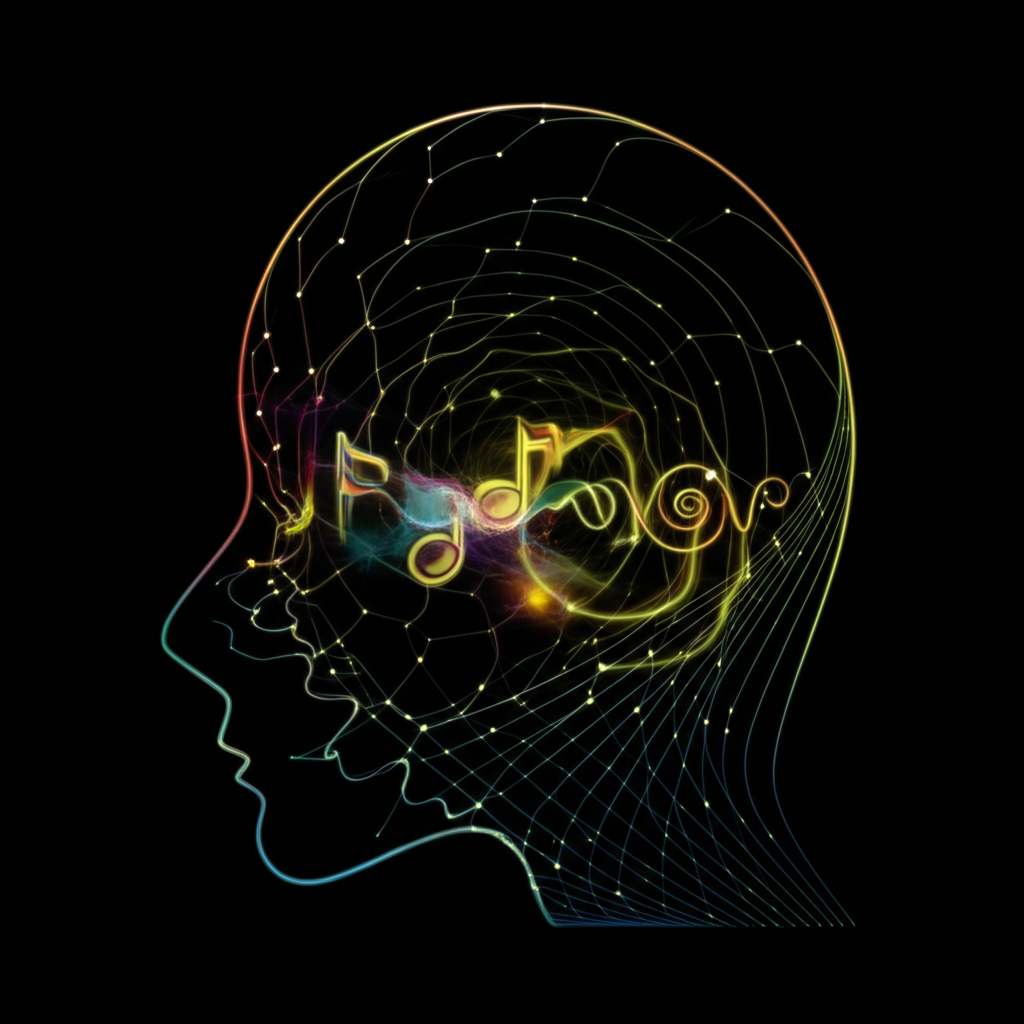 . Within the head, faint gears and cogs interlock, symbolizing cognitive processing, while a faint, glowing question mark hovers above, embodying the philosophical inquiry into the nature of experience and knowledge.)
The Indispensable Link: Experience and Knowledge
The philosophical definition of experience is inextricably linked to the concept of knowledge. Indeed, for many, experience is the only legitimate source of knowledge.
- Empirical Knowledge: This is the most straightforward connection. Scientific knowledge, for instance, relies heavily on observation, experimentation, and repeatable experience. We learn that fire is hot through direct sensery experience.
- Practical Knowledge (Know-how): Skills and abilities are gained through repeated experience. A skilled artisan doesn't just know theories; they have the practical knowledge gained through years of hands-on experience.
- Self-Knowledge: Our understanding of ourselves – our preferences, strengths, weaknesses – is built through a lifetime of internal and external experience.
- Limits of Experience: Philosophy also explores where experience ends and other forms of knowledge (e.g., purely rational or intuitive) might begin. Can we "experience" ultimate truths, or are some forms of knowledge beyond the grasp of our senses?
Table: Philosophical Approaches to Experience and Knowledge
| Philosophical School | Primary Focus of Experience | Relationship to Knowledge | Key Thinkers (Great Books) |
|---|---|---|---|
| Empiricism | Sensory input, observation | All knowledge originates from experience. | John Locke, David Hume |
| Rationalism | Reason, innate ideas | Experience provides data, but reason structures and completes knowledge. | René Descartes, Gottfried Leibniz |
| Kantianism | Synthesis of sensory data and innate mental categories | Knowledge arises from experience structured by the mind. | Immanuel Kant |
| Phenomenology | Lived, subjective experience | Knowledge is found in the direct, pre-reflective encounter with phenomena. | Edmund Husserl, Maurice Merleau-Ponty |
| Pragmatism | Active interaction with the environment | Knowledge is instrumental, tested and refined through experience. | John Dewey |
Why This Definition Matters
Understanding the philosophical definition of experience is not an academic exercise in futility. It underpins fundamental questions in:
- Epistemology: How do we know what we know? What are the limits of our knowledge?
- Ethics: Does moral experience shape our ethical frameworks? Can we learn virtue through experience?
- Aesthetics: Is beauty something we perceive through our senses, or is it a conceptual experience?
- Metaphysics: What is the nature of reality itself, if our only access to it is through experience?
In essence, delving into the definition of "experience" is to embark on a journey into the very fabric of our being and our connection to the world around us. It's a reminder that even the most seemingly simple terms can hide a universe of philosophical inquiry.
📹 Related Video: KANT ON: What is Enlightenment?
Video by: The School of Life
💡 Want different videos? Search YouTube for: ""John Locke Tabula Rasa Explained""
📹 Related Video: PLATO ON: The Allegory of the Cave
Video by: The School of Life
💡 Want different videos? Search YouTube for: ""Hume's Empiricism and Skepticism""