

The Nuance of Meaning: Disentangling Sign and Symbol
At the heart of human communication, thought, and the very structure of our understanding lies a fundamental distinction: that between a sign and a symbol. While often used interchangeably in everyday discourse, a deeper philosophical definition reveals their unique roles in conveying an idea. Grasping this difference is not merely an academic exercise; it is essential for appreciating the complexities of language, culture, and the ways we construct meaning. Simply put, a sign typically points directly to an immediate reality, often with a natural or straightforward conventional link, whereas a symbol carries a more abstract, culturally mediated, and often multi-layered meaning, representing a concept or idea that transcends its literal form.
Deconstructing the Definition: A Philosophical Inquiry
To truly appreciate the power of language and thought, one must delve into the philosophical underpinnings of how meaning is conveyed. The Great Books of the Western World frequently touch upon these concepts, from Plato's inquiries into the nature of names in Cratylus to Locke's exploration of ideas and words in An Essay Concerning Human Understanding. Understanding the precise definition of sign and symbol allows us to navigate the vast landscape of communication with greater clarity.
The Immediate Clarity of the Sign
A sign, in its most fundamental philosophical sense, is something that indicates or points to the existence of something else. Its relationship to what it signifies is often direct, inherent, or established through a relatively simple convention. The connection is typically one of cause and effect, contiguity, or a straightforward, unambiguous agreement.
- Characteristics of a Sign:
- Direct Reference: It points immediately to its referent.
- Causal or Natural Link: Smoke is a sign of fire; dark clouds are a sign of rain. These are natural signs.
- Simple Conventional Link: A red traffic light is a sign to stop; an arrow indicates direction. These are conventional signs, but their meaning is usually singular and unambiguous within a given context.
- Evokes a Specific Idea: The idea conveyed is often concrete and directly related to the sign itself.
An example: A footprint in the sand is a sign that someone has walked there. The relationship is direct and causal. The idea conveyed is simply "person was here."
The Layered Abstraction of the Symbol
A symbol, on the other hand, operates on a more abstract and complex plane. It represents an idea, concept, quality, or relationship through convention, analogy, or association, often transcending its literal form. The connection between a symbol and what it symbolizes is largely arbitrary and culturally constructed, requiring a shared understanding within a community.
- Characteristics of a Symbol:
- Indirect/Arbitrary Reference: The link to its referent is not natural or causal but is established through shared cultural convention.
- Abstract Representation: It often stands for complex ideas, emotions, or values.
- Polysemic Potential: A single symbol can hold multiple layers of meaning, depending on context and cultural interpretation.
- Cultural Specificity: Its meaning is deeply embedded in cultural, historical, and social contexts.
- Foundation of Language: Language itself is primarily a system of symbols, where words arbitrarily represent objects, actions, and abstract concepts.
An example: A dove is a symbol of peace. There is no natural or causal link between a bird and the abstract concept of peace; this connection is culturally learned and widely understood, conveying a complex idea.
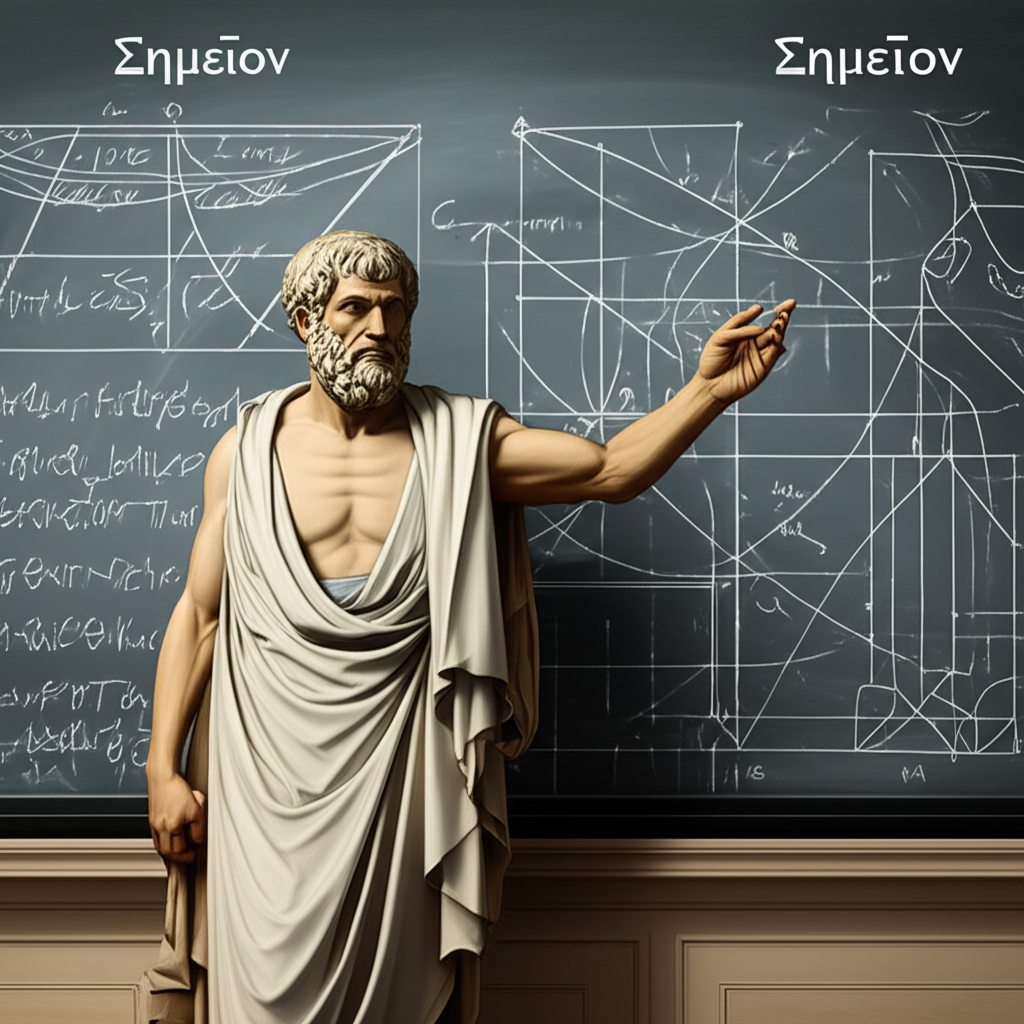 and "Σύμβολον" (Symbol), with illustrative sketches under each—a wisp of smoke under "Sign" and a balanced scale under "Symbol," emphasizing the conceptual difference in an ancient setting.)
Distinguishing the Two: A Comparative Analysis
To solidify our understanding, let's examine the key differences between a sign and a symbol through a comparative lens. This distinction is vital for dissecting how language functions and how we derive idea from various forms of communication.
| Feature | Sign | Symbol |
|---|---|---|
| Relationship | Direct, often natural or simple convention | Indirect, arbitrary, culturally constructed |
| Referent | Concrete, immediate existence, or action | Abstract idea, concept, emotion, value |
| Interpretation | Generally unambiguous, universal (within context) | Requires shared knowledge, culturally specific, often polysemic |
| Nature | Indicative, causal, or prescriptive | Representative, expressive, evocative |
| Dependence | Less dependent on cultural context | Highly dependent on cultural and historical context |
| Examples | Smoke, traffic light, footprint, warning siren | Flag, cross, national anthem, word "freedom" |
Both signs and symbols are indispensable tools for human cognition and interaction. Signs provide us with immediate information about our environment, guiding our actions directly. Symbols, however, allow us to transcend the immediate, to communicate complex ideas, to build shared cultures, and to engage in abstract thought. Language, as the most sophisticated system of symbols, enables us to articulate intricate philosophical concepts, share stories across generations, and explore the depths of human experience.
Ultimately, the philosophical journey into the definition of sign and symbol reveals the profound mechanisms by which we make sense of our world, shaping not only what we communicate but also how we think and perceive reality itself.
📹 Related Video: KANT ON: What is Enlightenment?
Video by: The School of Life
💡 Want different videos? Search YouTube for: ""Semiotics explained: Signs, Symbols, and Icons""
📹 Related Video: What is Philosophy?
Video by: The School of Life
💡 Want different videos? Search YouTube for: ""Philosophy of Language: Saussure and Peirce on Signs""