

The Fabric of Meaning: Unpacking the Definition of Sign and Symbol
Summary: At the heart of human understanding and communication lies the fundamental distinction between a sign and a symbol. While both serve to convey ideas, their mechanisms differ profoundly. A sign points directly and often unambiguously to something else, acting as an indicator. A symbol, conversely, carries a richer, more abstract, and culturally mediated meaning, representing complex ideas or concepts that are not immediately apparent in its form. Grasping this definition is crucial for navigating the intricate landscape of language, philosophy, and how we construct our shared reality.
The Foundation of Understanding: What is a Sign?
Our world is replete with signs, constantly guiding our perceptions and actions. Philosophically, a sign is an entity whose presence indicates the presence of something else. It functions through a direct, often causal or conventional, relationship. Think of it as a pointer, an immediate trigger for an idea.
- Direct Correspondence: The relationship between a signifier and its signified is typically straightforward. Smoke is a sign of fire; a fever is a sign of illness. Here, the connection is often natural or empirically observed.
- Conventional Signs: Beyond natural occurrences, language itself employs conventional signs. A red octagonal shape with white letters spelling "STOP" is a universally recognized sign demanding cessation of movement. While arbitrary in its initial creation, its meaning is direct and learned, leaving little room for interpretation in its immediate context.
- Function: Signs primarily serve to inform, alert, or direct. They are practical tools for navigating the physical and social environment.
The Depth of Meaning: What is a Symbol?
Where a sign points, a symbol represents. The definition of a symbol extends beyond mere indication; it embodies an idea or concept, often abstract, that is not intrinsically present in its physical form. Symbols are deeply embedded in culture, history, and shared human experience, carrying layers of meaning that can evolve over time.
- Arbitrary but Meaningful: The connection between a symbol and what it represents is largely arbitrary, established through cultural consensus and tradition. A dove, for instance, is a symbol of peace; its physical attributes don't inherently dictate this meaning, but cultural narratives have imbued it with this profound idea.
- Abstract Representation: Symbols are adept at conveying complex ideas, emotions, or spiritual concepts that would be difficult to articulate directly. A national flag is not merely a piece of cloth; it symbolizes a nation's history, values, identity, and aspirations.
- Multiple Interpretations: Unlike signs, symbols often invite multiple layers of interpretation, depending on individual and cultural contexts. The symbol of a cross holds different, though related, meanings across various religious and secular perspectives.
- Catalysts for Thought: Symbols don't just convey information; they evoke feelings, stimulate thought, and connect us to deeper communal or archetypal narratives.
The Interplay in Language and Thought
Language itself is a magnificent tapestry woven from both signs and symbols. At its most basic level, words can function as signs, directly naming objects or actions. "Tree" is a sign for the arboreal plant. However, language transcends this, utilizing words and phrases to build complex ideas, metaphors, and narratives that are profoundly symbolic.
Consider the word "justice." While it has a definition as a concept, its full meaning is often conveyed through symbolic representations (like the scales of justice) and narratives that explore its nuances. The power of language lies in its ability to shift between these modes, offering both clarity and profound depth.
Distinguishing Features: Sign vs. Symbol
To further clarify their definition and function, let's compare these two fundamental concepts:
| Feature | Sign | Symbol |
|---|---|---|
| Relationship | Direct, often causal or conventional | Indirect, arbitrary, culturally assigned |
| Meaning | Explicit, singular, indicative | Implied, multiple layers, representative |
| Function | To inform, alert, direct | To represent, evoke, embody abstract ideas |
| Interpretation | Generally straightforward, unambiguous | Open to varying interpretations, contextual |
| Dependence | Often relies on natural connection or simple convention | Relies heavily on cultural context, shared knowledge, and tradition |
| Example | Smoke (of fire), traffic light, warning bell | Flag (of a nation), dove (of peace), cross (of faith) |
The Philosophical Resonance
The distinction between sign and symbol has been a cornerstone of philosophical inquiry, particularly in semiotics (the study of signs and symbols) and epistemology (the theory of knowledge). From the ancient Greeks contemplating the nature of names to medieval scholastic discussions on signification, and later to modern linguists like Saussure and philosophers like Peirce, understanding how meaning is created and conveyed has been paramount.
The Great Books of the Western World are replete with explorations of this very theme. Thinkers grapple with how we move from sensory perception (often interpreted as signs) to abstract ideas and moral principles (frequently expressed through symbols). This journey from the concrete to the abstract, facilitated by our capacity for symbolic thought, is what allows for complex reasoning, ethical systems, and the very structure of human civilization.
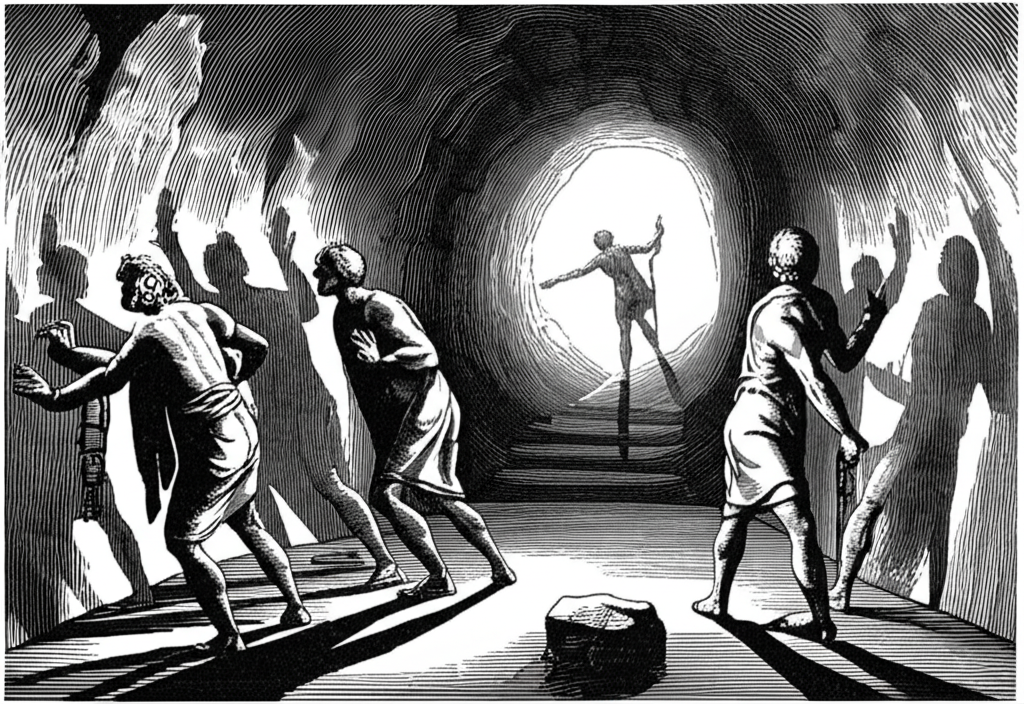
Beyond Mere Marks
Understanding the definition of sign and symbol is not merely an academic exercise; it's a key to unlocking the mechanisms of human thought and communication. It illuminates how language constructs reality, how cultures transmit values, and how we, as individuals, make sense of the vast ocean of ideas that surround us. By discerning the direct indicator from the profound representation, we sharpen our critical faculties and deepen our appreciation for the rich tapestry of meaning that defines our human experience.
📹 Related Video: PLATO ON: The Allegory of the Cave
Video by: The School of Life
💡 Want different videos? Search YouTube for: ""Ferdinand de Saussure Signifier and Signified Explained""
📹 Related Video: What is Philosophy?
Video by: The School of Life
💡 Want different videos? Search YouTube for: ""Semiotics and Philosophy: Understanding Signs and Symbols""