

The Enduring Definition of Rhetoric: An Art of Persuasion
At its core, the definition of rhetoric is the art of effective or persuasive speaking or writing, especially the use of figures of speech and other compositional techniques. More profoundly, as articulated by ancient philosophers, it is the faculty of observing in any given case the available means of persuasion, fundamentally utilizing language to shape opinion. Far from mere ornamentation or deceit, a true understanding of rhetoric reveals it as a foundational human endeavor, indispensable for navigating public discourse and influencing collective thought.
Unpacking the Classical Definition of Rhetoric
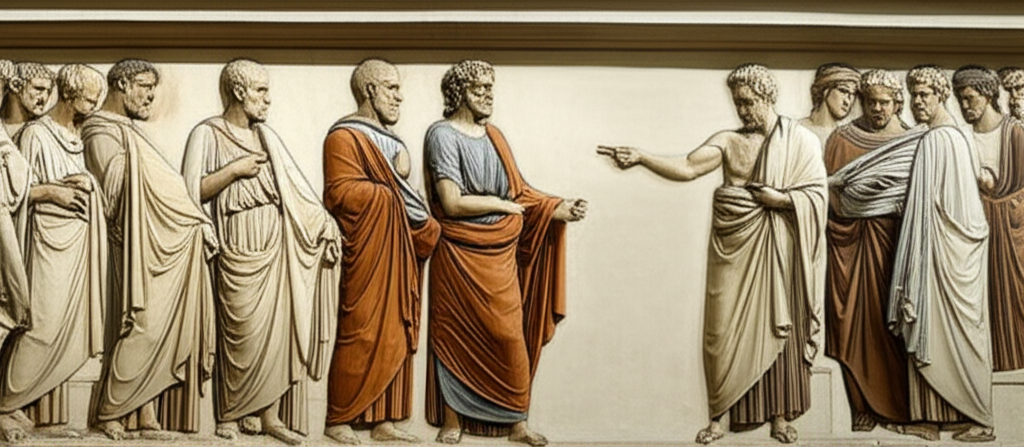
To truly grasp the essence of rhetoric, one must turn to its classical origins, particularly the works preserved within the Great Books of the Western World. It is here, in the writings of Aristotle, that we find one of the most enduring and comprehensive definitions. Aristotle, in his treatise Rhetoric, posited that rhetoric is "the faculty of observing in any given case the available means of persuasion." This isn't a judgment on the use of rhetoric, but rather a neutral description of its potential and its scope.
This definition highlights several critical aspects:
- A Faculty or Art (Technē): Rhetoric is a skill, a learned ability, much like medicine or navigation. It can be studied, practiced, and mastered.
- Observation: It requires keen insight into human nature, understanding what moves people, what they value, and how they reason.
- Available Means: The rhetorician must assess the specific context, audience, and subject matter to determine the most effective strategies.
- Persuasion: The ultimate aim is to influence belief or action, to move an audience from one opinion to another, or to strengthen an existing one.
Rhetoric, therefore, is not inherently good or bad; its moral valence depends entirely on the character of the rhetorician and the ends to which it is applied. It is a tool, and like any tool, its impact is determined by the hand that wields it.
The Pillars of Persuasion: How Rhetoric Operates
Central to the classical definition of rhetoric are the three appeals, or modes of persuasion, identified by Aristotle: Logos, Pathos, and Ethos. These represent the fundamental ways in which language is employed to sway an audience's opinion.
- Logos (Appeal to Logic): This involves the use of reason, evidence, facts, and logical arguments. A rhetorician employing logos seeks to convince the audience through sound reasoning and verifiable data. It asks: Does this make sense? Is it rational?
- Pathos (Appeal to Emotion): This mode of persuasion aims to evoke an emotional response in the audience, such as pity, fear, anger, or joy. By understanding human psychology, a rhetorician can craft language that resonates emotionally, influencing opinion not just through intellect but through feeling.
- Ethos (Appeal to Credibility or Character): This appeal relies on the speaker's or writer's perceived credibility, authority, or moral character. An audience is more likely to be persuaded if they trust and respect the source of the message. Ethos is built through demonstrating expertise, sincerity, and good will.
These three appeals are rarely used in isolation; effective rhetoric often masterfully blends all three to create a compelling and persuasive message.
Rhetoric, Language, and the Shaping of Opinion
The medium through which rhetoric primarily operates is language. From the careful selection of words to the structuring of arguments, every aspect of language is a rhetorical choice. The power of rhetoric lies in its ability to take complex ideas, abstract concepts, or simple facts and present them in a way that resonates with a specific audience, thereby shaping their opinion.
Consider how different linguistic choices can frame the same event:
- Calling a tax increase an "investment in the future" versus "a burden on the taxpayer."
- Describing a protest as "a spirited demonstration of free speech" versus "an unruly mob causing disruption."
In each instance, the choice of language is a rhetorical act, designed to elicit a particular emotional or logical response and guide the audience toward a desired opinion. This deliberate crafting of communication is what makes rhetoric such a potent force in politics, law, ethics, and everyday interaction.
Beyond Manipulation: The True Definition's Ethical Dimension
It is a common misconception to equate rhetoric solely with manipulation or empty grandstanding. This narrow view often arises from observing instances where rhetoric is indeed misused for deceitful purposes. However, to accept this as the full definition is to miss the profound ethical implications and intellectual demands of the art.
A true understanding of rhetoric, as taught by figures like Aristotle, acknowledges its potential for both good and ill. A rhetorician with integrity uses their skill to:
- Clarify complex issues: Making intricate subjects accessible to a broader audience.
- Advocate for justice: Giving voice to the voiceless and arguing for what is right.
- Promote understanding: Bridging divides through careful and empathetic communication.
- Inspire action: Moving people to achieve noble goals.
Thus, the definition of rhetoric encompasses not just the means of persuasion, but also the responsibility that comes with wielding such a powerful tool of language to influence public opinion.
Conclusion: The Indispensable Art
The study of rhetoric remains as vital today as it was in ancient Greece. Understanding its definition — as the art of discerning and employing the available means of persuasion through language to shape opinion — equips us not only to be more effective communicators but also more discerning listeners and critical thinkers. In an age saturated with information and competing narratives, the ability to analyze and understand rhetorical strategies is paramount to navigating the complexities of human interaction and making informed decisions.
YouTube Video Suggestions:
- YouTube: "Aristotle Rhetoric explained"
- YouTube: "Ethos Pathos Logos examples"
📹 Related Video: What is Philosophy?
Video by: The School of Life
💡 Want different videos? Search YouTube for: "The Definition of Rhetoric philosophy"