

Unpacking the Definition of Rhetoric: An Enduring Philosophical Inquiry
The Definition of Rhetoric is not a static pronouncement but a dynamic concept, deeply rooted in the history of Western thought. At its core, rhetoric is the art of persuasion, a systematic approach to using language effectively, primarily to influence opinion and action. From the ancient Greek agora to the modern digital sphere, understanding rhetoric means grasping the fundamental mechanisms by which ideas are communicated, understood, and ultimately, accepted or rejected by an audience. It is an intellectual discipline that explores the power and purpose of articulate expression.
The Classical Foundations: Where Rhetoric Finds its Definition
To truly grasp the essence of rhetoric, one must turn to the foundational texts that shaped Western civilization, particularly those compiled in the Great Books of the Western World. It is within these venerable pages that the earliest and most enduring definitions were forged, often through vigorous debate.
Plato's Skepticism: Rhetoric as a "Knack"
While not offering a positive definition, Plato, particularly in his dialogue Gorgias, provides a critical lens through which to view rhetoric. He often portrays it as a mere "knack" for producing conviction without necessarily imparting true knowledge. For Plato, rhetoric, when divorced from philosophy and the pursuit of truth, could be a dangerous tool, capable of manipulating public opinion rather than guiding it towards wisdom. He saw it less as an art (techne) and more as a form of flattery, akin to cookery or cosmetics, designed to please rather than to benefit.
Aristotle's Systematic Definition: The Art of Persuasion
It is with Aristotle, however, that we find the most comprehensive and influential definition of rhetoric, presented in his seminal work, Rhetoric, a cornerstone of the Great Books of the Western World. Aristotle defines rhetoric as:
"the faculty of observing in any given case the available means of persuasion."
This definition is crucial for several reasons:
- Neutrality: Aristotle presents rhetoric as a tool, inherently neither good nor bad. Its moral value depends entirely on the intention of the user.
- Systematic Study: It is a "faculty"—a systematic art or science—requiring observation, analysis, and skill.
- Focus on Means: It concerns the available means of persuasion, implying a practical application and adaptability to various situations.
Aristotle meticulously broke down these "means of persuasion" into three primary modes, which remain fundamental to the study of rhetoric today:
| Mode of Persuasion | Description | Keyword Connection |
|---|---|---|
| Ethos | Persuasion through the speaker's character or credibility. | Relates to the speaker's trustworthiness, influencing opinion. |
| Pathos | Persuasion through appealing to the audience's emotions. | Directly targets the audience's feelings to shape opinion. |
| Logos | Persuasion through logical reasoning, facts, and evidence. | Employs language in a structured, rational way to build conviction. |
These three pillars highlight how rhetoric operates through the careful deployment of language to construct arguments that resonate with an audience on multiple levels.
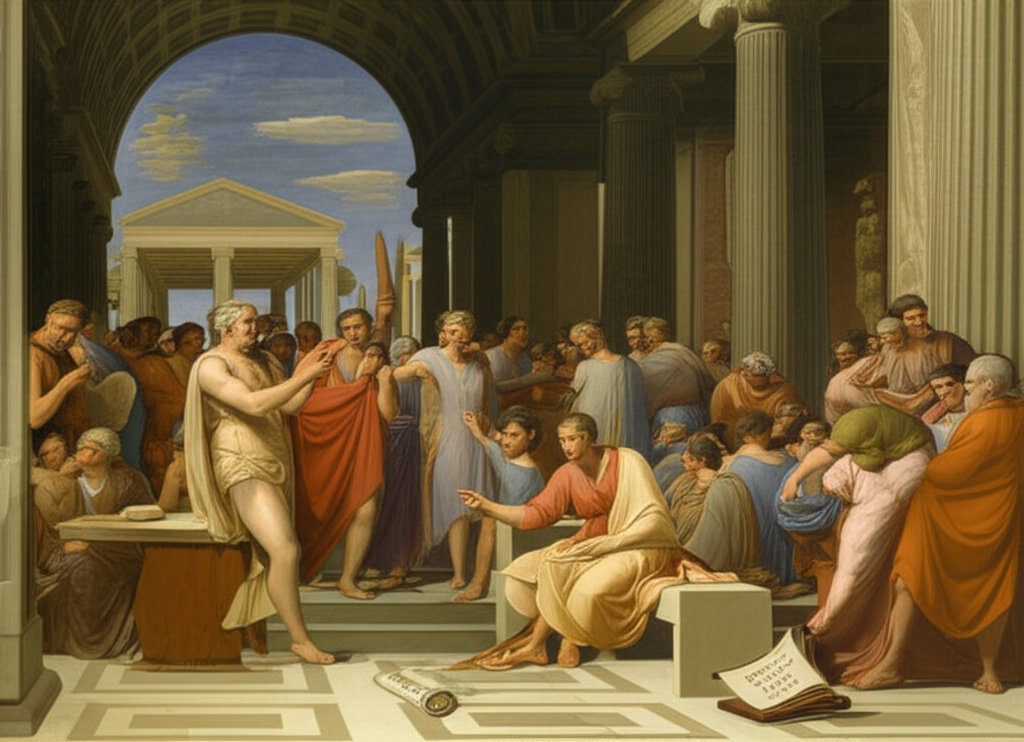
Rhetoric, Language, and the Shaping of Opinion
The intrinsic connection between rhetoric and language cannot be overstated. Language is the primary medium through which rhetoric functions. It's not just what is said, but how it is said:
- Choice of Words: Diction, vocabulary, and phrasing.
- Structure of Arguments: Syntax, arrangement, and logical flow.
- Figurative Language: Metaphors, similes, rhetorical questions that enhance impact and memorability.
Through the skillful manipulation of language, rhetoric aims to shape and sway opinion. It acknowledges that absolute truth is often elusive in human affairs, and therefore, decisions are frequently made based on probabilities, beliefs, and shared understandings. Rhetoric provides the framework for presenting a case in the most compelling way possible to win assent.
Beyond the Classical: An Evolving Definition
While the classical definition of rhetoric remains foundational, its understanding has evolved. From Cicero's emphasis on rhetoric as the art of the good citizen speaking well, to later developments in literary theory and communication studies, the scope has broadened. Yet, the core tenets established by Aristotle—the observation of persuasive means, the reliance on language, and the goal of influencing opinion—endure as the bedrock of its definition.
In an age saturated with information and diverse viewpoints, understanding rhetoric is more crucial than ever. It empowers us not only to construct effective arguments but also to critically evaluate the persuasive appeals directed at us daily, fostering informed opinion and reasoned discourse.
Conclusion: The Enduring Power of Rhetoric
The Definition of Rhetoric is a testament to humanity's enduring fascination with the power of language to shape thought and action. As articulated in the Great Books of the Western World, particularly by Aristotle, rhetoric is not merely flowery speech but a systematic discipline for identifying and employing the available means of persuasion. It is a neutral tool, capable of both enlightenment and manipulation, whose ultimate value is determined by the intentions of its practitioner. To comprehend rhetoric is to understand a fundamental aspect of human communication and the very fabric of public opinion.
📹 Related Video: ARISTOTLE ON: The Nicomachean Ethics
Video by: The School of Life
💡 Want different videos? Search YouTube for: ""Aristotle Rhetoric Summary" or "What is Rhetoric? Crash Course Philosophy""