

Unpacking the Essence: The Philosophical Definition of Quality and Form
The quest to understand reality often begins with the most fundamental questions: What is a thing, and what makes it the way it is? This article delves into the profound philosophical concepts of Quality and Form, exploring their intricate Definition within the realm of Metaphysics. From the ancient Greeks to contemporary thought, these ideas have served as cornerstones for understanding existence, essence, and the very nature of being. We will explore how philosophers have grappled with defining what constitutes a thing's inherent structure (Form) and its observable or intrinsic characteristics (Quality), revealing their deep, often inseparable, connection.
The Enduring Quest for Clarity: Defining Reality's Building Blocks
Philosophy, at its heart, is a persistent inquiry into the Definition of things – not just their names, but their deepest nature. When we speak of Quality and Form, we are touching upon the very architecture of existence. Are these concepts objective truths awaiting discovery, or are they constructs of human understanding? The journey through the Great Books reveals a rich tapestry of thought dedicated to unraveling these mysteries, offering insights that continue to shape our worldview.
The Ancient Foundations: Form as the Blueprint of Reality
The most influential foundational discussions of Form emerge from ancient Greece, particularly with Plato and Aristotle, whose ideas laid much of the groundwork for Western Metaphysics.
-
Plato's Transcendent Forms:
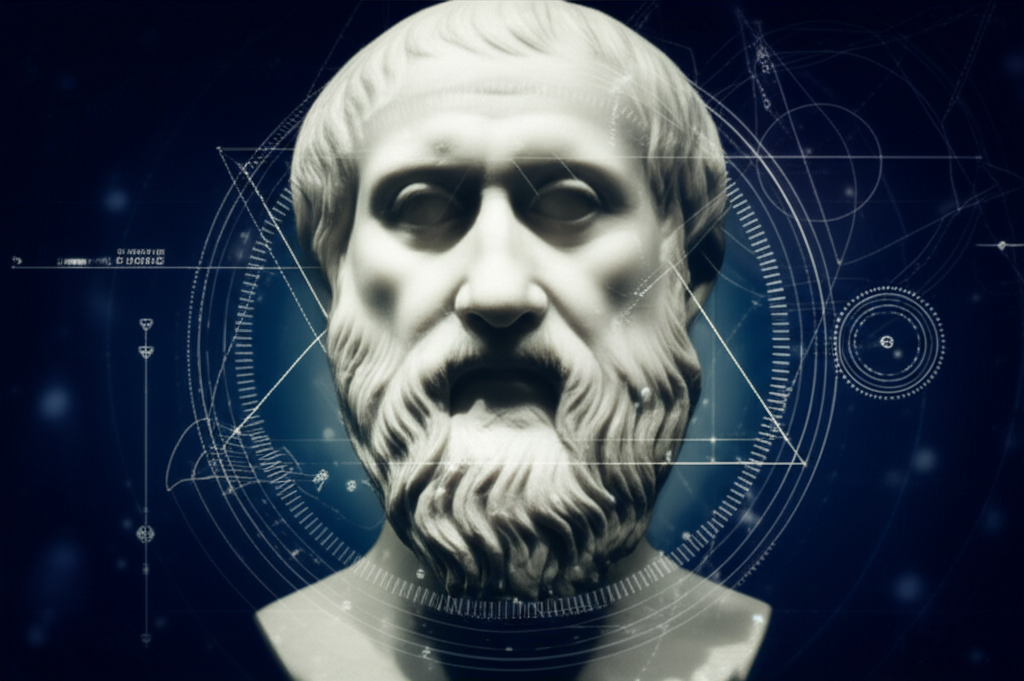
Plato posited a realm of perfect, eternal, and unchanging Forms (or Ideas) that exist independently of the physical world. For Plato, the Form of "Beauty" or "Justice" or "Chairness" is the ultimate, true Definition of these concepts. Physical objects are merely imperfect copies or shadows of these ideal Forms. The Form provides the essence, the blueprint, the objective standard against which all particulars are measured. Without the Form of "Goodness," for instance, no particular act could be truly good, nor could its Quality be assessed. This realm of Forms is central to his Metaphysics, explaining how we can have knowledge of universal truths despite the changing nature of the sensory world. -
Aristotle's Immanent Forms (Hylomorphism):
Aristotle, a student of Plato, offered a different, yet equally profound, perspective. While he agreed that Form is essential, he argued that it does not exist in a separate realm. Instead, Form is inherent within the matter of a thing. A statue, for example, is composed of matter (marble) and Form (the shape given by the sculptor). The Form is what makes a thing what it is – its essence, its Definition. For Aristotle, Form is inextricably linked with matter, together constituting a substance. This concept, known as hylomorphism, suggests that a thing's Form gives it its identity and potential, thereby enabling its specific Qualities to manifest. The Form of "human being" dictates the Qualities of rationality, bipedalism, etc., that define humanity.
Navigating the Nuances of Quality: What Makes a Thing Good or Characteristic?
If Form provides the essential blueprint, then Quality describes the actual characteristics, attributes, or properties that a thing possesses. The Definition of Quality itself is multifaceted.
-
Defining Quality:
In philosophy, Quality (from Latin qualitas) refers to an attribute or property that characterizes an object or substance. It answers the question, "Of what kind is it?" This can range from simple sensory qualities (red, sweet, hard) to more complex characteristics (virtuous, intelligent, efficient). Aristotle, in his Categories, listed Quality as one of the ten fundamental categories of being, distinguishing it from substance, quantity, relation, etc. -
Types of Qualities:
Philosophers have often distinguished between different kinds of qualities:- Primary Qualities: These are properties inherent in the object itself, independent of an observer. Examples include extension, motion, number, and shape. These are often considered objective and measurable.
- Secondary Qualities: These are properties that produce sensations in the observer, depending on the interaction between the object and the senses. Examples include color, taste, sound, and smell. These are often considered subjective and relational.
- Intrinsic Qualities: Properties that a thing possesses in itself, regardless of its relation to other things (e.g., being made of carbon).
- Extrinsic Qualities: Properties that a thing possesses by virtue of its relation to other things (e.g., being "taller than" something else).
The Indissoluble Link: How Form Informs Quality
The relationship between Form and Quality is profound and foundational to Metaphysics. A thing's Form fundamentally determines the Qualities it can possess.
Consider a simple example: a chair. Its Form – its essential structure and purpose – is to be a device for sitting. This Form dictates its potential Qualities: it must be sturdy enough to bear weight, have a surface for sitting, and a backrest (typically). A chair cannot, by its Form, possess the Qualities of a liquid or a thought. The Form sets the boundaries and potentials for the Qualities that can manifest.
Similarly, in human beings, the Form of humanity, as conceived by Aristotle, includes rationality and the capacity for moral choice. These essential Forms are what allow for the Qualities of wisdom, compassion, or artistic talent to develop. Without the underlying Form, the Qualities would be incoherent or impossible.
Beyond the Ancients: Evolving Perspectives
While Plato and Aristotle laid the groundwork, the philosophical Definition of Quality and Form continued to evolve. Medieval scholastics, like Thomas Aquinas, synthesized Aristotelian Form with Christian theology, viewing Form as God's design. Later, thinkers like John Locke and Immanuel Kant further refined the understanding of primary and secondary Qualities, and how our minds structure our perception of reality, adding layers of complexity to how we define and experience these fundamental aspects of being. Yet, the core questions about essential nature (Form) and observable characteristics (Quality) remain central to philosophical inquiry.
The Enduring Philosophical Challenge
The concepts of Quality and Form are not mere academic curiosities; they are deeply woven into our understanding of the world. They challenge us to look beyond superficial appearances and grasp the deeper Definition of what makes a thing what it is. In an era saturated with information, revisiting these foundational concepts from the Great Books of the Western World reminds us of the enduring power of philosophical inquiry to clarify, to categorize, and ultimately, to comprehend the intricate Metaphysics of our reality.
YouTube Video Suggestions:
-
📹 Related Video: PLATO ON: The Allegory of the Cave
Video by: The School of Life
💡 Want different videos? Search YouTube for: "Plato's Theory of Forms explained for beginners"
-
📹 Related Video: ARISTOTLE ON: The Nicomachean Ethics
Video by: The School of Life
💡 Want different videos? Search YouTube for: "Aristotle's Metaphysics: Form, Matter, and Potency"