

The Definition of Quality and Form: Unpacking the Essence of Being
We often use the word "quality" in our daily lives, distinguishing between a well-made artisan coffee and a mediocre brew, or a profound philosophical treatise and a superficial essay. But what truly underpins our judgment of quality? This article delves into the profound, interconnected concepts of Definition, Quality, and Form, exploring their roots in Metaphysics and drawing insights from the enduring wisdom of the Great Books of the Western World. We will argue that Quality is not merely a subjective preference but is deeply rooted in a thing's Form – its essential nature and perfect ideal.
The Elusive Nature of Quality: More Than Just "Good"
At first glance, quality seems straightforward. We know it when we see it, feel it, or experience it. A high-quality tool performs its function flawlessly; a high-quality argument is logically sound and persuasive. Yet, when pressed for a precise definition, the concept often slips through our fingers. Is quality inherent in the object itself, or is it merely a projection of our subjective desires and expectations? This ancient philosophical quandary leads us directly to the concept of Form.
Form: The Blueprint of Reality
To understand quality, we must first grapple with Form. In the annals of Western thought, particularly in the works compiled in the Great Books, Form emerges as a cornerstone of Metaphysics – the study of the fundamental nature of reality.
Plato's Enduring Legacy:
Perhaps the most famous proponent of Form was Plato. For him, the physical world we perceive through our senses is merely a shadow of a higher, unchanging reality: the World of Forms. These Forms are:
- Perfect and Ideal: The Form of Beauty, the Form of Justice, the Form of a Table – these are the perfect, archetypal essences.
- Eternal and Unchanging: Unlike the transient objects in our world, Forms exist outside of space and time.
- The Source of Definition: A particular object is beautiful because it participates in the Form of Beauty. Its definition is derived from its corresponding Form.
For Plato, true quality in a particular object or action would be measured by how closely it approximates or participates in its ideal Form. A truly just society, for instance, would perfectly embody the Form of Justice.
Aristotle's Immanent Forms:
Aristotle, while disagreeing with Plato on the separate existence of Forms, still recognized their crucial role. For Aristotle, the Form of a thing is not in a separate realm but is inherent within the matter of the thing itself. It is the organizing principle, the essence, that makes a thing what it is and gives it its definition.
- A piece of wood has the potential to become a chair, but it is the Form of the chair (its structure, purpose, and essence) that actualizes that potential.
- The Form dictates the characteristic properties and functions of a thing.
Quality as a Manifestation of Form
This brings us back to quality. If Form provides the essential definition and blueprint for a thing's being, then quality can be understood as the degree to which a particular instance embodies or fulfills its inherent Form.
Consider these relationships:
| Concept | Description | Connection to Quality |
|---|---|---|
| Form | The essential nature, ideal blueprint, or organizing principle of a thing. (e.g., the Form of "Chair") | Provides the standard against which quality is judged. |
| Definition | The precise statement of what a thing is, derived from its Form. (e.g., "A chair is a seat for one person, typically with a back and four legs.") | Articulates the criteria for assessing quality; a thing's quality is its adherence to its definition. |
| Quality | The degree to which a particular object or instance embodies or fulfills its Form and Definition. | A chair of high quality effectively serves its Form (comfort, stability, durability). Low quality deviates from it. |
| Metaphysics | The branch of philosophy that examines the fundamental nature of reality, including Form and Essence. | Provides the framework for understanding the objective basis of quality beyond mere subjective preference. |
A high-quality chair, for example, is one that perfectly embodies the Form of a chair: it is stable, comfortable, durable, and serves its purpose effectively. A low-quality chair deviates from this Form, perhaps by being wobbly, uncomfortable, or easily broken. The quality here is not merely a matter of taste but an objective assessment of its adherence to its essential definition and ideal Form.
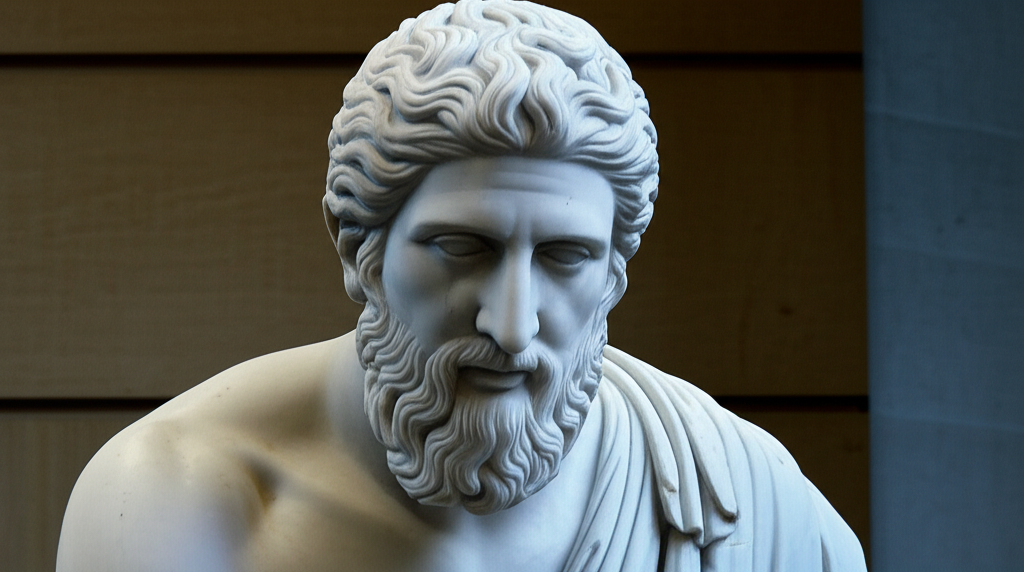
The Metaphysical Interplay
The relationship between Quality and Form is deeply metaphysical. It suggests that there is an objective standard of "goodness" or "excellence" inherent in the very nature of things. When we speak of something having "good quality," we are implicitly acknowledging that it has successfully realized its Form – its potential, its purpose, its essential definition.
This perspective allows us to move beyond purely subjective appraisals. While individual preferences might vary (one person prefers a modern chair, another an antique), the underlying quality of each chair can still be assessed against its specific Form (the ideal modern chair vs. the ideal antique chair). Both can exhibit high quality by fulfilling their respective Forms.
Conclusion: Beyond Surface Impressions
In our pursuit of understanding the world, the definition of quality remains a cornerstone. By tracing its philosophical lineage through the concept of Form – as explored by Plato, Aristotle, and countless other thinkers in the Great Books – we uncover a profound metaphysical truth. Quality is not just a fleeting impression or a personal preference; it is the observable manifestation of a thing's adherence to its essential nature, its ideal blueprint. To truly appreciate quality is to understand Form, and to understand Form is to delve into the very fabric of reality.
YouTube Video Suggestions:
-
📹 Related Video: PLATO ON: The Allegory of the Cave
Video by: The School of Life
💡 Want different videos? Search YouTube for: ""Plato Theory of Forms Explained" or "What are Plato's Forms?""
2. ## 📹 Related Video: ARISTOTLE ON: The Nicomachean Ethics
Video by: The School of Life
💡 Want different videos? Search YouTube for: ""Aristotle Metaphysics Form and Matter" or "Aristotle's Four Causes Explained""