

The Shifting Sands of Being: Unpacking the Definition of Life and Death
Summary: The definition of life and death is not a static concept but a profound, evolving inquiry at the intersection of philosophy, science, and our intrinsic connection to nature. This article delves into the historical and contemporary attempts to grasp these fundamental states, exploring how thinkers from the Great Books of the Western World illuminate our understanding, and how modern scientific advancements continually challenge our perceptions. From the biological markers of existence to the existential contemplation of non-being, we explore the elusive boundaries that define our experience.
The Ever-Present Question: What Does it Mean to Be?
From the moment we first gaze upon the world, we are confronted with the undeniable reality of existence. But what, precisely, constitutes life? And where, exactly, does it cease, giving way to death? These aren't just academic musings for philosophers; they are questions that underpin our ethics, our laws, our medicine, and indeed, our very understanding of ourselves. For centuries, humanity has grappled with these ultimate definitions, weaving narratives, conducting experiments, and formulating theories that reflect our deepest fears and greatest hopes.
Science's Lens: The Biological Imperative
Modern science offers a tangible, though often incomplete, definition of life. Biologists typically identify several key characteristics:
- Homeostasis: The ability to maintain a stable internal environment.
- Organization: Being composed of one or more cells.
- Metabolism: The transformation of energy.
- Growth: An increase in size and development.
- Adaptation: The ability to adjust to the environment.
- Response to Stimuli: Reacting to changes in the environment.
- Reproduction: The ability to produce new individual organisms.
Yet, even these criteria are not without their ambiguities. Viruses, for instance, lack some of these traits but are considered by many to be alive. Artificial intelligence, while not biological, prompts us to reconsider what "intelligence" or "consciousness" means outside of organic forms. This scientific pursuit, though seemingly modern, has roots in early observations of nature. Aristotle, in his History of Animals and On the Soul, meticulously categorized living beings and pondered the very essence of the "soul" (psyche) as the animating principle of a living body—a proto-biological and philosophical inquiry rolled into one.
The Philosophical Quandary: Beyond the Mere Mechanism
While science provides a framework, philosophy dives deeper into the meaning of life. Is it merely a complex set of chemical reactions, or is there something more?
- Ancient Greek Perspectives:
- Plato, in works like Phaedo, posits that true life resides in the immortal soul, which is distinct from the perishable body. The body is merely a temporary vessel, and death is the soul's release.
- Aristotle, in contrast, saw the soul as the "form" of the body, inseparable from its living matter. To be alive was to possess a soul that enabled specific functions (nutrition, sensation, locomotion, thought). When the body ceased to function, the soul also ceased in that particular form.
- Cartesian Dualism: René Descartes, a pivotal figure in the Great Books tradition, famously separated mind (res cogitans) from body (res extensa). For Descartes, life in its most profound sense was tied to consciousness and thought, a non-physical substance that could exist independently of the physical body, leading to complex questions about where life truly resides and what constitutes its end.
- Existentialist Echoes: While more modern, the seeds of existential thought can be found in the contemplation of individual existence and the search for meaning. For many philosophers, life isn't just about biological function; it's about purpose, experience, and self-awareness.
The Inevitable Horizon: Defining Death
If defining life is complex, defining death is equally, if not more, fraught with ethical and philosophical dilemmas.
Scientific and Medical Definitions of Death:
| Type of Death | Description | Implications |
|---|---|---|
| Clinical Death | Cessation of heartbeat and breathing. Reversible with immediate intervention. | Historically, the primary marker. Still used in emergency medicine. |
| Brain Death | Irreversible cessation of all functions of the entire brain, including the brainstem. | Legally recognized as death in most places, allowing for organ donation. |
| Cellular Death | The cessation of metabolic processes at the cellular level. | Occurs gradually after clinical or brain death, contributing to decomposition. |
| Social Death | Loss of social identity, often preceding biological death (e.g., severe dementia). | A non-biological but significant aspect of the end of a person's perceived existence. |
The move from defining death by cardiac arrest to brain death revolutionized medicine and ethics. It forced us to confront the core of what we consider essential for "being alive." Is a body with a beating heart but no brain activity truly alive in a human sense?
Philosophical Perspectives on Death:
- Socrates, in Plato's Apology and Phaedo, faced death with remarkable equanimity, arguing that fearing death is to presume knowledge of the unknown, and perhaps, it is the greatest good. For him, the philosopher's life is a preparation for death, a release of the soul from the body.
- Epicurus, as preserved in the Great Books, offered a comforting thought: "Death is nothing to us; for that which is dissolved is without sensation, and that which is without sensation is nothing to us." His argument is that we only experience life, never death itself, making fear irrational.
- Stoics advocated for an acceptance of death as a natural part of the cosmic order, something beyond our control and therefore not a source of distress.
Nature's Grand Cycle: Life, Death, and Renewal
Beyond the laboratory and the lecture hall, nature itself offers a profound, visceral understanding of life and death. From the sprouting seed to the decaying leaf, from the birth of a star to its eventual collapse, the universe is a testament to cycles of creation and dissolution.
- The interconnectedness of ecosystems, where the death of one organism provides life for another, highlights a continuous flow rather than an abrupt end.
- The seasons, the tides, the growth and decay of forests—all these natural phenomena underscore the impermanence of individual forms and the enduring continuity of existence.
- Ancient philosophers, observing the rhythms of nature, often drew parallels to human life and death, seeing them as integral parts of a larger, grand design. This holistic view, where all things are interconnected, reminds us that our individual definition of life and death is but a small part of a much grander narrative.
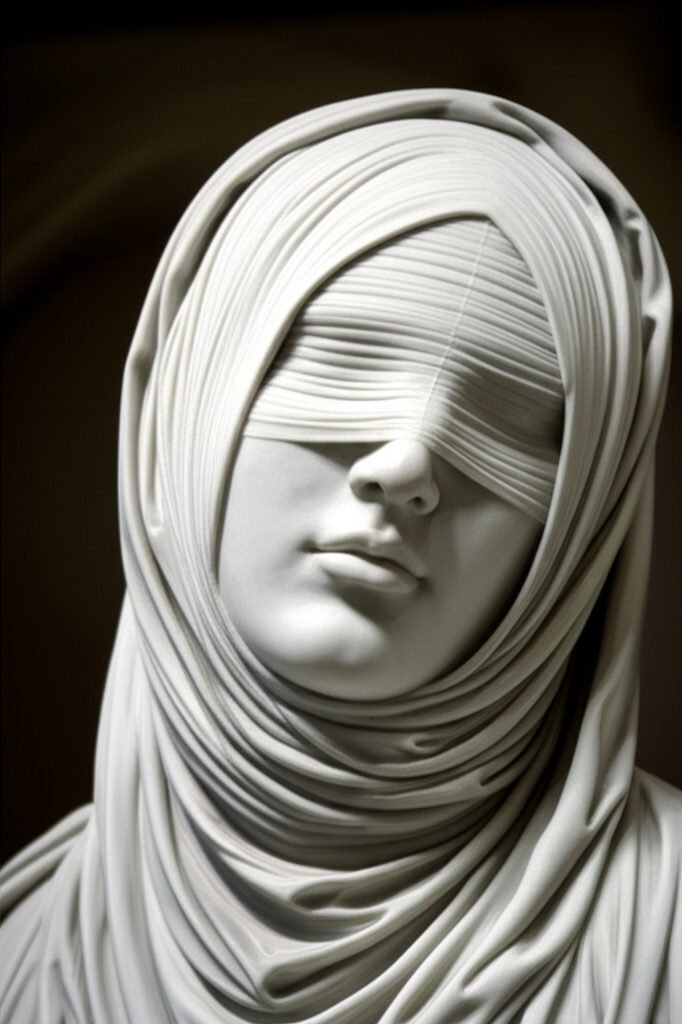 or Thanatos (Death), with delicate details suggesting peace and transition rather than terror. The background is a soft, ethereal blur, enhancing the sense of timelessness.)
The Enduring Enigma
Ultimately, the definition of life and death remains an open-ended philosophical journey, continually informed by scientific discovery and our evolving understanding of nature. It is a question that challenges our assumptions, pushes the boundaries of our knowledge, and compels us to reflect on the very essence of our being. As we continue to advance in medicine and technology, these definitions will only become more intricate, demanding deeper contemplation and renewed ethical consideration.
📹 Related Video: PLATO ON: The Allegory of the Cave
Video by: The School of Life
💡 Want different videos? Search YouTube for: ""Great Books of the Western World Plato Phaedo Summary""
📹 Related Video: ARISTOTLE ON: The Nicomachean Ethics
Video by: The School of Life
💡 Want different videos? Search YouTube for: ""Aristotle On the Soul Explained""