

The Elusive Quest for a Definition of Happiness
The pursuit of happiness is perhaps the most universal and enduring human endeavor. From the earliest philosophical inquiries to the present day, thinkers have grappled with its definition, its nature, and the means to achieve it. Yet, despite millennia of contemplation, a singular, universally accepted definition remains elusive. This article delves into the rich tapestry of philosophical thought on happiness, drawing primarily from the Great Books of the Western World, to illuminate the diverse perspectives that have shaped our understanding of this fundamental human experience. We will explore the interplay between pleasure and pain, the role of good and evil, and the profound ethical implications inherent in defining what it truly means to be happy.
Unpacking the Meaning: Why Defining Happiness is So Hard
At first glance, happiness seems self-evident. We all recognize its presence, or its absence, in our lives. However, attempting to pin down a precise definition quickly reveals its complexity. Is it a feeling, a state of being, a life well-lived, or perhaps a divine gift? The difficulty arises from its subjective nature, its dependence on individual values, cultural contexts, and the ever-changing landscape of human experience. What brings joy to one might bring indifference or even sorrow to another. Philosophers, through rigorous inquiry, have sought to move beyond mere fleeting contentment to a more profound and enduring understanding.
Ancient Greek Foundations: Eudaimonia vs. Hedonism
The foundational discussions on happiness often begin with the ancient Greeks, who offered two primary, albeit distinct, paths to understanding.
Aristotle and the Pursuit of Eudaimonia
For Aristotle, particularly in his Nicomachean Ethics, happiness (eudaimonia) is the "chief good," the ultimate end (telos) of human life. It is not a fleeting emotion or a simple sum of pleasures, but rather an activity of the soul in accordance with complete virtue.
Key Aristotelian Concepts:
- Eudaimonia: Often translated as "flourishing," "well-being," or "living well." It implies a life lived excellently, achieving one's full potential.
- Virtue (Arete): Moral and intellectual excellences. Aristotle argued that a truly happy person is a virtuous person, acting rationally and ethically.
- Rational Activity: The distinct function of humans is reason. Therefore, a life of reason, engaging in contemplation and virtuous action, is the path to happiness.
- Completeness and Self-Sufficiency: Eudaimonia is complete because it is chosen for its own sake, and self-sufficient because it lacks nothing.
Aristotle meticulously separates happiness from mere sensation, arguing that while pleasure is a natural accompaniment to virtuous activity, it is not the goal itself. A life dedicated solely to sensual pleasure would be more fitting for cattle than for humans.
Epicurus and the Refined Hedonism
In contrast to Aristotle's virtue ethics, Epicurus proposed a form of hedonism, but one often misunderstood. For Epicurus, the goal of life was the absence of pain in the body (aponia) and disturbance in the soul (ataraxia). This was not a call for wild debauchery but for a tranquil, simple life.
Epicurean Principles for Happiness:
| Principle | Description | Connection to Happiness |
|---|---|---|
| Ataraxia | Freedom from mental disturbance, anxiety, and fear (especially fear of death and gods). | Inner peace, tranquility |
| Aponia | Freedom from bodily pain. | Physical comfort |
| Prudence | The most important virtue, allowing one to choose pleasures wisely and avoid greater pain. | Rational decision-making |
| Simple Pleasures | Emphasized friendship, intellectual conversation, and moderation over lavish indulgence. | Sustainable contentment |
Epicurus taught that true pleasure derived from a state of calm equilibrium, where basic needs are met, and the soul is free from turmoil. Thus, while pleasure was the ultimate good, it was a refined, long-term pleasure achieved through moderation and intellectual pursuits, not immediate gratification.
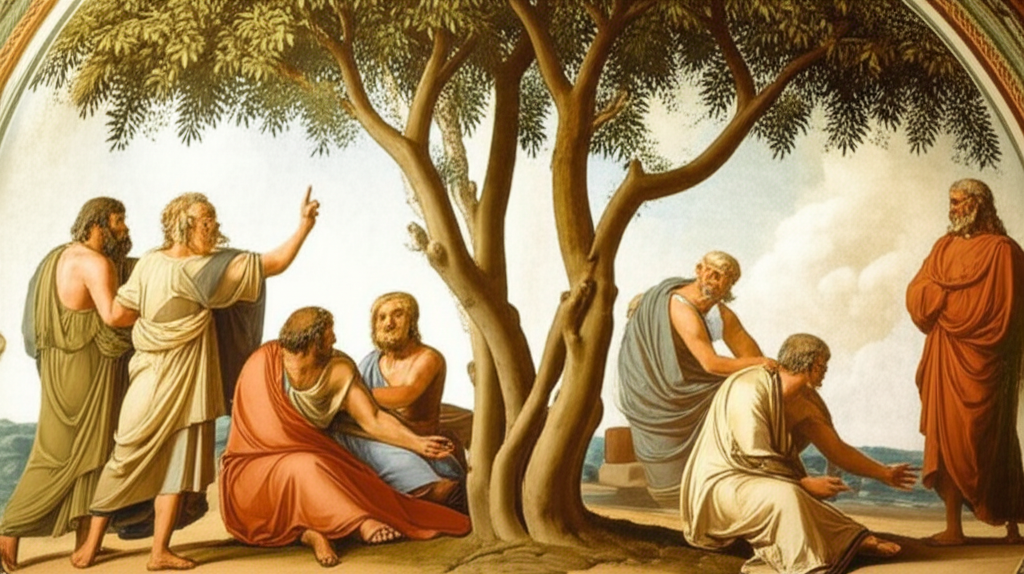
The Interplay of Pleasure and Pain
The concepts of pleasure and pain are inextricably linked to the definition of happiness. Every major philosophical school has had to contend with their role.
- Socrates/Plato: While recognizing pleasure, they often viewed it with suspicion, especially sensual pleasure, seeing it as potentially distracting from the pursuit of truth and virtue. True happiness lay in the good of the soul, attained through wisdom.
- Stoicism: Advocated for indifference to both pleasure and pain (apatheia), believing that true happiness comes from living in accordance with reason and virtue, accepting what is beyond one's control.
- Utilitarianism (Mill): John Stuart Mill, building on Jeremy Bentham, argued that happiness is pleasure and the absence of pain. However, Mill distinguished between "higher" (intellectual, moral) and "lower" (sensual) pleasures, asserting that the quality of pleasure matters more than mere quantity. "It is better to be a human being dissatisfied than a pig satisfied; better to be Socrates dissatisfied than a fool satisfied."
The challenge lies in determining whether pleasure is an intrinsic part of happiness, a consequence of it, or merely a fleeting sensation that can distract from it.
The Moral Compass: Good and Evil in the Definition of Happiness
Can one be truly happy while engaging in evil? This question has profound implications for the definition of happiness and has been a central concern for moral philosophers.
- Plato and the Ring of Gyges: Through the story of the Ring of Gyges, Plato explores whether a person would choose to be unjust if they could escape punishment. His conclusion, articulated through Socrates, is that injustice corrupts the soul, making true happiness impossible. The good life is inherently linked to the just life.
- Augustine of Hippo: For Christian thinkers like Augustine, true happiness (beatitudo) is found ultimately in God, in the beatific vision. Earthly happiness is always imperfect and fleeting. Evil actions distance one from God, and thus from true happiness. The pursuit of good is therefore a prerequisite.
- Immanuel Kant: Kant famously argued that happiness should not be the primary motive for moral action. One acts morally out of duty, from respect for the moral law. While virtue makes one worthy of happiness, happiness itself is not guaranteed in this life and is not the definition of a moral life. However, he posited a "highest good" (summum bonum) where virtue and happiness are united, often requiring a postulate of God and immortality.
These perspectives highlight that for many philosophers, a definition of happiness that ignores the moral dimension is incomplete or flawed. A life lived in accordance with good is often seen as intrinsically linked to, or even constitutive of, genuine happiness.
Towards a Modern Understanding: Synthesis and Ongoing Dialogue
While a singular definition of happiness remains elusive, the centuries of philosophical inquiry offer valuable insights.
- Happiness as a Process, Not a Destination: It is less about achieving a static state and more about an ongoing engagement with life, growth, and meaningful action.
- Balance of Internal and External Factors: While external circumstances (health, wealth, relationships) contribute, internal states (virtue, resilience, perspective) are often deemed more crucial for enduring happiness.
- The Interconnectedness of Mind, Body, and Spirit: A holistic definition often encompasses intellectual flourishing, emotional well-being, physical health, and a sense of purpose.
The definition of happiness is not merely an academic exercise; it guides our choices, shapes our societies, and informs our understanding of what constitutes a life worth living. It remains a dynamic concept, continually re-evaluated in light of new knowledge and evolving human experience.
Conclusion: The Enduring Pursuit
The journey through the Great Books of the Western World reveals that the definition of happiness is a multifaceted jewel, reflecting different facets of human experience and aspiration. Whether viewed as Aristotle's eudaimonia, Epicurus's tranquil pleasure, or a divine beatitude, the core inquiry persists: what truly makes a life good, meaningful, and fulfilling? The interplay of pleasure and pain, and the ever-present moral considerations of good and evil, demonstrate that happiness is not a simple sentiment but a profound philosophical challenge that continues to invite contemplation and personal discovery.
📹 Related Video: ARISTOTLE ON: The Nicomachean Ethics
Video by: The School of Life
💡 Want different videos? Search YouTube for: ""Aristotle Nicomachean Ethics Happiness Explained" and "What is Eudaimonia? Philosophy Basics""