

The Elusive Eudaimonia: Unpacking the Philosophical Definition of Happiness
The human heart, across every epoch and culture, beats to the rhythm of a singular, profound desire: happiness. Yet, for all its universality, the definition of happiness remains one of philosophy's most enduring and perplexing challenges. Is it a fleeting sensation, a state of mind, a moral accomplishment, or a life lived in accordance with some higher purpose? This article delves into the rich tapestry of Western thought, drawing from the wellspring of the Great Books, to explore how philosophers have grappled with this fundamental question, examining the interplay of pleasure and pain, the pursuit of the good and evil, and the very essence of human flourishing. We will journey from the ancient Greek ideal of eudaimonia to later theological and ethical considerations, seeking to illuminate the multifaceted nature of this most cherished aspiration.
The Ancient Quest: Happiness as Eudaimonia
For many of the ancients, particularly the Greeks, happiness was far more profound than a mere feeling. It was a state of being, a life well-lived, a flourishing existence.
Aristotle's Enduring Legacy: The Virtuous Life
Perhaps no philosopher articulated the definition of happiness more comprehensively than Aristotle. In his Nicomachean Ethics, he posits that happiness, or eudaimonia, is the ultimate human good, the highest aim of all human activity. It is not, he argues, synonymous with pleasure, honor, or wealth, though these may be components of a happy life. Instead, eudaimonia is an activity of the soul in accordance with virtue (aretē) over a complete life.
Aristotle's view emphasizes:
- Rational Activity: Happiness is unique to humans because it involves our distinctive capacity for reason.
- Virtue: It requires the cultivation of moral and intellectual virtues, such as courage, temperance, justice, and practical wisdom.
- Completeness: True happiness isn't a momentary joy but a sustained state achieved through a lifetime of virtuous action.
For Aristotle, a truly happy person is one who functions excellently, fulfilling their human potential. The absence of great pain and the presence of moderate pleasure might accompany this, but they are not the essence of happiness itself.
Plato's Ideal Form: Justice in the Soul
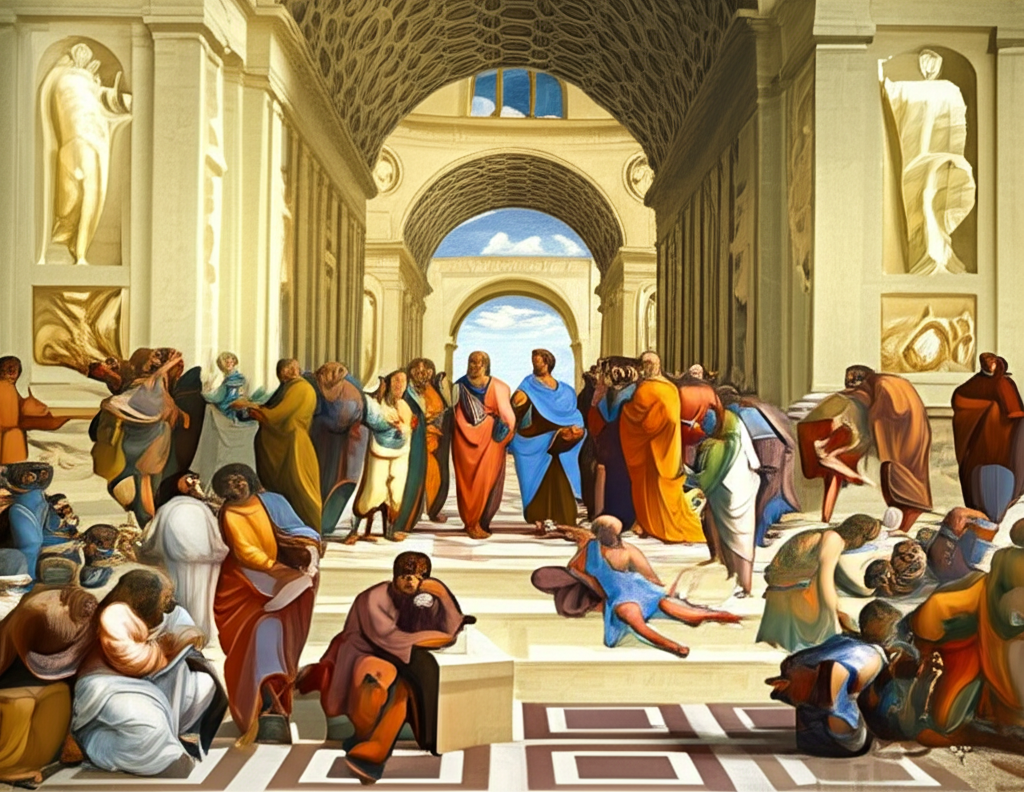
Before Aristotle, his teacher Plato, in works like The Republic, explored happiness primarily through the lens of justice. For Plato, true happiness in an individual is achieved when the three parts of the soul—reason, spirit, and appetite—are in harmony, with reason ruling justly. An unjust soul, dominated by unruly appetites or misguided spirit, cannot truly be happy, regardless of external circumstances. The pursuit of Good and the avoidance of Evil are intrinsically linked to the soul's health and, by extension, to genuine happiness. This internal order reflects the ideal Forms, particularly the Form of the Good, which illuminates all truth and value.
Pleasure, Pain, and the Hedonistic Calculus
Not all philosophers agreed that happiness was solely about virtue or an ideal state. For some, the direct experience of pleasure and the absence of pain were paramount.
Epicurus and the Absence of Suffering
Epicurus, a Hellenistic philosopher, offered a different, often misunderstood, definition of happiness. He argued that happiness consists of ataraxia (tranquility of mind) and aponia (absence of bodily pain). This was not a call for hedonistic excess, but rather for a life of simple pleasures, friendship, and intellectual pursuits, free from anxiety and fear. He distinguished between kinetic pleasures (like eating when hungry) and static pleasures (the state of being full). True happiness lay in the latter, a state of contentment and freedom from disturbance. The wise person, for Epicurus, calculates which actions lead to the greatest long-term pleasure and the least pain, embodying a careful, rational hedonism.
The Utilitarian Echoes
While later in development than the Great Books period, the Epicurean emphasis on pleasure and pain laid groundwork for utilitarian thought, which defines the good as that which maximizes happiness (or pleasure) and minimizes suffering for the greatest number. This approach, though distinct, highlights the enduring philosophical tension between individual virtue and collective well-being in the pursuit of happiness.
Virtue, Duty, and the Moral Compass
Beyond the pursuit of flourishing or pleasure, other traditions linked happiness inextricably to moral duty and divine alignment.
The Stoic Path to Serenity
For the Stoics, including figures like Epictetus and Marcus Aurelius (whose Meditations are a cornerstone of the Great Books), happiness was found in living in accordance with nature and reason, accepting what is beyond one's control, and cultivating virtue. Pleasure and pain were considered "indifferents" – things that should not dictate one's emotional state. True freedom and serenity came from mastering one's internal reactions to external events. The Stoic sage finds happiness not in external fortune, but in their own virtuous character and rational acceptance of fate. The definition of happiness here is self-sufficiency and inner peace, immune to the vicissitudes of fortune.
Augustine and the Divine Good
St. Augustine, in works like Confessions and The City of God, profoundly shifted the discourse by integrating Christian theology. For Augustine, ultimate happiness, or "blessedness," cannot be found fully in this earthly life. True and everlasting happiness resides in God, the ultimate Good. Human beings are restless until they rest in Him. Earthly happiness is at best a partial reflection, a foretaste of the divine joy. The pursuit of happiness thus becomes a spiritual journey, a turning away from evil and earthly temptations towards divine love and grace.
The Modern Labyrinth: Subjectivity and Objective Good
The philosophical journey regarding happiness continues, with modern thought often emphasizing subjective well-being and individual definitions. However, the core questions posed by the ancients remain relevant.
Defining Happiness Today: A Spectrum of Views
Contemporary discussions often oscillate between psychological states (feeling good), life satisfaction (thinking one's life is good), and eudaimonic well-being (living a meaningful, purposeful life). The ancient tension between pleasure and pain, the pursuit of the Good and Evil, and the role of virtue continues to inform our understanding, even if the language has evolved.
| Philosophical Approach | Core Definition of Happiness | Key Emphasis | Relationship to Pleasure/Pain | Relationship to Good/Evil |
|---|---|---|---|---|
| Aristotelian | Eudaimonia (Flourishing) | Virtue, Reason | Secondary; accompanies virtue | Derived from acting virtuously (Good) |
| Platonic | Justice in the Soul | Harmony, Ideal Forms | Indirect; result of internal order | Alignment with the Form of the Good |
| Epicurean | Aponia & Ataraxia | Absence of Suffering | Primary; goal is maximum pleasure, minimal pain | Rational calculation for best outcome (Good) |
| Stoic | Inner Serenity, Virtue | Control over Self | Indifferent; not the goal | Living in accordance with nature (Good) |
| Augustinian | Blessedness in God | Divine Love, Faith | Fleeting earthly, eternal divine | Found only by turning to God (Good) |
The Enduring Pursuit of Good and the Avoidance of Evil
Ultimately, the philosophical quest for the definition of happiness is deeply intertwined with the broader human endeavor to understand what constitutes a good life and how to avoid evil. Whether it's Aristotle's virtuous activity, Plato's just soul, Epicurus's tranquil existence, the Stoic's rational acceptance, or Augustine's divine love, each tradition, drawing from the profound insights of the Great Books, posits happiness as something more than mere fleeting contentment. It is, in its deepest sense, a state of being aligned with what is truly valuable, meaningful, and ultimately, good. The continuous re-evaluation of this concept is not a sign of failure, but rather a testament to its profound importance and complex nature in the human experience.
Further Philosophical Exploration
📹 Related Video: ARISTOTLE ON: The Nicomachean Ethics
Video by: The School of Life
💡 Want different videos? Search YouTube for: ""Aristotle Nicomachean Ethics Happiness Summary""
📹 Related Video: STOICISM: The Philosophy of Happiness
Video by: The School of Life
💡 Want different videos? Search YouTube for: ""Stoicism Happiness Marcus Aurelius Epictetus Seneca""