

The Definition of a Just War: A Philosophical Inquiry
The concept of a "just war" stands as one of philosophy's most enduring and challenging attempts to reconcile the grim reality of organized violence with the persistent human yearning for morality and order. This article delves into the historical and philosophical definition of a just war, exploring its evolution from ancient thought to modern international law, examining the criteria by which societies have sought to legitimize, limit, and ultimately understand conflict. Drawing from the intellectual bedrock of the Great Books of the Western World, we trace the continuous struggle to apply principles of justice within the chaotic domain of war and peace.
Reconciling Violence with Virtue: An Introduction
From the earliest city-states to the complexities of globalized conflict, humanity has grappled with the paradox of war: a necessary evil for some, an absolute moral failure for others. The philosophical tradition, however, has rarely contented itself with simple condemnation or uncritical acceptance. Instead, thinkers have meticulously constructed frameworks, seeking a definition that allows for the ethical evaluation of armed conflict. This quest is not about glorifying war, but rather about establishing moral and legal boundaries, ensuring that even in the gravest of circumstances, the pursuit of justice remains paramount. The Great Books, from Plato's Republic to Kant's Perpetual Peace, serve as our guide through this intricate intellectual landscape.
Ancient Foundations: The Seeds of Just Conflict
The earliest philosophical inquiries into the nature of war often linked it to the state's very purpose. For the ancient Greeks, particularly figures like Plato and Aristotle, war could be justified if it served the telos (purpose) of the polis – self-preservation, defense of citizens, or the establishment of a just order. Yet, even then, there was an implicit understanding that such actions should be undertaken with a certain measure of prudence and virtue.
The Romans provided a more formalized, if ritualistic, approach. Their jus fetiale (law of nations) established strict procedures for declaring war, ensuring it was a last resort and undertaken only after proper grievances and diplomatic efforts had failed. This nascent form of law sought to imbue conflict with a sense of legitimacy, a precursor to later, more robust theories of justice in warfare.
Medieval Systematization: Augustine and Aquinas
The Christian tradition, profoundly influenced by both classical philosophy and its own theological imperatives, dramatically shaped the definition of a just war.
St. Augustine of Hippo: The Sorrowful Necessity
In the wake of the Roman Empire's decline, St. Augustine of Hippo (354–430 AD) laid foundational stones for Just War theory. For Augustine, a pacifist at heart, war was always a tragic consequence of sin. However, he acknowledged its potential necessity in certain circumstances, particularly for defense or to restore a violated peace. Key Augustinian criteria included:
- Just Cause: War must be waged to avenge wrongs, to defend against aggression, or to punish those who refuse to make amends for injury. It is never for conquest or glory.
- Legitimate Authority: Only a sovereign power (a prince or state) has the authority to declare war, not private individuals.
- Right Intention: The ultimate goal must be to restore peace and order, not to expand power or exact revenge.
Augustine's contribution was pivotal: he framed war not as an act of aggression, but as a potential instrument of justice, albeit one undertaken with profound sorrow.
St. Thomas Aquinas: The Scholastic Framework
Centuries later, St. Thomas Aquinas (1225–1274 AD) further systematized Augustine's ideas in his Summa Theologica, providing the widely recognized tripartite definition of Jus ad bellum (justice in going to war):
- Legitimate Authority: War must be waged by a sovereign authority, not by private citizens.
- Just Cause: There must be a grave and lasting wrong that cannot be otherwise rectified. This often implies self-defense or the protection of the innocent.
- Right Intention: The intention must be to promote good or avoid evil, to restore peace, and to correct injustice, not for self-aggrandizement or cruelty.
Aquinas's work solidified the moral and theological underpinnings of Just War theory, providing a robust framework that would influence Western thought for centuries.
The Enlightenment and the Birth of International Law
With the rise of nation-states and the decline of unified religious authority, the definition of a just war began to secularize, transitioning from theological decree to principles of international law and political philosophy.
Hugo Grotius: The Law of Nations
Hugo Grotius (1583–1645), often considered the father of international law, built upon the medieval tradition but grounded his arguments in natural law accessible through reason, rather than solely divine revelation. In his seminal work, On the Law of War and Peace, Grotius meticulously detailed the conditions under which war could be considered just, emphasizing the rights and obligations of states. His work was crucial in establishing the idea that even between warring nations, a framework of law and justice should prevail.
Immanuel Kant: Perpetual Peace and Moral Imperatives
Immanuel Kant (1724–1804), in his essay Perpetual Peace, offered a more radical vision. While not directly articulating a "just war" theory in the traditional sense, Kant's philosophy implicitly challenges the very premise of war. He argued for a federation of free states governed by public law, where aggressive war would be rendered obsolete. His categorical imperative, demanding that actions be universally applicable, profoundly questions the moral legitimacy of any war not undertaken as a last resort for self-preservation or defense of universal rights. For Kant, the ultimate definition of a just international order is one where peace reigns, guided by rational law.
Key Principles of Just War Theory: A Modern Synthesis
Today, the definition of a just war is commonly understood through two main categories, each with specific criteria, reflecting centuries of philosophical and legal debate.
Jus ad Bellum (Justice in Going to War)
These principles govern whether it is morally permissible for a state to initiate armed conflict:
- Just Cause: The most fundamental criterion. War is only permissible to confront a real and certain danger, such as self-defense against aggression, protecting innocent life, or redressing a grave, public wrong.
- Legitimate Authority: Only a properly constituted public authority (e.g., a sovereign state or international body) has the right to declare war.
- Right Intention: The primary goal of war must be to restore peace and justice, not to gain territory, wealth, or power, or to exact revenge.
- Proportionality (ad bellum): The anticipated good to be achieved by going to war must outweigh the expected harm and costs of the conflict.
- Last Resort: All peaceful alternatives and diplomatic avenues must have been genuinely exhausted before resorting to armed force.
- Reasonable Prospect of Success: There must be a reasonable chance of achieving the just cause; futile wars are morally irresponsible.
Jus in Bello (Justice in Conducting War)
These principles govern the moral conduct of parties once war has begun:
- Discrimination (Non-combatant Immunity): Military forces must distinguish between combatants and non-combatants. Intentional targeting of civilians or civilian infrastructure is prohibited.
- Proportionality (in bello): The force used must be proportionate to the military objective. Excessive force or destruction beyond what is necessary to achieve a legitimate military goal is forbidden. Civilian casualties, even if unintended, must be minimized.
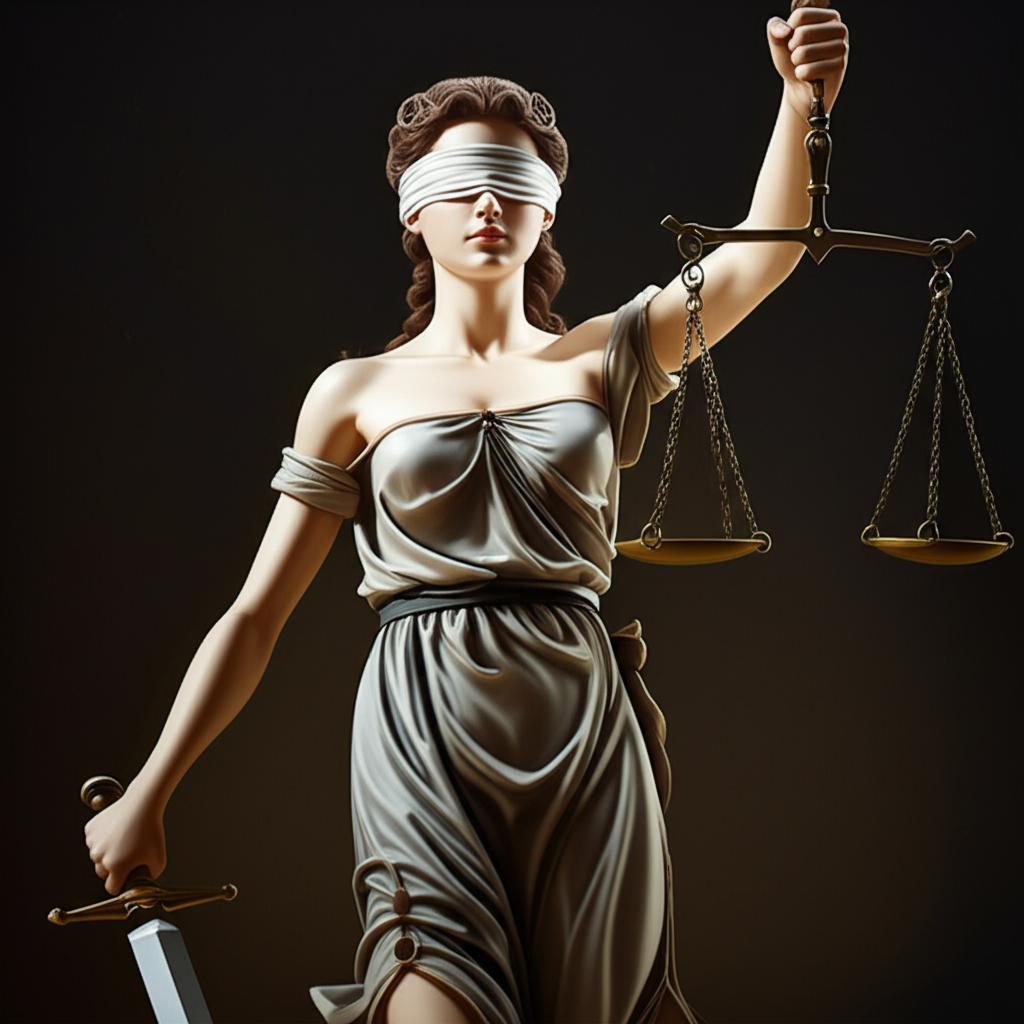 standing between two warring factions. One faction is clearly defensive, protecting civilians, while the other appears aggressive, adorned with symbols of conquest. Rays of light emanate from Justice, highlighting principles of restraint and legitimate defense, while shadows shroud acts of wanton destruction.)
The Enduring Relevance and Contemporary Challenges
The definition of a just war remains a vital, albeit constantly debated, framework in the 21st century. As the nature of conflict evolves – from interstate wars to humanitarian interventions, counter-terrorism operations, and cyber warfare – philosophers, legal scholars, and policymakers continue to wrestle with how these ancient principles of justice and law apply. The core tension between war and peace persists, demanding that we continuously refine our understanding of what constitutes a legitimate, moral, and lawful use of force. The legacy of the Great Books ensures that this profound ethical inquiry into the definition of a just war will continue to shape our pursuit of a more peaceful and just world.
YouTube Video Suggestions:
-
📹 Related Video: KANT ON: What is Enlightenment?
Video by: The School of Life
💡 Want different videos? Search YouTube for: "Michael Walzer Just and Unjust Wars Lecture"
2. ## 📹 Related Video: What is Philosophy?
Video by: The School of Life
💡 Want different videos? Search YouTube for: "Just War Theory Explained Crash Course Philosophy"