

The Definition of a Just War: A Philosophical Inquiry
The concept of a "just war" is not merely an academic exercise, but a profound and enduring philosophical attempt to reconcile the horrific reality of armed conflict with fundamental principles of justice and law. From the ancient world to contemporary geopolitical challenges, thinkers have wrestled with the very definition of when, if ever, engaging in war can be morally permissible, and how such conflicts, once begun, ought to be conducted to uphold some semblance of human dignity and pave the way for lasting peace. This article explores the historical development and key tenets of Just War Theory, drawing upon the rich intellectual heritage found within the Great Books of the Western World.
Navigating the Labyrinth of Conflict: An Introduction
The very notion of a "just war" might strike some as an oxymoron. How can something as destructive and violent as war ever be considered just? Yet, throughout history, societies have found themselves compelled to resort to arms, often believing their cause to be righteous. Philosophy, in its relentless pursuit of understanding, has sought to impose a moral and legal framework upon this most brutal of human endeavors. This framework, known as Just War Theory, provides a critical lens through which we can evaluate the morality of going to war (jus ad bellum) and the morality of conduct within war (jus in bello). It’s a centuries-long conversation about the precise definition of legitimate force, and a constant struggle to balance the harsh realities of conflict with the aspirational ideals of justice and peace.
Historical Foundations: From Antiquity to Scholasticism
The roots of Just War Theory stretch back to antiquity, with early ideas appearing in Roman law and Stoic philosophy. Cicero, for instance, spoke of wars undertaken only after formal demand for restitution and with a clear purpose. However, it was within the Christian tradition that the theory found its most comprehensive early articulation, profoundly influencing subsequent Western thought.
St. Augustine's Formative Contributions
St. Augustine of Hippo (354-430 CE), grappling with the Roman Empire's decline and the need for Christian citizens to defend their communities, laid the foundational arguments. For Augustine, true peace was an internal state, a tranquility of order. However, he acknowledged that earthly peace might require the use of force. He argued that war could only be justified if waged:
- By legitimate authority: Not by private individuals.
- For a just cause: To avenge injuries, defend the innocent, or restore order, not for conquest or glory.
- With a right intention: Driven by love and the desire for peace, not hatred or cruelty.
Augustine's emphasis on justice as dictated by divine law provided a crucial theological underpinning for the definition of a permissible war.
St. Thomas Aquinas and the Scholastic Refinement
Centuries later, St. Thomas Aquinas (1225-1274), drawing heavily on Augustine and Aristotle, systematized these ideas into three explicit conditions for jus ad bellum in his Summa Theologica. These conditions became the bedrock of subsequent Just War Theory:
- Sovereign Authority: The war must be waged by a legitimate ruler, not private persons. This directly links to the concept of law and state sovereignty.
- Just Cause: There must be a grave and lasting injury inflicted by the enemy, such as self-defense against aggression, or to right a serious wrong. This is the core of justice in initiating conflict.
- Right Intention: The warring party must intend to promote good or avoid evil, and to restore peace, not to gain power or inflict wanton destruction.
Aquinas's clear articulation provided a robust definition for evaluating the initiation of war, solidifying its place within philosophical and theological discourse.
The Age of Reason and the Rise of International Law
As Europe moved beyond the medieval period, the principles of Just War Theory began to be secularized and codified, forming the basis of modern international law concerning war and peace.
Hugo Grotius and the Law of Nations
Hugo Grotius (1583-1645), often considered the father of international law, significantly advanced the theory in his seminal work, De Jure Belli ac Pacis (On the Law of War and Peace). Grotius sought to establish a universal law of nations, applicable to all states regardless of their religious beliefs. He retained the core conditions of jus ad bellum but placed them within a secular framework of natural law and the rights of states, further refining the definition of legitimate state action. His work was crucial in shifting the focus from divine command to rational principles of justice and reciprocal obligation between sovereign entities.
Immanuel Kant's Vision for Perpetual Peace
Later, Immanuel Kant (1724-1804), in his essay Perpetual Peace, offered a more idealistic, yet profoundly influential, perspective. While not directly articulating conditions for a just war, Kant argued that the ultimate goal should be the abolition of war itself through the establishment of a federation of free states governed by public law. His ideas underscore the ultimate aim of Just War Theory: not to glorify war, but to constrain it and ultimately to foster lasting peace.
Key Principles of Just War Theory: A Dual Framework
Just War Theory is typically divided into two main components, each offering a distinct set of criteria for evaluating the morality of armed conflict.
Jus ad Bellum (Justice in Going to War)
These principles govern the decision to initiate war. They provide the fundamental definition of a morally legitimate reason for conflict.
- Just Cause: There must be a grave and immediate threat, such as self-defense against aggression, the protection of innocents from widespread atrocities, or to reclaim something wrongfully taken.
- Legitimate Authority: Only properly constituted authorities (e.g., states, international bodies) can declare and wage war. This prevents private vengeance or rogue actions.
- Right Intention: The primary goal must be to achieve peace and correct a wrong, not conquest, revenge, or economic gain.
- Last Resort: All non-violent alternatives (negotiation, sanctions, diplomacy) must have been exhausted or deemed impractical.
- Proportionality (ad bellum): The good achieved by going to war must outweigh the harm it will cause. The anticipated benefits must be proportional to the expected costs and destruction.
- Reasonable Prospect of Success: There must be a reasonable chance of achieving the war's objectives; waging a hopeless war is often considered unjust due to the inevitable, pointless suffering.
Jus in Bello (Justice in Conduct of War)
These principles dictate the moral conduct of combatants once war has begun. They define how force can be used justly, even in the midst of conflict.
- Discrimination (Non-Combatant Immunity): Military force must be directed only at legitimate military targets and combatants. Civilians and non-combatants must be protected from intentional attack.
- Proportionality (in bello): The force used must be proportional to the military objective. Excessive force or destruction beyond what is necessary to achieve a legitimate military goal is prohibited.
- Necessity: Force used must be necessary to achieve a legitimate military objective. Unnecessary suffering or destruction is forbidden.
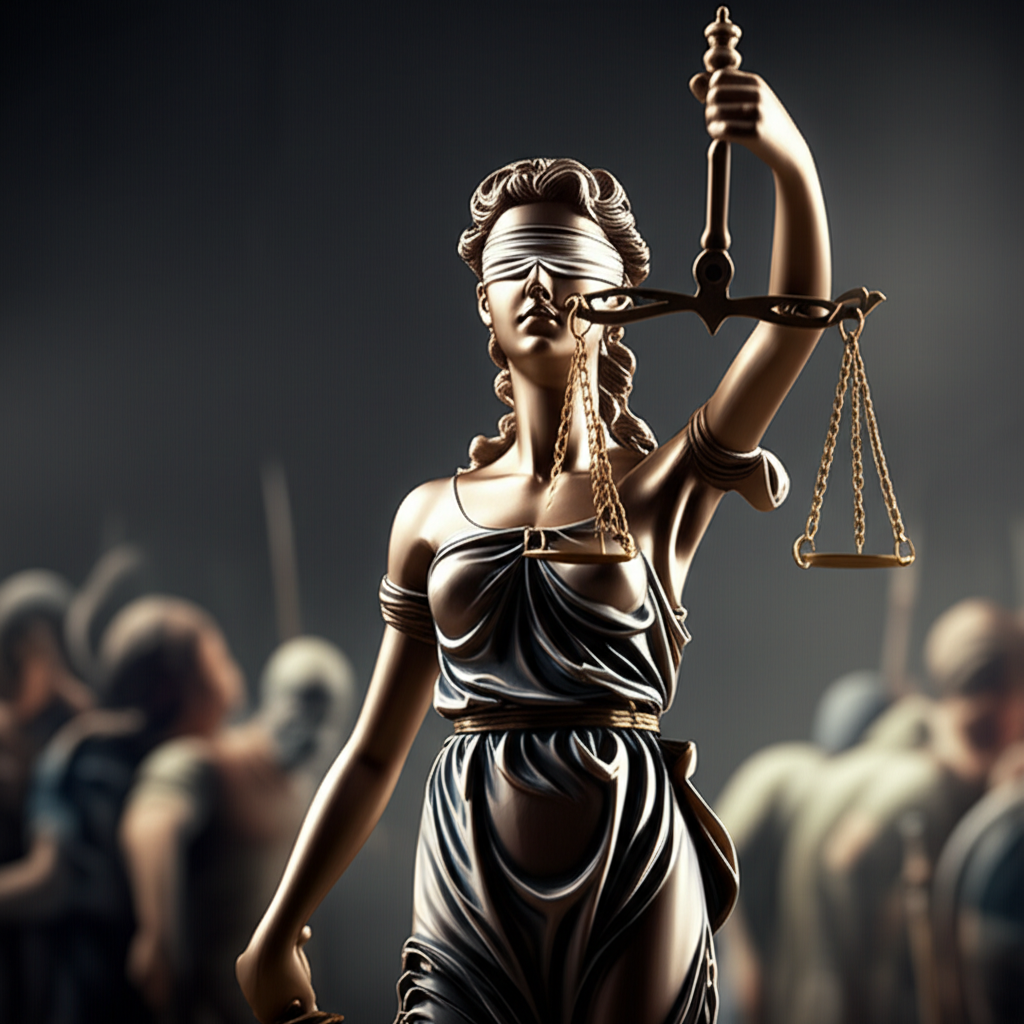
Modern Challenges and Enduring Relevance
In the contemporary world, the definition of a just war faces new challenges. The rise of non-state actors, terrorism, cyber warfare, and the devastating potential of modern weaponry (including nuclear arms) test the boundaries of these classical principles. Questions surrounding humanitarian intervention, pre-emptive strikes, and the ethics of drone warfare force a constant re-evaluation of justice and law in the context of war and peace.
Despite these complexities, Just War Theory remains the dominant framework for ethical and legal discussions about armed conflict. It provides a shared vocabulary and a set of criteria for international law, diplomatic discourse, and individual moral reflection, continually pushing humanity to seek peace through the careful application of justice.
The ongoing debate underscores that the definition of a just war is not static, but a living, evolving philosophical concept, essential for navigating the fraught landscape of human conflict.
📹 Related Video: What is Philosophy?
Video by: The School of Life
💡 Want different videos? Search YouTube for: ""Just War Theory Explained - Crash Course Philosophy #40""
📹 Related Video: PLATO ON: The Allegory of the Cave
Video by: The School of Life
💡 Want different videos? Search YouTube for: ""Augustine and Aquinas on Just War""