

The Definition of a Citizen: A Philosophical Inquiry
The concept of a "citizen" is far more profound and complex than a mere legal status. It lies at the very heart of political philosophy, shaping our understanding of individual identity, collective responsibility, and the nature of the State. From the ancient Greek polis to the sprawling nation-states of today, the Definition of a citizen has been a dynamic and often contested idea, intimately tied to the prevailing Laws, ethical frameworks, and societal structures of its time. This pillar page delves into the historical and philosophical evolution of citizenship, exploring how thinkers throughout the Great Books of the Western World have grappled with this fundamental question, and why its precise understanding remains crucial for contemporary society. We will navigate the shifting sands of rights, duties, and belonging, ultimately revealing that to define a citizen is to define the very fabric of human political existence.
The Ancient Roots: Citizenship in the Polis
Our journey into the Definition of a citizen must begin where Western political thought truly blossomed: ancient Greece. Here, the concept was not merely theoretical but a lived reality, foundational to the State and the individual's place within it.
Aristotle's Practical Definition: Who is a Citizen?
For Aristotle, in his Politics, the Definition of a citizen was profoundly practical and deeply tied to active participation in the State. He famously argued that a citizen is not merely someone who resides in a particular place, nor someone who enjoys legal rights, but rather "one who shares in the administration of justice and in the holding of office."
This meant:
- Participation in the Assembly: Voting on laws and policies.
- Serving on Juries: Engaging directly in the administration of justice.
- Holding Public Office: Taking on governmental roles, even if for a limited time.
Aristotle explicitly excluded women, slaves, resident aliens (metics), and even most manual laborers from citizenship, as he believed their occupations or nature prevented them from having the leisure or capacity for active political life. For him, a true citizen was a free man capable of virtue, contributing directly to the governance and well-being of the polis. The Law of the State was thus shaped by and for these active participants.
Plato's Ideal State and the Role of the Citizen
While Aristotle focused on the practicalities of citizenship in existing Greek city-states, his teacher Plato, in works like The Republic, envisioned an ideal State where the Definition of a citizen was less about political participation and more about fulfilling one's designated role for the common good. In Plato's hierarchical society, citizens were divided into classes—philosopher-kings, guardians, and producers—each with specific duties.
- Duty over Rights: Citizenship was primarily defined by one's duty to the State and its pursuit of justice, rather than individual rights.
- Virtue and Specialization: Each citizen's virtue lay in performing their function excellently, contributing to the harmony of the whole, guided by the wisdom of the philosopher-rulers.
Though distinct, both Aristotle and Plato underscore a crucial ancient perspective: citizenship was not an inherent birthright for all residents but a privileged status tied to specific responsibilities, capacities, and the flourishing of the State.
| Aspect | Ancient Greek Citizenship (e.g., Athens) | Modern Citizenship (e.g., Western Democracies) |
|---|---|---|
| Definition Basis | Active participation in governance and justice | Legal status, rights, and duties defined by Law |
| Eligibility | Restricted (free, adult, male landowners, native-born) | Broad (birthright, naturalization, universal suffrage) |
| Primary Focus | Collective good of the polis, direct democracy | Individual rights, representative democracy, national State |
| Key Obligation | Direct political and military service | Obedience to Law, taxes, potential military service |
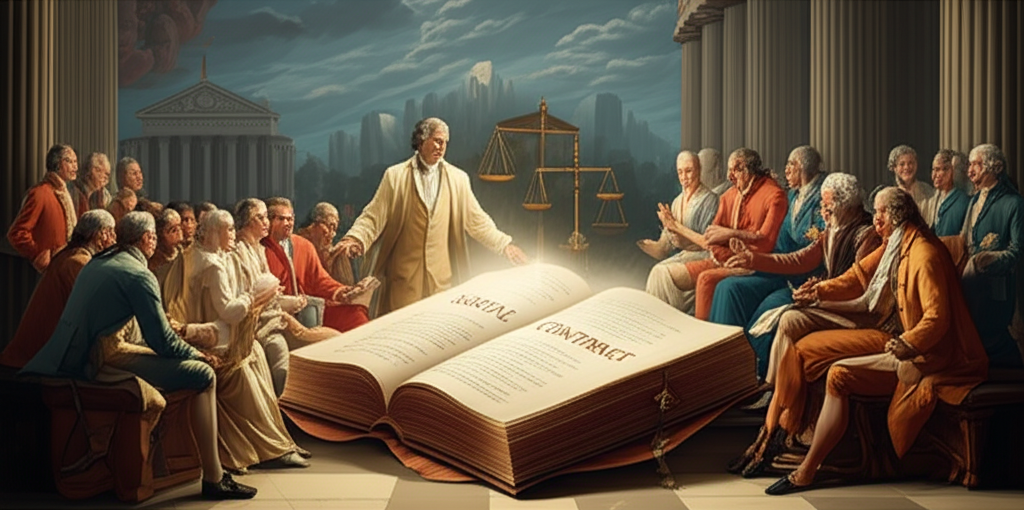
The Enlightenment and the Social Contract
The transition from the ancient polis to the modern nation-state brought about a radical re-evaluation of the Definition of a citizen. The Enlightenment era, with its emphasis on individual reason, natural rights, and the social contract, fundamentally reshaped our understanding of the relationship between the individual and the State.
Locke and the Natural Rights of the Citizen
John Locke, a pivotal figure in the Great Books tradition, presented a revolutionary Definition of citizenship based on the concept of natural rights. In his Two Treatises of Government, Locke argued that individuals possess inherent rights to life, liberty, and property even before the formation of a State. Citizens, therefore, enter into a social contract to form a government primarily to protect these pre-existing rights.
- Consent of the Governed: A legitimate government derives its authority from the consent of the citizens.
- Limited Government: The State's power is not absolute; it is constrained by the very rights it is meant to protect.
- Right to Rebellion: If the government fails to uphold its end of the contract and infringes upon natural rights, citizens have the right to resist and establish a new government.
For Locke, the Law of the State was valid only insofar as it aligned with natural Law and protected the citizens' fundamental entitlements.
Rousseau and the General Will: Duty to the State
Jean-Jacques Rousseau, in The Social Contract, offered a more complex and, in some ways, more demanding Definition of citizenship. While agreeing with the idea of a social contract, Rousseau emphasized the collective sovereignty of the people and the concept of the "general will."
- Active Participation: True citizens are not merely subjects but active participants in shaping the Laws that govern them. They are both authors and subjects of the Law.
- General Will: Citizens must set aside their private interests to discern and follow the general will, which aims at the common good. To obey the general will is to be truly free.
- Civic Virtue: Citizenship demands a strong sense of civic duty and a willingness to prioritize the collective over the individual.
Rousseau's vision suggested that the Definition of a citizen involved a profound moral transformation, where individuals merge their will with the collective, becoming an indivisible part of the sovereign body that constitutes the State.
Hobbes and the Sovereign: Security over Liberty?
Thomas Hobbes, writing earlier in the Enlightenment period in Leviathan, offered a starkly different perspective. For Hobbes, the state of nature was a "war of all against all." To escape this brutal existence, individuals surrender a significant portion of their individual liberty to an absolute sovereign (the State) in exchange for security and order.
- Absolute Authority: The sovereign's power is absolute and indivisible, necessary to enforce the Law and prevent a return to chaos.
- Obedience to Law: The primary duty of a citizen is unwavering obedience to the Laws established by the sovereign. Questions of rights are secondary to the preservation of life and peace.
In Hobbes's view, the Definition of a citizen is essentially a subject bound by the absolute authority of the State, prioritizing collective security above all else.
Modern Interpretations: Rights, Duties, and Belonging
The legacy of these philosophical giants continues to shape our contemporary understanding, though the modern Definition of a citizen has expanded significantly, encompassing a broader range of legal, social, and political dimensions.
Legal vs. Philosophical Definitions
In the modern era, the Law of the nation-state is often the primary definer of citizenship. This legal Definition typically involves:
- Jus Soli (Law of the Soil): Citizenship acquired by birth within the territory of the State.
- Jus Sanguinis (Law of the Blood): Citizenship acquired by descent from a citizen parent, regardless of place of birth.
- Naturalization: The process by which a non-citizen acquires citizenship, usually involving residency requirements, language proficiency, and an oath of allegiance to the State and its Law.
However, the philosophical Definition continues to probe beyond mere legal status. It asks: What does it mean to be a citizen in a meaningful sense? This includes questions of:
- Civic Engagement: Active participation in democratic processes beyond just voting.
- Social Responsibility: Contributing to the community, upholding ethical standards.
- Identity and Belonging: The psychological and cultural ties that bind individuals to a State or community.
The Evolving Role of the Citizen: Global Challenges
The 20th and 21st centuries have introduced new complexities to the Definition of a citizen. Globalization, human rights movements, and the rise of supranational organizations challenge the traditional nation-state-centric view.
- Global Citizenship: The idea that individuals have responsibilities and rights that extend beyond their national borders, often linked to universal human rights.
- Dual Citizenship: Legal recognition by two or more States, complicating traditional notions of singular allegiance.
- Digital Citizenship: The responsibilities and rights of individuals in the online sphere, concerning privacy, speech, and conduct.
These developments force us to reconsider the boundaries of the State and the scope of a citizen's obligations and entitlements.
Here are some key components that often define modern citizenship:
- Rights:
- Civil Rights: Freedom of speech, religion, assembly, fair trial.
- Political Rights: Right to vote, hold office, participate in governance.
- Social Rights: Right to education, healthcare, social security (varying by State).
- Duties & Responsibilities:
- Obeying the Law.
- Paying taxes.
- Serving on juries.
- Defending the State (e.g., military service).
- Civic participation (voting, community service).
- Identity & Belonging:
- Shared national history, culture, and values.
- Sense of community and collective purpose.
- Allegiance to the State.
- Participation:
- Engagement in political processes.
- Advocacy for social change.
- Contribution to public discourse.
The Philosophical Nexus: Why the Definition Matters
Ultimately, wrestling with the Definition of a citizen is not an academic exercise for its own sake; it has profound implications for how we construct just societies and how individuals experience their lives within the State.
Citizenship and the Just State
The way a State defines its citizens directly impacts its legitimacy and its capacity to deliver justice.
- Inclusive Definitions: Tend to foster greater equality, social cohesion, and broad participation, potentially leading to a more stable and just State.
- Exclusive Definitions: Can lead to marginalization, unrest, and a society divided between those with full rights and those without.
- The Law as a Reflection: The Laws governing citizenship reveal the core values and priorities of a State. Do they prioritize individual liberty, collective duty, or economic utility?
The Individual and Collective: A Constant Tension
The Definition of a citizen constantly navigates the tension between individual autonomy and collective obligation.
- Individual Liberty: Emphasizes the citizen's rights against the State.
- Civic Duty: Stresses the citizen's responsibilities to the State and the community.
Striking the right balance is a perennial philosophical challenge. A healthy State requires citizens who are both free to pursue their own good and willing to contribute to the common good, understanding that their individual flourishing is often intertwined with the well-being of the collective. The ongoing debate about the Definition of a citizen is, therefore, a continuous conversation about this delicate equilibrium.
Conclusion
From Aristotle's active participant in the polis to Locke's rights-bearing individual and Rousseau's embodiment of the general will, the Definition of a citizen has undergone a remarkable transformation. It is a concept deeply embedded in the philosophical discourse of the Great Books of the Western World, evolving with each shift in political thought and societal structure. While modern Laws provide a formal framework, the philosophical inquiry into what it truly means to be a citizen—with its attendant rights, duties, and sense of belonging—remains as vital as ever. As we navigate an increasingly interconnected world, understanding this complex Definition is not just an academic pursuit but a crucial step towards building more inclusive, just, and responsive States. The conversation about who we are as citizens, and what we owe to each other and to the State, is far from over; it is a continuous dialogue that shapes our collective future.
📹 Related Video: ARISTOTLE ON: The Nicomachean Ethics
Video by: The School of Life
💡 Want different videos? Search YouTube for: ""Aristotle Politics Citizenship Explained""
📹 Related Video: ARISTOTLE ON: The Nicomachean Ethics
Video by: The School of Life
💡 Want different videos? Search YouTube for: ""Social Contract Theory: Locke, Rousseau, Hobbes Summary""