

The Custom and Convention of Marriage: A Philosophical Inquiry into the Family Unit
Marriage, at its core, represents one of humanity's most enduring and complex social institutions. Far from being a mere biological imperative, its specific forms and functions are deeply sculpted by Custom and Convention, reflecting a profound interplay between natural inclinations and societal constructs. This article explores how marriage, as the foundational unit of the Family, has been understood and regulated through the ages, examining the philosophical underpinnings of its Law and the inherent Duty it places upon individuals, drawing insights from the rich tradition of the Great Books of the Western World.
The Enduring Enigma of Matrimony: Nature vs. Nurture of Society
Is marriage a natural state, an inherent component of human flourishing, or is it primarily a societal invention, a set of Customs and Conventions designed to regulate reproduction, inheritance, and social order? This fundamental question has occupied philosophers for millennia. While the impulse to form lasting bonds and raise offspring might appear natural, the specific rituals, legal frameworks, and social expectations surrounding marriage are undeniably products of human ingenuity and cultural evolution. From ancient betrothal ceremonies to modern civil unions, the institution of marriage has always been a mirror reflecting the values, anxieties, and aspirations of a given society.
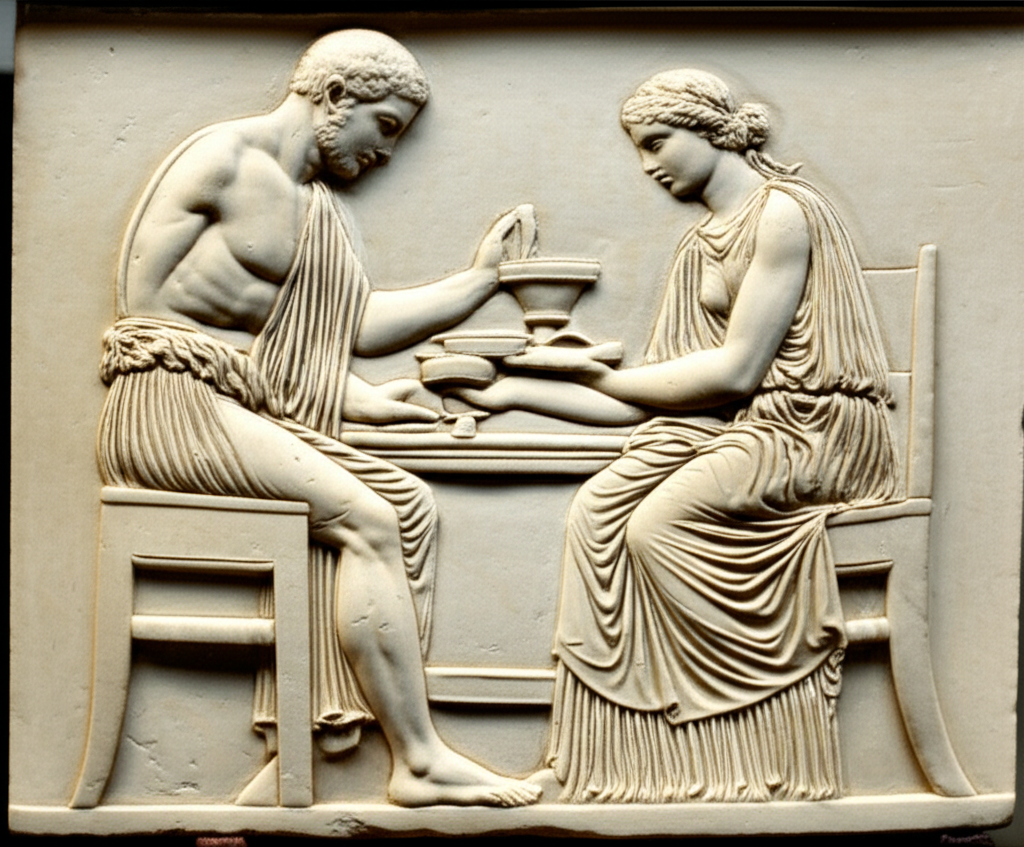
Echoes of Antiquity: Marriage in the Great Books Tradition
The philosophical tradition, as preserved in the Great Books, offers a profound lens through which to view the evolution and purpose of marriage. For the ancients, particularly figures like Aristotle, the Family (the oikos) was the primary and natural community from which the village and ultimately the polis (city-state) emerged. Marriage, therefore, was not merely a private affair but a vital component of civic life, ensuring the perpetuation of the citizenry and the transmission of values.
In this context, Custom and Convention played a crucial role in defining the structure and responsibilities within the household. The Law of the state often codified these conventions, establishing clear roles and expectations for spouses and children. The Duty to marry, to procreate, and to manage the household effectively was often seen as a civic virtue, contributing directly to the stability and prosperity of the wider community. Plato, in his Republic, even envisioned radical alterations to traditional familial structures, demonstrating that the conventional understanding of marriage was always subject to philosophical scrutiny and proposed reform, even if those reforms were rarely implemented.
The Architecture of Convention: Shaping Marital Duties and Rights
The legal and social frameworks surrounding marriage are perhaps the clearest manifestations of Custom and Convention. These frameworks define not only who can marry whom but also the intricate web of Duties and rights that come with the marital bond. These vary dramatically across cultures and historical periods, yet some common threads emerge:
- Procreation and Nurturing: A primary historical Duty of marriage has been the production and raising of legitimate heirs, ensuring the continuation of the Family line and society itself.
- Mutual Support and Companionship: While often secondary to economic or dynastic concerns in earlier periods, the Duty of spouses to provide emotional, practical, and financial support to one another has gained increasing prominence.
- Economic Partnership: Marriage often entails a Customary pooling of resources, labor, and property, establishing an economic unit governed by specific Laws of inheritance and shared responsibility.
- Social Status and Recognition: Marriage confers a certain social status and legitimizes relationships, often defining an individual's place within the community according to prevailing Conventions.
- Fidelity: A near-universal Custom across cultures, albeit with varying interpretations, is the Duty of fidelity, intended to ensure lineage certainty and maintain the integrity of the marital bond.
These Customs are not static; they evolve, challenged by new social realities and philosophical insights. The very definition of marriage, once rigidly defined, has broadened in many societies, reflecting a changing understanding of equality, love, and individual autonomy.
Beyond the Threshold: Marriage, Family, and the Social Fabric
The institution of marriage, shaped by its Customs and Conventions, extends its influence far beyond the immediate couple. It is the primary means by which societies organize kinship, transmit cultural values, and provide for the care and education of the next generation. The Family, thus constituted, acts as a critical intermediary between the individual and the state, instilling the first lessons of Duty, responsibility, and communal living.
When the Customs and Conventions of marriage are challenged, or when the Law governing them shifts, it often signals profound changes within the broader social fabric. Debates around marriage are rarely just about individual rights; they are often deeply rooted in differing philosophies about the nature of society, the role of the state, and the very definition of human flourishing. The ongoing dialogue about marriage reflects humanity's continuous effort to balance individual freedom with collective well-being, to reconcile ancient Custom with modern imperatives.
YouTube: Plato on Love and Marriage: Crash Course Philosophy #23
YouTube: Aristotle's Ethics: The Good Life and the Polis
Conclusion: The Persistent Resonance of Custom
Ultimately, marriage stands as a testament to the enduring power of Custom and Convention in human life. While its forms may vary and its purposes may be reinterpreted across generations, its fundamental role in establishing the Family unit, codifying Law, and articulating individual and collective Duty remains remarkably consistent. From the philosophical inquiries of the ancients to the complex legal debates of today, marriage continues to be a central arena where humanity grapples with its own nature, its social responsibilities, and its aspirations for a just and orderly society. It is an institution perpetually under construction, yet one whose foundations are deeply embedded in the shared human experience.
📹 Related Video: What is Philosophy?
Video by: The School of Life
💡 Want different videos? Search YouTube for: "The Custom and Convention of Marriage (Family) philosophy"