

The Constitution as a Framework for Justice: A Philosophical Inquiry
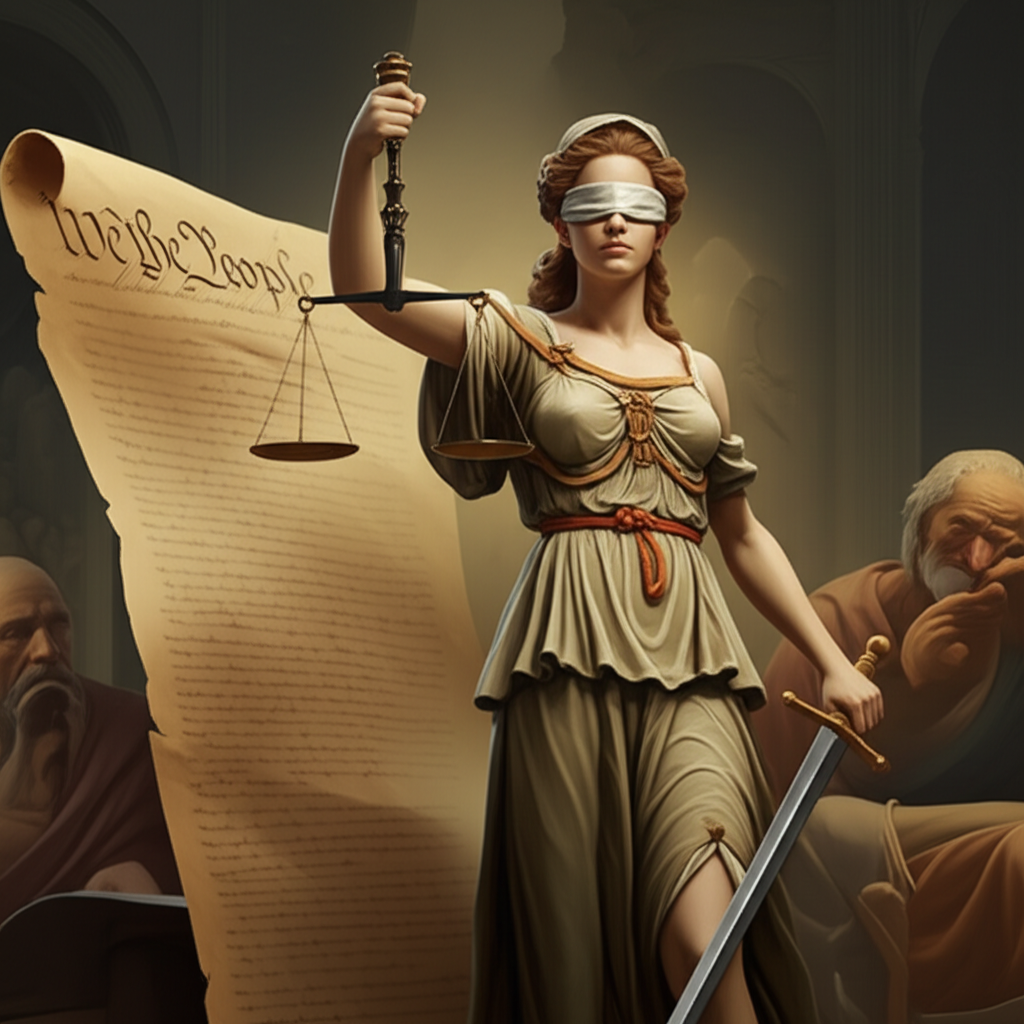
The concept of justice has haunted human thought since antiquity, prompting philosophers from Plato to Rawls to articulate the principles of a fair and equitable society. Yet, the leap from abstract ideals to the concrete mechanisms of governance is where the Constitution emerges as a profound philosophical artifact. Far more than a mere legal document, a constitution serves as the foundational framework through which a government endeavors to instantiate justice through law. It is a dynamic blueprint, continually interpreted and challenged, that seeks to balance individual liberties with collective order, making it an ongoing experiment in applied philosophy.
The Enduring Quest for Justice Through Law
From the earliest city-states, humanity grappled with how to organize society to prevent tyranny and promote well-being. The Great Books of the Western World are replete with such inquiries. Plato, in his Republic, envisioned an ideal state governed by philosopher-kings, where justice was the harmonious ordering of the soul reflected in the state. Aristotle, in his Politics, meticulously analyzed various forms of government, advocating for a "polity" – a mixed constitution that blends elements of oligarchy and democracy – as the most stable and just. These ancient dialogues laid the groundwork for the modern understanding that a just society requires not just good intentions, but a robust and well-defined structure of law that binds rulers and ruled alike.
The transition from these theoretical ideals to the practical application of constitutional law represents a monumental shift. It acknowledges that justice cannot rely solely on the virtue of individuals but must be embedded within the very fabric of governance. A constitution, then, becomes the codification of a society's highest aspirations for fairness, order, and liberty, providing the architecture for a just state.
Foundational Pillars: How the Constitution Structures Justice
A constitution, particularly one designed to foster justice, establishes several critical principles that limit power and protect rights. These are not arbitrary rules but deeply considered responses to historical abuses and philosophical dilemmas.
The Primacy of the Rule of Law
Perhaps the most fundamental contribution of a constitution to justice is the establishment of the Rule of Law. This principle dictates that all individuals, including those in government, are subject to and accountable under the law. It stands in stark contrast to the arbitrary rule of individuals or whims. As articulated by thinkers like John Locke, a government's legitimacy derives from its adherence to established laws, protecting citizens from capricious decisions.
Key Aspects of the Rule of Law:
- Supremacy of Law: The constitution and its laws are paramount.
- Equality Before the Law: No one is above the law.
- Accountability: Government officials are held responsible for their actions.
- Transparency: Laws are clear, public, and stable.
Separation of Powers and Checks & Balances
Inspired by Montesquieu's The Spirit of the Laws, the division of governmental authority into distinct branches – typically legislative, executive, and judicial – is a cornerstone of constitutional justice. This separation of powers, coupled with a system of checks and balances, is designed to prevent the concentration of power in any single entity, thereby safeguarding against tyranny and promoting accountability within the government. Each branch has specific functions and the ability to limit the powers of the others, ensuring a delicate equilibrium that protects the citizenry.
Safeguarding Individual Rights and Liberties
A just constitution is incomplete without explicit protections for individual rights and liberties. Drawing heavily on the social contract theories of Locke and Rousseau, who argued for inherent natural rights, many constitutions enshrine a Bill of Rights. These provisions guarantee fundamental freedoms such as speech, religion, and assembly, and ensure due process under the law. They serve as a powerful bulwark against potential overreach by the government, affirming the inherent dignity and autonomy of each person. The ongoing interpretation of these rights is a continuous process of defining and redefining the boundaries of justice in a changing society.
A Living Document: Evolution and Interpretation of Justice
While a constitution provides a stable framework, it is not immutable. The very concept of justice itself is subject to evolving societal understandings. Therefore, a truly effective constitutional framework includes mechanisms for its own amendment and interpretation. This capacity for adaptation ensures that the foundational law can respond to new challenges, correct historical injustices, and reflect a society's expanding moral consciousness. Judicial review, legislative amendments, and public discourse all contribute to the dynamic evolution of constitutional justice.
Philosophical Echoes in Constitutional Design
The architecture of a just government is deeply indebted to centuries of philosophical thought. The table below illustrates some key connections:
| Philosophical Concept/Thinker | Constitutional Principle | Aim for Justice |
|---|---|---|
| Plato (Ideal State, Order) | Rule of Law | Stability, Predictability |
| Aristotle (Mixed Government) | Checks & Balances | Prevention of Tyranny, Equity |
| John Locke (Natural Rights, Social Contract) | Bill of Rights, Popular Sovereignty | Individual Liberty, Legitimate Governance |
| Montesquieu (Separation of Powers) | Division of Government Branches | Prevention of Abuse of Power |
| Rousseau (General Will, Social Contract) | Democratic Representation, Amendability | Collective Good, Self-Governance |
These connections highlight that the Constitution is not merely a set of rules, but a profound philosophical statement about how a society chooses to govern itself in pursuit of justice.
Conclusion: The Ongoing Dialectic of Constitution and Justice
The Constitution stands as a testament to humanity's persistent quest for justice. It provides a structured framework that attempts to translate abstract ideals into tangible law, guiding the actions of government and safeguarding the rights of citizens. Yet, it is crucial to remember that this framework is not self-executing. Its efficacy depends on continuous engagement, interpretation, and a steadfast commitment from both those who govern and those who are governed to uphold its principles and strive for an ever more perfect justice. It is a perpetual dialogue between ideal and reality, a living testament to the ongoing philosophical endeavor to build a fair and equitable society.
📹 Related Video: PLATO ON: The Allegory of the Cave
Video by: The School of Life
💡 Want different videos? Search YouTube for: ""Plato's Republic Justice" for a foundational understanding of justice in political philosophy."
📹 Related Video: KANT ON: What is Enlightenment?
Video by: The School of Life
💡 Want different videos? Search YouTube for: ""Constitutional Law Explained" for an overview of how constitutional principles are applied."