

The Constitution as a Barrier to Tyranny: Safeguarding Government, Liberty, and the Human Spirit
The very essence of a civilized society lies in its ability to govern itself without succumbing to the arbitrary will of a single ruler or an oppressive faction. In this pursuit, the Constitution stands as a monumental achievement, meticulously crafted not merely to establish government, but fundamentally to serve as an enduring barrier against tyranny, thereby securing the precious commodity of liberty for its citizens. It is a philosophical framework made manifest, a testament to centuries of human thought on governance and freedom, reflecting the profound insights found within the Great Books of the Western World.
The Philosophical Genesis of Constitutional Restraint
The architects of constitutional government, deeply informed by the historical record and the intellectual currents of their age, understood the inherent dangers of unchecked power. From Plato's exploration of the degeneration of ideal states into tyrannies in The Republic, to Aristotle's classification of political forms and his warnings against despotic rule in Politics, the Western philosophical tradition has long grappled with the mechanisms by which power corrupts.
It was Enlightenment thinkers, however, particularly John Locke and Montesquieu, whose ideas served as direct wellsprings for the American constitutional project. Locke's articulation of natural rights – life, liberty, and property – and the concept of government by consent, as detailed in his Two Treatises of Government, provided the moral imperative for limited government. Montesquieu, in The Spirit of the Laws, rigorously detailed the necessity of separating governmental powers to prevent any one branch from accumulating too much authority, thereby laying the intellectual groundwork for checks and balances. These foundational texts, cornerstones of the Great Books, provided the philosophical blueprint for a system designed to resist the ever-present specter of tyranny.
Mechanisms of Resistance: How the Constitution Defends Liberty
The Constitution is not merely a document of aspiration; it is a practical blueprint for preventing the consolidation of power that leads to tyranny. Its genius lies in its intricate design, which creates a dynamic tension among various governmental entities, all while affirming the supremacy of individual rights.
Here are key constitutional mechanisms that act as bulwarks against tyranny:
- Separation of Powers: Inspired directly by Montesquieu, the Constitution divides governmental authority into three distinct branches: the legislative (Congress), the executive (President), and the judicial (Supreme Court). Each branch possesses unique powers and responsibilities, preventing any single entity from monopolizing power.
- Checks and Balances: Complementing the separation of powers, this system grants each branch the ability to limit the powers of the others. For example, the President can veto legislation passed by Congress, Congress can impeach the President or federal judges, and the judiciary can declare laws unconstitutional. This creates a constant, healthy tension, forcing cooperation and preventing overreach.
- Federalism: The division of power between a national (federal) government and various state governments ensures that authority is decentralized. This dispersion prevents a single, monolithic power center from emerging and allows for diverse local governance, reflecting the varied needs and preferences of different populations. It also provides multiple avenues for citizens to influence their government.
- Individual Rights and the Bill of Rights: The first ten amendments to the Constitution, collectively known as the Bill of Rights, explicitly enumerate fundamental individual liberties that the government cannot infringe upon. These include freedom of speech, religion, assembly, and the press, as well as protections against unreasonable searches and seizures, and the right to due process. These rights are not granted by the state but are recognized as inherent, acting as direct limitations on governmental power and crucial safeguards for liberty.
- Independent Judiciary: The establishment of an independent judiciary, with judges appointed for life (barring impeachment), ensures that the interpretation of laws and the Constitution is insulated from political pressures. This independence is vital for upholding the rule of law and protecting individual rights against potential legislative or executive overreach.
The Enduring Vigilance: A Philosophical Imperative
While the Constitution provides a robust framework, it is not an automatic, self-executing barrier. Its effectiveness hinges upon the active engagement and philosophical commitment of its citizens. The document itself is a living testament to the idea that liberty is not a given but a constant struggle against the potential for tyranny.
The ongoing debate over constitutional interpretation, the need for civic education, and the active participation in the democratic process are all crucial components of maintaining this barrier. As the great thinkers remind us, the preservation of a just government and the safeguarding of liberty require perpetual vigilance and a deep understanding of the principles that underpin our constitutional order. The Constitution, therefore, is not merely a legal text; it is a profound philosophical statement on human nature, power, and the enduring quest for a free society.
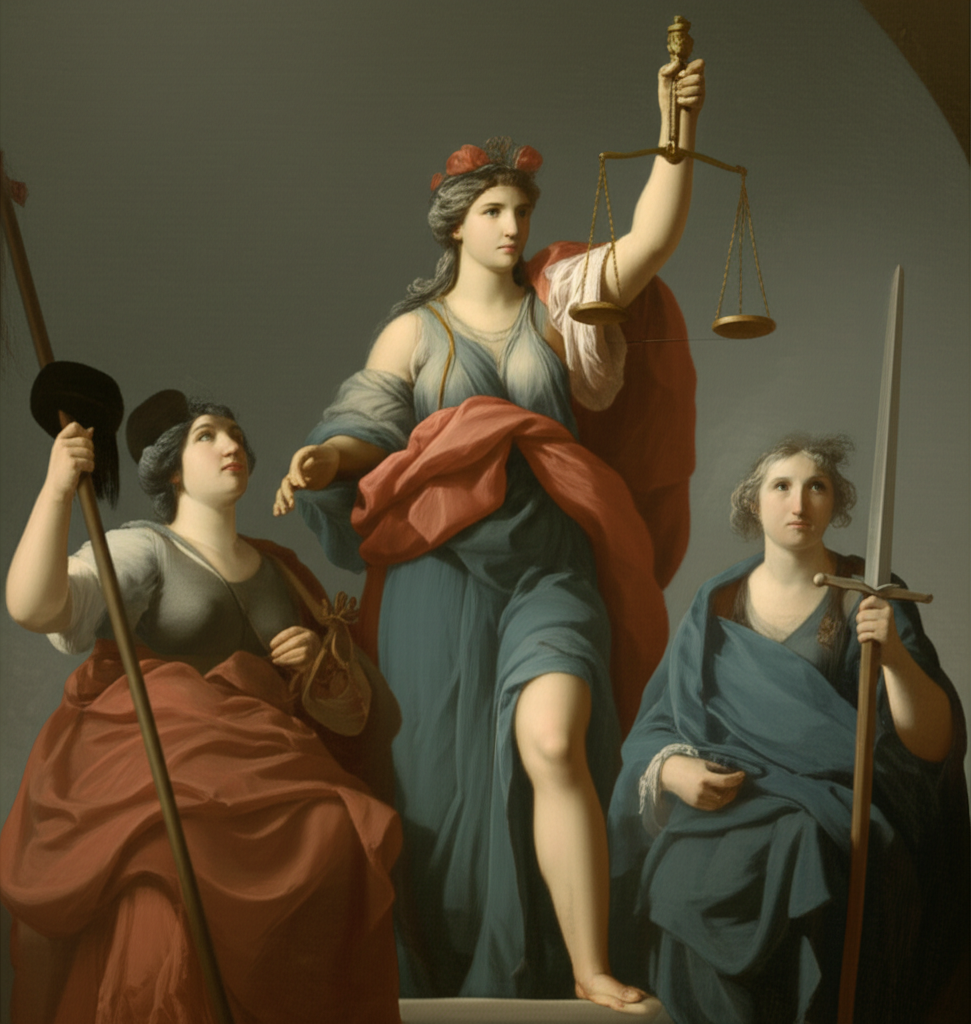 and "Law" (holding a scroll), all beneath a watchful eye, symbolizing the intricate balance required to maintain a free and just society.)
📹 Related Video: KANT ON: What is Enlightenment?
Video by: The School of Life
💡 Want different videos? Search YouTube for: ""John Locke Two Treatises of Government explained""
📹 Related Video: KANT ON: What is Enlightenment?
Video by: The School of Life
💡 Want different videos? Search YouTube for: ""Montesquieu Separation of Powers explained""