

The Constitution: An Enduring Bulwark Against Tyranny
A Philosophical Examination of Structured Liberty
Summary: The United States Constitution stands as a profound philosophical and practical edifice, meticulously crafted to prevent the rise of tyranny. Through its ingenious architecture of separated powers, checks and balances, federalism, and the explicit enumeration of individual rights, it deliberately fragments governmental authority while simultaneously empowering the citizenry. This framework, deeply informed by the lessons of history and the Enlightenment's philosophical insights, ensures that Government remains accountable, protecting Liberty from the insidious creep of unchecked power and the potential for Tyranny.
The Perennial Fear of Unchecked Power
From the earliest city-states to the grand empires, humanity has grappled with the inherent danger of concentrated authority. The spectre of Tyranny – the arbitrary and oppressive exercise of power by a single ruler or a small group – has haunted political thought for millennia. Philosophers from Plato in his Republic, who warned of democracy's potential descent into tyranny, to Aristotle in his Politics, dissecting the corruption of various governmental forms, understood that the best intentions could be subverted by unchecked power.
The framers of the U.S. Constitution, acutely aware of these historical precedents and armed with Enlightenment philosophies, embarked on a radical experiment. Their goal was not merely to establish a new nation, but to forge a new kind of Government – one designed structurally to resist the very forces that had historically led to oppression. The Constitution itself is, in essence, a philosophical argument made manifest in law, a testament to the belief that human Liberty requires institutional safeguards.
The Architectural Genius: Dividing Power to Preserve Freedom
The primary strategy employed by the Constitution to thwart tyranny is the systematic division of power. This is not simply a matter of administrative convenience but a deeply philosophical commitment to prevent any single entity from accumulating enough authority to become tyrannical.
1. Separation of Powers: Montesquieu's Enduring Influence
Inspired profoundly by Montesquieu's The Spirit of the Laws (a cornerstone of the Great Books of the Western World), the Constitution meticulously divides federal authority into three distinct branches:
- Legislative Branch (Congress): Responsible for making laws.
- Executive Branch (President): Responsible for executing and enforcing laws.
- Judicial Branch (Courts): Responsible for interpreting laws.
This separation ensures that no single branch can unilaterally create, enforce, and interpret law, thereby preventing the concentration of power in a single hand or body.
2. Checks and Balances: A Dynamic Equilibrium
Beyond mere separation, the Constitution institutes a system of "checks and balances," allowing each branch to limit the powers of the others. This creates a dynamic tension, ensuring mutual accountability.
Examples of Checks and Balances:
- Presidential Veto: The President can veto legislation passed by Congress.
- Congressional Override: Congress can override a presidential veto with a two-thirds majority in both houses.
- Judicial Review: The Supreme Court can declare laws passed by Congress or actions taken by the President unconstitutional.
- Senate Confirmation: The Senate must confirm presidential appointments and ratify treaties.
- Impeachment: Congress can impeach and remove federal officials, including the President and judges.
This intricate web of interdependencies makes it exceedingly difficult for any one branch to seize dictatorial control, serving as a robust barrier against Tyranny.
3. Federalism: The Vertical Division of Power
The Constitution further fragments power vertically through the principle of federalism, dividing authority between the national Government and state governments. This decentralized structure allows for local control over many aspects of daily life, while reserving certain powers for the federal government. This not only promotes diverse approaches to governance but also provides another layer of protection, as state governments can act as checks on federal overreach, and vice versa.
Safeguarding Individual Liberty: The Bill of Rights and Rule of Law
While the structural divisions of power are crucial, the Constitution also directly addresses individual Liberty through explicit protections. The Bill of Rights, added shortly after ratification, codifies fundamental freedoms, drawing heavily from Enlightenment thinkers like John Locke, whose Two Treatises of Government articulated the concept of natural rights inherent to all individuals.
Key Protections of Individual Liberty:
- Freedom of Speech, Press, Religion, and Assembly: Guarantees the right to express ideas and beliefs, a vital component of a free society.
- Right to Bear Arms: Acknowledges the right of individuals to self-defense and the ability of a populace to resist oppression.
- Due Process and Fair Trial: Ensures that the Government cannot arbitrarily deprive individuals of life, liberty, or property without proper legal procedures.
- Protection Against Unreasonable Searches and Seizures: Limits governmental intrusion into private lives.
These enumerated rights establish clear boundaries beyond which the Government cannot tread, acting as direct barriers to the arbitrary abuses characteristic of Tyranny. The overarching principle of the Rule of Law – that all, including those in power, are subject to and accountable to the law – underpins these protections, ensuring a predictable and just society where rights are not granted by the state, but inherent and protected by the state.
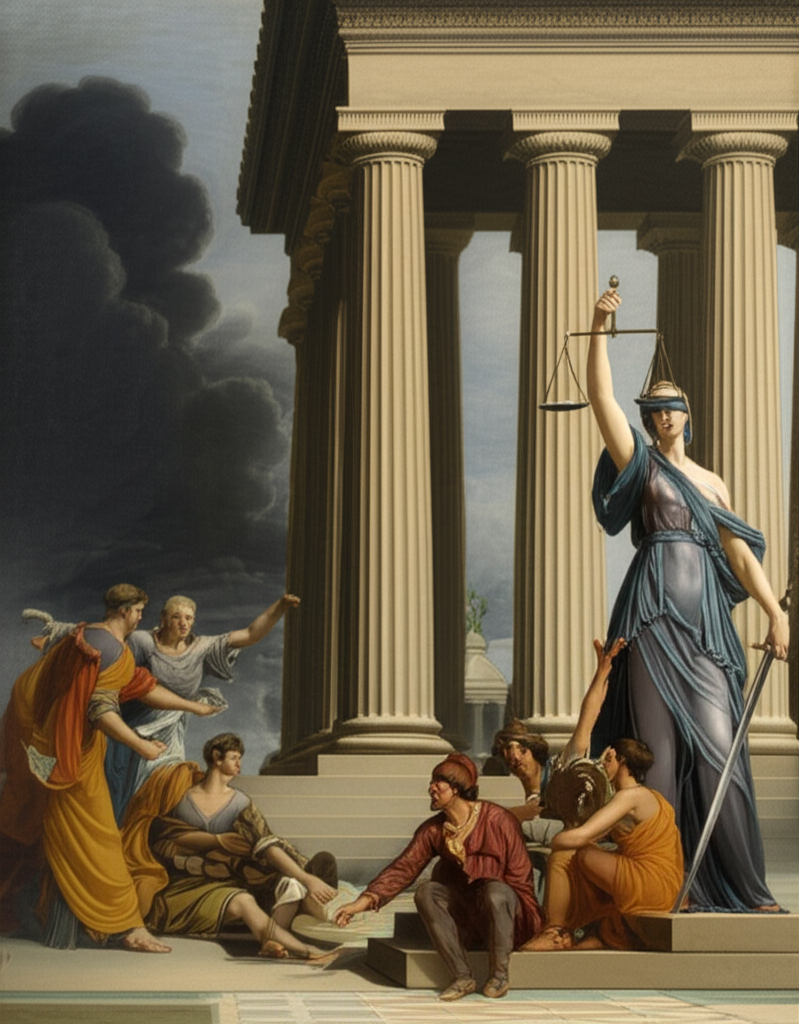
The Enduring Vigilance: A Philosophical Imperative
The Constitution is not a static document; it is a living framework that requires constant engagement and interpretation. Its efficacy as a barrier to Tyranny ultimately rests on the vigilance of its citizens. As Madison argued in The Federalist Papers, "A dependence on the people is, no doubt, the primary control on the government; but experience has taught mankind the necessity of auxiliary precautions." These auxiliary precautions are the constitutional mechanisms, but the primary control remains the informed and active citizenry.
The philosophical underpinnings of the Constitution remind us that Liberty is not a gift, but a perpetual struggle. The document provides the tools, but the will to use them, to question authority, to participate in the democratic process, and to defend fundamental rights, must come from the people. Without this active engagement, even the most brilliantly designed constitutional barriers can erode.
YouTube Video Suggestions:
-
📹 Related Video: What is Philosophy?
Video by: The School of Life
💡 Want different videos? Search YouTube for: ""Montesquieu Separation of Powers Explained Philosophy""
-
📹 Related Video: What is Philosophy?
Video by: The School of Life
💡 Want different videos? Search YouTube for: ""John Locke Two Treatises of Government Summary Philosophy""
In conclusion, the Constitution is far more than a legal text; it is a profound philosophical statement on the nature of power, the necessity of its restraint, and the paramount importance of individual Liberty. By dividing Government power horizontally and vertically, establishing a system of mutual accountability, and explicitly guaranteeing fundamental rights, it erects formidable barriers against the historical inevitability of Tyranny. Yet, its strength ultimately derives from the ongoing commitment of citizens to uphold its principles and defend the freedoms it enshrines.