

The Intricate Web: Unpacking the Relation Between Wealth and Justice
A Perennial Philosophical Puzzle
The relation between wealth and justice is one of philosophy's most enduring and complex challenges. This article delves into how Western thought, from ancient Greece to contemporary debates, has grappled with economic inequality, property rights, and the moral imperatives governing the accumulation and distribution of resources. We will explore how different philosophers have conceived of the State's role in mediating this crucial connection, ultimately revealing that the pursuit of justice inevitably confronts the profound realities of wealth, urging us to continually redefine what constitutes a fair society.
The Ancient Roots: Wealth, Virtue, and the Polis
Have you ever pondered the foundational role of economics in shaping our ideals of justice? The philosophers of ancient Greece certainly did, laying the groundwork for centuries of debate. For them, the relation between an individual's wealth and the justice of their society was not merely an economic concern but a moral and political one.
Plato's Ideal State and the Guardians' Poverty
In Plato's monumental work, The Republic, the quest for justice in the ideal State (the polis) is paramount. Plato believed that excessive wealth and extreme poverty were both detrimental to social harmony and individual virtue. His famous class structure included the Guardians, the ruling class of philosopher-kings, who were expressly forbidden from owning private property or accumulating wealth. Their lives were communal, designed to eliminate personal greed and ensure their sole focus remained on the common good and the administration of justice.
- Plato's View on Wealth and Justice:
- Excessive Wealth: Corrupts the soul, fosters avarice, and distracts from civic duty.
- Extreme Poverty: Leads to crime, resentment, and instability.
- The State's Role: To prevent these extremes, especially for rulers, to ensure a just and harmonious society.
This radical proposal highlights Plato's conviction that the pursuit of wealth could fundamentally undermine the very fabric of a just society, particularly when it came to those entrusted with power.
Aristotle's Mean: Economic Life and the Good Citizen
Aristotle, Plato's student, offered a more pragmatic, yet equally insightful, perspective, particularly in his Politics and Nicomachean Ethics. While he recognized the necessity of private property and some level of wealth for a flourishing life, he, too, warned against its excesses. Aristotle argued that a truly just State required a substantial middle class, as extremes of wealth and poverty fostered division and instability.
- Aristotle's Ideal Economic Citizen:
- Possesses sufficient wealth to engage in civic life and leisure for intellectual pursuits.
- Avoids the corrupting influence of avarice.
- Contributes to the stability of the State.
For Aristotle, justice was often about proportionality and balance. The State had a role in fostering an environment where citizens could achieve a moderate level of wealth, allowing them to participate fully and virtuously in the polis. The relation here is one of balance: enough wealth to support virtue, but not so much as to corrupt it.
Medieval and Early Modern Perspectives: Property, Rights, and the State
As Western thought evolved, so too did the understanding of the relation between wealth and justice, often intertwined with emerging concepts of individual rights and the role of the State.
Aquinas and the 'Just Price'
Saint Thomas Aquinas, drawing on Aristotelian thought in his Summa Theologica, addressed economic justice within a Christian framework. He affirmed the permissibility of private property but insisted that its ownership was secondary to the common good. Crucially, Aquinas articulated the concept of the "just price" (iustum pretium) in economic transactions. Selling goods for more than their objective value, or charging excessive interest (usury), was considered unjust because it exploited another's need. This was an early attempt to define economic justice not just in terms of distribution, but in the fairness of exchange itself.
Locke's Labor Theory: Property as a Natural Right
John Locke, a towering figure of the Enlightenment, profoundly reshaped the discourse on wealth and justice in his Second Treatise of Government. Locke argued that individuals possess natural rights, including the right to life, liberty, and property. His famous labor theory of property asserted that when a person mixes their labor with unowned resources, those resources become their property.
This revolutionary idea established a fundamental relation between individual effort, wealth accumulation, and justice. For Locke, the primary purpose of the State was to protect these natural rights, particularly property. Any State that arbitrarily deprived individuals of their legitimately acquired wealth was acting unjustly.
Rousseau's Critique: Inequality's Genesis
Jean-Jacques Rousseau, in his Discourse on the Origin and Basis of Inequality Among Men, offered a stark counter-narrative to Locke. While Locke saw property as a natural right, Rousseau viewed the institution of private property as the very genesis of social inequality and, by extension, injustice. He famously stated, "The first man who, having enclosed a piece of ground, bethought himself of saying This is mine, and found people simple enough to believe him, was the real founder of civil society."
For Rousseau, the State was often complicit in perpetuating this inequality, having been formed to protect the wealth of the powerful rather than to ensure true justice for all. His work casts a critical eye on the relation between wealth and power, arguing that the former often leads to the latter, thereby corrupting the promise of a truly just society.
The Age of Industrialization and Beyond: Wealth, Class, and Redistribution
The Industrial Revolution brought unprecedented wealth alongside unprecedented poverty, forcing new philosophical examinations of justice in an increasingly complex economic landscape.
Marx's Revolutionary Call: Economic Determinism and Class Justice
Karl Marx, whose ideas are foundational to Das Kapital and The Communist Manifesto, presented perhaps the most radical critique of the relation between wealth and justice. For Marx, capitalism was inherently unjust. He argued that wealth was accumulated through the exploitation of the working class (the proletariat) by the owning class (the bourgeoisie). Labor, the source of all value, was alienated from the worker, and surplus value was unjustly appropriated by capitalists.
Marx envisioned a classless society, achieved through a revolutionary overthrow of the capitalist State, where private property would be abolished, and the means of production would be communally owned. Only then, he believed, could true justice be realized, transcending the economic determinism that shaped social relations.
Modern Dilemmas: Rawls's Justice as Fairness vs. Nozick's Entitlement
The 20th century brought renewed efforts to define justice in the face of economic disparities.
John Rawls, in A Theory of Justice, proposed "justice as fairness." He argued that a just society would be one whose principles of justice were chosen by individuals behind a "veil of ignorance," unaware of their own social position, wealth, or talents. This thought experiment led him to two principles:
- Equal Basic Liberties: Each person has an equal right to the most extensive scheme of equal basic liberties compatible with a similar scheme of liberties for all.
- Difference Principle: Social and economic inequalities are to be arranged so that they are both (a) to the greatest benefit of the least advantaged, and (b) attached to offices and positions open to all under conditions of fair equality of opportunity.
Rawls's theory implies a significant role for the State in redistributing wealth to ensure that inequalities ultimately benefit the most vulnerable, thus creating a just relation between wealth and societal well-being.
Robert Nozick, a contemporary of Rawls, offered a powerful counter-argument in Anarchy, State, and Utopia. Nozick advocated for an "entitlement theory" of justice, arguing that a distribution of wealth is just if it arises from just acquisition, just transfer, and rectification of past injustices. He argued against patterned principles of justice (like Rawls's), which would require continuous State intervention to maintain a specific distribution of wealth.
Nozick's minimal State (a "night-watchman state") would protect individuals from force, theft, and fraud, but would not engage in redistribution. For Nozick, any attempt by the State to redistribute legitimately acquired wealth was an infringement on individual liberty and, therefore, unjust.
The Enduring Role of the State in Mediating Wealth and Justice
The historical trajectory of philosophical thought reveals a constant tension and evolution in defining the State's responsibility concerning wealth and justice.
| Philosopher/Era | View on Wealth | Role of the State in Justice |
|---|---|---|
| Plato | Potential corruptor, especially for rulers. | Strict control, communal property for guardians to ensure justice. |
| Aristotle | Necessary for civic life, but avoid extremes. | Foster a stable middle class, prevent extreme wealth/poverty. |
| Aquinas | Permissible, but subordinate to common good. | Ensure "just price" and ethical economic transactions. |
| Locke | Natural right derived from labor. | Protect property rights, enforce contracts. Minimal intervention. |
| Rousseau | Origin of inequality and injustice. | Often complicit in perpetuating inequality; needs reform or revolution. |
| Marx | Source of exploitation and class division. | To be overthrown; replaced by a classless society without private property. |
| Rawls | Permissible if beneficial to the least advantaged. | Active redistribution to ensure fairness and social justice. |
| Nozick | Legitimate if justly acquired and transferred. | Minimal; protect rights, no redistribution. |
Navigating the Contemporary Landscape: Challenges and Reflections
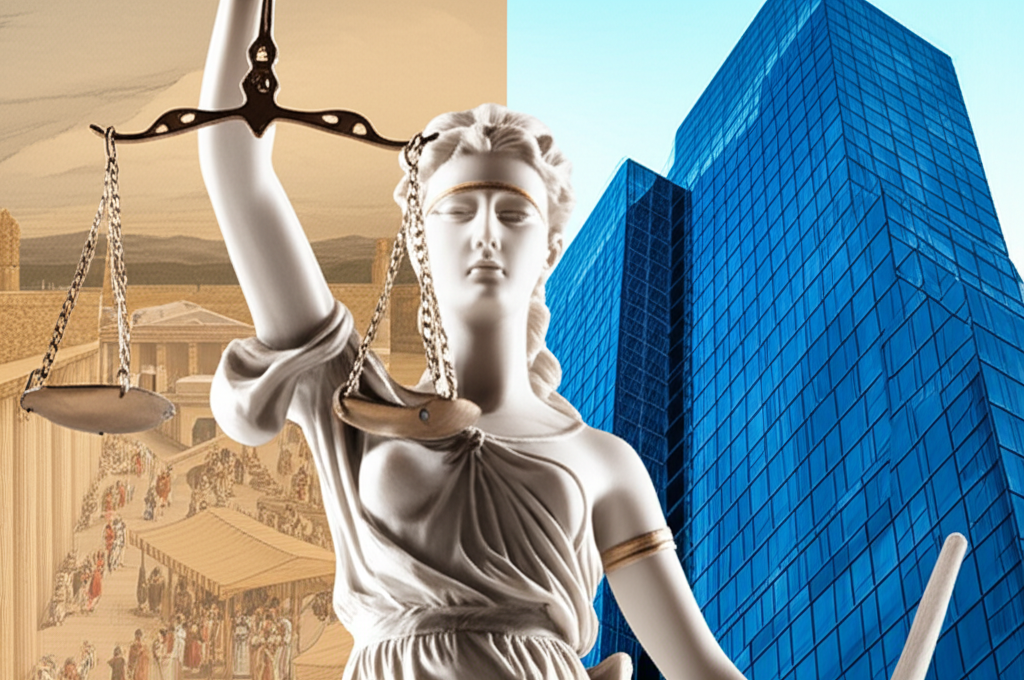
The relation between wealth and justice remains a fiercely debated topic in our globalized world. We grapple with widening wealth gaps, the ethics of global capitalism, the role of technology in creating new forms of wealth and inequality, and the efficacy of various State interventions, from taxation to social safety nets.
Are we closer to a just society, or do the ancient warnings about the corrupting influence of wealth still resonate with alarming clarity? The philosophical journey through these ideas doesn't offer easy answers, but it provides a robust framework for understanding the complexities. It compels us to critically examine our own assumptions about economic fairness and the kind of society we wish to build. The conversation continues, and perhaps, it always should.
Conclusion: An Ongoing Dialogue
From the communal ideals of Plato to the individual entitlements of Nozick, the philosophical exploration of wealth and justice is a testament to humanity's persistent quest for a fair and equitable society. Each thinker, in their own time, illuminated a different facet of this intricate relation, highlighting the profound impact of economic structures on the very essence of human flourishing and the moral legitimacy of the State. As we navigate the economic realities of our own era, these historical dialogues remain indispensable tools for critical reflection and informed action.
📹 Related Video: PLATO ON: The Allegory of the Cave
Video by: The School of Life
💡 Want different videos? Search YouTube for: ""Plato's Republic justice wealth" or "John Rawls theory of justice explained""