

The Elusive Equation: Unpacking the Connection Between Wealth and Happiness
Summary: The relationship between wealth and happiness is one of philosophy's most enduring and complex questions. While a basic level of wealth is undeniably crucial for well-being, freeing us from immediate suffering and facilitating certain freedoms, history's greatest thinkers consistently warn against the notion that greater material possessions automatically equate to greater happiness. Instead, they point to the nature of desire, the pursuit of virtue, and the ethical considerations of Good and Evil as more significant determinants of a truly flourishing life. This article delves into the philosophical tradition to explore why the pursuit of wealth, untempered by wisdom, often leads to an unfulfilled existence.
Ancient Insights: Wealth as a Means, Not an End
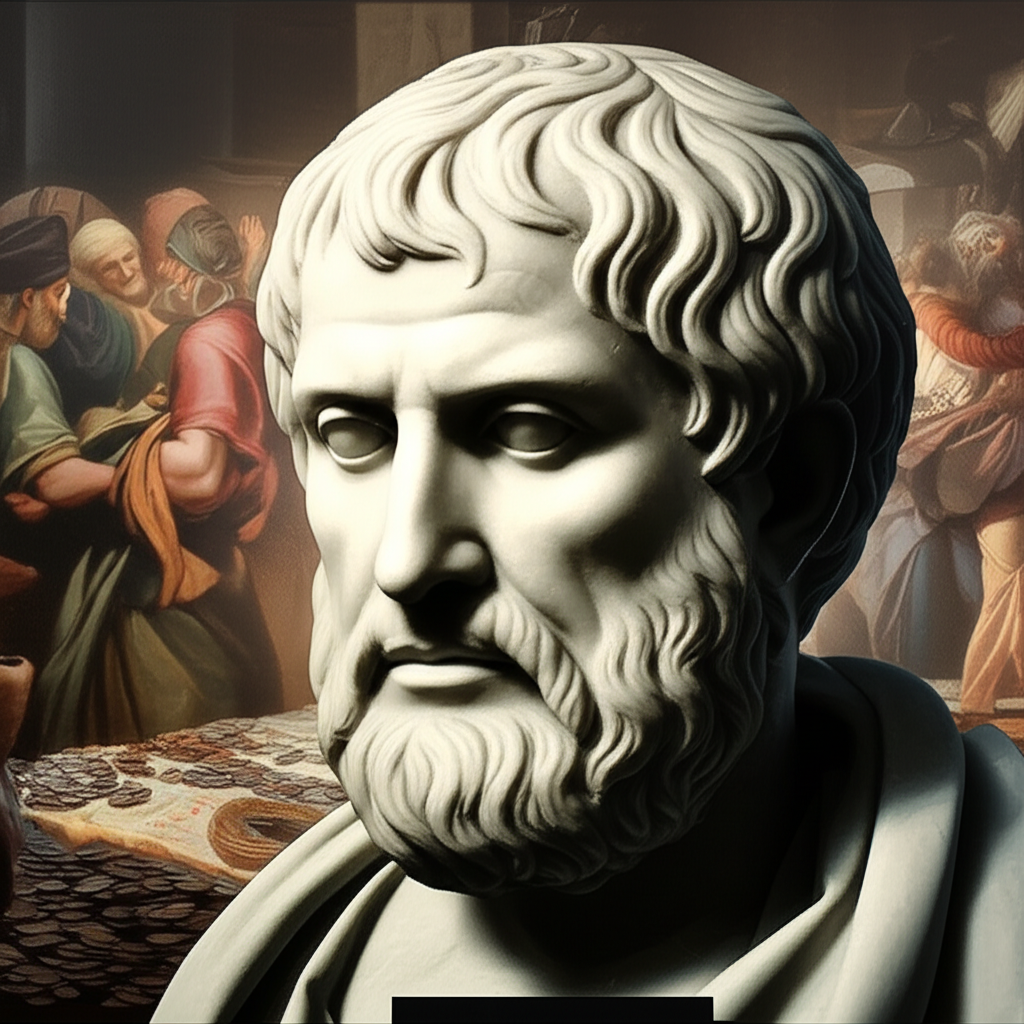
From the earliest philosophical inquiries, the sages of the Western world recognized wealth as a tool, not an ultimate goal. For Aristotle, in his Nicomachean Ethics, the highest human good is eudaimonia—often translated as "happiness" or "flourishing"—which he argued is achieved through virtuous activity in accordance with reason. Wealth, for Aristotle, falls into the category of "external goods," necessary for a comfortable life and for performing acts of generosity, but it is never sufficient for eudaimonia itself. A truly happy person might possess wealth, but their happiness does not derive from it.
Plato, too, in his Republic, explored the dangers of unchecked avarice, linking the pursuit of excessive wealth to the corruption of the soul and the instability of the state. He posited that a just society, and a just individual, would understand the proper hierarchy of goods, placing wisdom and virtue above material gain.
- Key Takeaways from Ancient Thought:
- Wealth is a necessary condition for overcoming basic suffering, but not a sufficient condition for happiness.
- True happiness (eudaimonia) is an internal state, cultivated through virtue and rational activity.
- Unchecked pursuit of wealth can lead to moral decay and societal imbalance.
The Tyranny of Desire: A Philosophical Perspective
The very act of pursuing wealth is often driven by desire. But what kind of desire? Is it the desire for security, for comfort, for power, or for social status? Philosophers have long cautioned against desires that are insatiable or misdirected.
The Stoics, such as Epictetus and Seneca, vehemently argued that true tranquility comes not from acquiring external goods like wealth, but from controlling one's internal reactions and desires. They taught that we should differentiate between what is within our control (our thoughts, judgments, actions) and what is outside it (wealth, reputation, health). To tie one's happiness to external factors is to surrender control and invite perpetual dissatisfaction.
Epicurus, often misunderstood as an advocate for hedonism, actually championed a life of modest pleasures, freedom from pain, and tranquility of mind (ataraxia). He understood that excessive desires, particularly for luxury and superfluous wealth, only lead to anxiety, fear, and ultimately, unhappiness. For Epicurus, the greatest pleasure was the absence of disturbance, a state more easily achieved with simple means than with elaborate riches.
Table: Philosophical Views on Desire and Wealth
| Philosopher/School | Stance on Wealth | View on Desire | Connection to Happiness |
|---|---|---|---|
| Aristotle | External good; means to an end. | Desires for virtue are good; excessive material desires are distracting. | Happiness (Eudaimonia) through virtue, not wealth directly. |
| Plato | Can corrupt the soul; secondary to wisdom. | Uncontrolled desires lead to injustice and unhappiness. | Justice and wisdom bring happiness; avarice brings misery. |
| Stoics | Indifferent external; not under our control. | Control desires; focus on what is internal. | Tranquility through acceptance and self-mastery, independent of wealth. |
| Epicurus | Necessary for basic comfort; excess brings pain. | Limit desires to simple, natural needs. | Ataraxia (peace of mind) through modest living and freedom from fear/pain. |
Wealth and the Dichotomy of Good and Evil
The acquisition and use of wealth are fertile ground for exploring the concepts of Good and Evil. When does the pursuit of prosperity cross the line from a legitimate human endeavor into something morally questionable or even destructive?
Thomas Aquinas, drawing heavily on Aristotle, discussed the concept of "just price" and the ethical limits of commerce. While wealth itself is not inherently evil, its acquisition through unjust means (usury, fraud, exploitation) or its use for avaricious or harmful purposes certainly is. For Aquinas, wealth, like any other earthly good, should be ordered towards the ultimate good, which is God. Its misuse distances one from this ultimate good.
Conversely, wealth can be a force for good. Philanthropy, investment in public welfare, the creation of opportunities for others—these are all ways in which wealth, when guided by virtuous intent, can alleviate suffering and promote human flourishing. The ethical dimension lies not in the mere possession of wealth, but in the intentions behind its acquisition and the manner of its deployment.
Even Adam Smith, in The Wealth of Nations, while advocating for a system where individual self-interest could lead to collective prosperity through an "invisible hand," still recognized the moral sentiments that underpin a just society. Unrestrained self-interest, devoid of empathy or ethical consideration, could lead to societal imbalance and suffering, undermining the very conditions for general happiness.
The Modern Dilemma: More is Not Always Better
In our contemporary world, where economic progress often dictates societal values, the ancient wisdom remains strikingly relevant. While it is undeniable that a certain level of wealth is essential for health, education, and security—factors that contribute significantly to happiness—studies consistently show diminishing returns beyond a particular threshold. Once basic needs are met and a sense of financial security is established, additional wealth often fails to correlate with a proportional increase in happiness. Instead, other factors like strong social relationships, meaningful work, physical health, and a sense of purpose become paramount.
This observation echoes the philosophical warnings: when the pursuit of wealth becomes an end in itself, rather than a means to a life well-lived, it can lead to an endless cycle of desire and dissatisfaction. The constant striving for "more" can overshadow the appreciation of "enough," fostering envy, anxiety, and a perpetual sense of lack.
Conclusion: Reorienting Our Pursuit of Happiness
The connection between wealth and happiness is not a simple linear progression. Philosophical inquiry, from the Great Books of the Western World to modern thought, consistently guides us towards a nuanced understanding. While wealth can certainly provide the conditions for happiness—freedom from want, access to opportunities—it is never its direct cause. True happiness, or eudaimonia, remains an internal project, shaped by our virtues, the management of our desires, and our ethical choices regarding Good and Evil.
To genuinely pursue happiness, we must look beyond the accumulation of material possessions and instead cultivate wisdom, temperance, justice, and courage. It is in this rich inner life, rather than in the size of our coffers, that enduring contentment is ultimately found.
YouTube Video Suggestions:
-
📹 Related Video: ARISTOTLE ON: The Nicomachean Ethics
Video by: The School of Life
💡 Want different videos? Search YouTube for: ""Aristotle Nicomachean Ethics Happiness Wealth""
2. ## 📹 Related Video: STOICISM: The Philosophy of Happiness
Video by: The School of Life
💡 Want different videos? Search YouTube for: ""Stoicism Desire Wealth Happiness""