

Beyond the Coin: Unraveling the Philosophical Threads Between Wealth and Happiness
The connection between wealth and happiness is one of philosophy's most enduring and perennially debated questions. Far from a simple equation, this relationship is a complex tapestry woven with threads of desire, ethics, and the very definition of a "good life." Drawing upon the profound insights of the Great Books of the Western World, we find that while wealth can certainly alleviate suffering and open doors to certain forms of contentment, it is rarely presented as the direct, sole, or ultimate source of true happiness or human flourishing. Instead, philosophers consistently point to wisdom, virtue, and the careful management of one's desires as the more significant determinants of a well-lived life.
The Labyrinth of Desire: Wealth as a Human Pursuit
The pursuit of wealth is deeply ingrained in the human experience, often driven by fundamental desires for security, comfort, and status. From the earliest communal structures to the most complex modern economies, the acquisition of resources has been a primary concern.
- From Scarcity to Surplus: A Primal Urge
At its most basic, the desire for wealth stems from the need to overcome scarcity. Adequate food, shelter, and safety are prerequisites for a stable existence, and wealth provides access to these. Yet, human desire rarely stops at mere sufficiency. As Plato observed in the Republic, the appetitive part of the soul is insatiable, constantly seeking more. This endless craving, if unchecked, can lead to a cycle where the pursuit of wealth becomes an end in itself, rather than a means to a truly fulfilling life. The accumulation of riches can become a substitute for deeper introspection, a distraction from the harder work of cultivating inner peace and virtue.
The Philosophers' Scales: Weighing Wealth Against Eudaimonia
For centuries, the wisest minds have grappled with where wealth fits into the grand scheme of human flourishing. Their conclusions, often divergent in detail, converge on a crucial point: wealth is an external good, distinct from the internal goods that define genuine happiness.
-
Aristotle's Path to Flourishing
Perhaps no philosopher explored happiness with greater rigor than Aristotle in his Nicomachean Ethics. For Aristotle, true happiness – or eudaimonia (often translated as flourishing or living well) – is the highest human good, achieved through virtuous activity in accordance with reason. He categorizes goods into three types: external goods (like wealth, friends, political power), goods of the body (health, strength), and goods of the soul (virtues, knowledge). While external goods like wealth are acknowledged as necessary to some extent for a complete life – providing the means for noble actions and leisure for contemplation – they are emphatically not the primary source of eudaimonia. A person lacking basic necessities cannot easily practice virtue, but excessive wealth, if not managed by reason and virtue, can equally lead to moral decay and unhappiness. -
Plato's Cave and the Shadow of Riches
Plato, in works like the Republic, likewise places material wealth in a subordinate position. His allegory of the cave suggests that our focus on worldly possessions and superficial appearances can blind us to true knowledge and the Forms, which represent ultimate reality and goodness. For Plato, the pursuit of true good requires turning away from the shadows of material gain towards intellectual and moral enlightenment. Excessive desire for wealth can corrupt the soul, fostering injustice and preventing individuals from achieving harmony within themselves and within the ideal state.
Wealth's Double-Edged Sword: The Interplay of Good and Evil
Wealth itself is a neutral force, a powerful tool whose moral valence is determined entirely by the hands that wield it and the intentions behind its use. It has the capacity to facilitate both immense good and profound evil.
- Benevolence or Avarice: The Choice of the Soul
When guided by virtue, wealth can be a catalyst for good. It can fund education, support the arts, alleviate poverty, and advance scientific discovery, contributing to the flourishing of communities and individuals. Philanthropy, a concept with ancient roots, exemplifies wealth used for benevolent purposes. However, when desire for wealth becomes avarice, it can lead to exploitation, corruption, and injustice. The pursuit of limitless riches, detached from ethical considerations, often results in actions that are inherently evil, causing suffering to others and ultimately leading to a hollow existence for the accumulator. The choice lies with the individual: to use wealth as a means to a virtuous life or to allow it to become a master that dictates a life of vice.
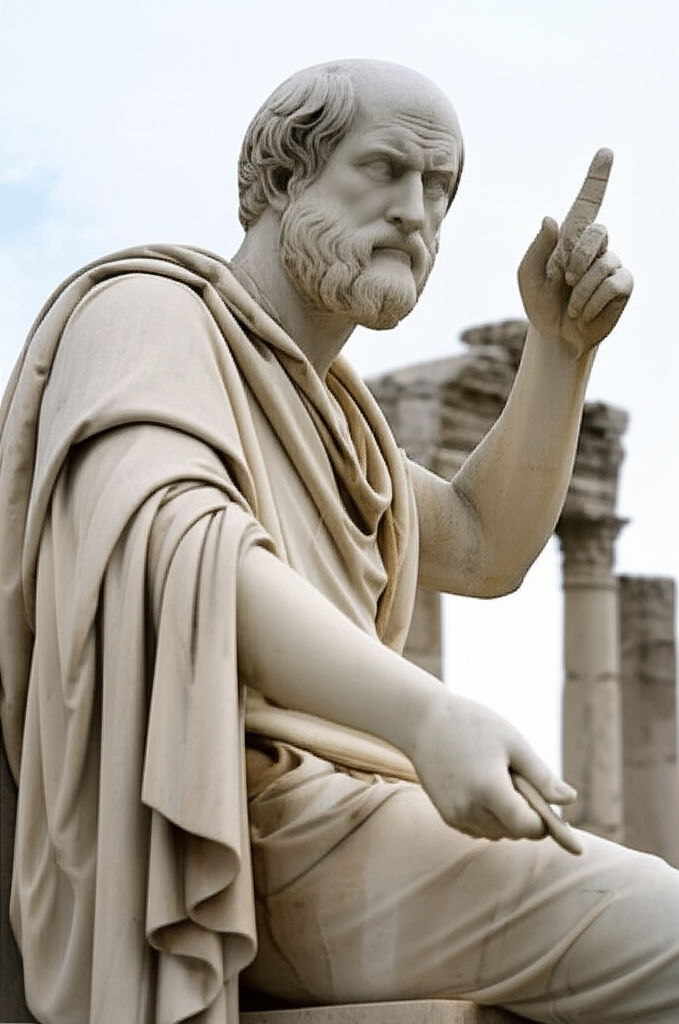
Three Philosophical Perspectives on Wealth and Happiness:
Here's a brief look at how different schools of thought from the Great Books tradition approached the relationship:
- Stoicism: For Stoics like Seneca and Epictetus, virtue is the sole good. Wealth is considered an "indifferent" – neither good nor bad in itself. Possessing it is perfectly acceptable, but one must be indifferent to its loss and never allow the desire for it to compromise one's virtue or inner tranquility. True happiness comes from living in accordance with nature and reason, not from external possessions.
- Epicureanism: Epicurus advocated for a life of moderate pleasure, primarily defined as the absence of pain (aponia) and mental disturbance (ataraxia). While wealth could contribute to this by providing security and comfort, it was not seen as essential. Excessive desire for luxury often led to greater anxiety and pain, thus detracting from happiness. Simple pleasures and friendship were valued far above material riches.
- Christian Thought (e.g., Augustine): Drawing from a different spiritual tradition, figures like St. Augustine in Confessions emphasize that true happiness cannot be found in earthly wealth or temporal pleasures, which are fleeting and imperfect. Ultimate happiness (beatitude) is found in God, the ultimate Good. Wealth, therefore, is a temporary stewardship, to be used for righteous purposes, but never to be mistaken for the ultimate source of fulfillment.
Modern Echoes and the Enduring Quest
The ancient philosophical insights into wealth and happiness resonate powerfully in our contemporary world. While economic prosperity has undeniably lifted billions out of destitution, the persistent question remains: are we, as a society, truly happier? The relentless pursuit of material accumulation, often fueled by unchecked desire, continues to leave many feeling unfulfilled, even amidst abundance.
The wisdom of the Great Books reminds us that wealth is a means, not an end. It can facilitate the good life, but it cannot define it. True happiness, as understood by the great thinkers, is an internal achievement, cultivated through virtue, wisdom, and a clear understanding of what truly constitutes the good for human beings, transcending the fleeting allure of material possessions.
YouTube Video Suggestions:
-
📹 Related Video: ARISTOTLE ON: The Nicomachean Ethics
Video by: The School of Life
💡 Want different videos? Search YouTube for: "Aristotle Nicomachean Ethics Eudaimonia"
-
📹 Related Video: PLATO ON: The Allegory of the Cave
Video by: The School of Life
💡 Want different videos? Search YouTube for: "Plato Republic Desire Wealth Philosophy"