

The Golden Fetters: Unpacking Wealth's Elusive Promise of Happiness
The pursuit of wealth is a foundational drive in human society, often equated, implicitly or explicitly, with the pursuit of happiness. Yet, for millennia, philosophers have challenged this simple equation, probing the intricate and often paradoxical connection between material abundance and genuine flourishing. This article, drawing deeply from the intellectual currents of the Great Books of the Western World, delves into this profound question, examining how our desires for wealth shape our lives, and the moral dimensions of good and evil inherent in its acquisition and use. We will explore whether true happiness lies in the accumulation of external goods, or if it resides in a realm beyond the reach of coin and property.
Defining Our Terms: Wealth, Happiness, and the Human Condition
Before we can unravel the connection, we must first establish what we mean by our core terms. The common understanding often falls short of philosophical rigor.
- Wealth: More than mere currency, wealth encompasses all forms of material resources, property, and capital that provide security, comfort, and the means to acquire goods and services. It signifies an abundance of external possessions.
- Happiness: This is where the philosophical inquiry truly begins. For many, happiness is a fleeting state of pleasure or contentment. However, the ancient Greeks, particularly Aristotle, introduced the concept of eudaimonia – often translated as "flourishing" or "living well." Eudaimonia is not a momentary feeling but a state of being, achieved through virtuous activity over a complete life. It suggests a deeper, more enduring sense of well-being, independent of transient pleasures.
The Allure of Desire: Wealth as a Perceived Path
Human nature is characterized by desire. From the most basic needs for survival to the loftiest intellectual aspirations, desire acts as a powerful motivator. The desire for wealth often stems from a combination of these fundamental urges:
- Security: Wealth promises protection from want, illness, and uncertainty.
- Comfort: It offers ease, luxury, and freedom from physical hardship.
- Power: With wealth comes influence, the ability to shape one's environment and command resources.
- Status: Wealth often confers social standing and recognition.
Plato, in his Republic, explores different types of desires, distinguishing between necessary and unnecessary appetites. While some wealth satisfies necessary desires, the endless pursuit often caters to the unnecessary, potentially leading to an insatiable craving. Augustine, reflecting on his own life in Confessions, grappled with the pull of worldly desires, ultimately concluding that true fulfillment lay beyond material accumulation, in a higher, spiritual good. The question then becomes: can an endless stream of external goods ever truly satisfy an internal, perhaps infinite, desire?
Philosophical Perspectives: Does Wealth Lead to Happiness?
The historical tapestry of philosophy offers varied and often conflicting views on the utility of wealth in achieving happiness.
| Philosophical School | Stance on Wealth | Impact on Happiness | Key Figures (Great Books) |
|---|---|---|---|
| Aristotelian | Necessary but not sufficient. External goods (wealth, health, friends) are "instrumental" for a good life, but virtue is paramount. | Can contribute to, but not guarantee, eudaimonia. A virtuous person with moderate wealth is better off than a virtuous person in extreme poverty. | Aristotle (Nicomachean Ethics) |
| Epicurean | Minimalist. Wealth is often a source of anxiety and unnecessary desires. | True happiness (absence of pain and mental disturbance) is found in simple pleasures, friendship, and freedom from fear. Excessive wealth complicates this. | Epicurus (as conveyed in texts like Diogenes Laërtius) |
| Stoic | Indifferent. Wealth is an "indifferent" (adiaphora) – neither good nor evil in itself. | Has no bearing on true happiness, which is found solely in virtue and living in accordance with reason. One can be happy in poverty or wealth, as long as one is virtuous. | Seneca, Marcus Aurelius (Meditations), Epictetus |
| Early Christian | Suspicious. Often viewed as a potential obstacle to spiritual salvation and a source of temptation. | Can hinder spiritual happiness; "It is easier for a camel to go through the eye of a needle than for a rich man to enter the kingdom of God." | Augustine (Confessions), The Gospels |
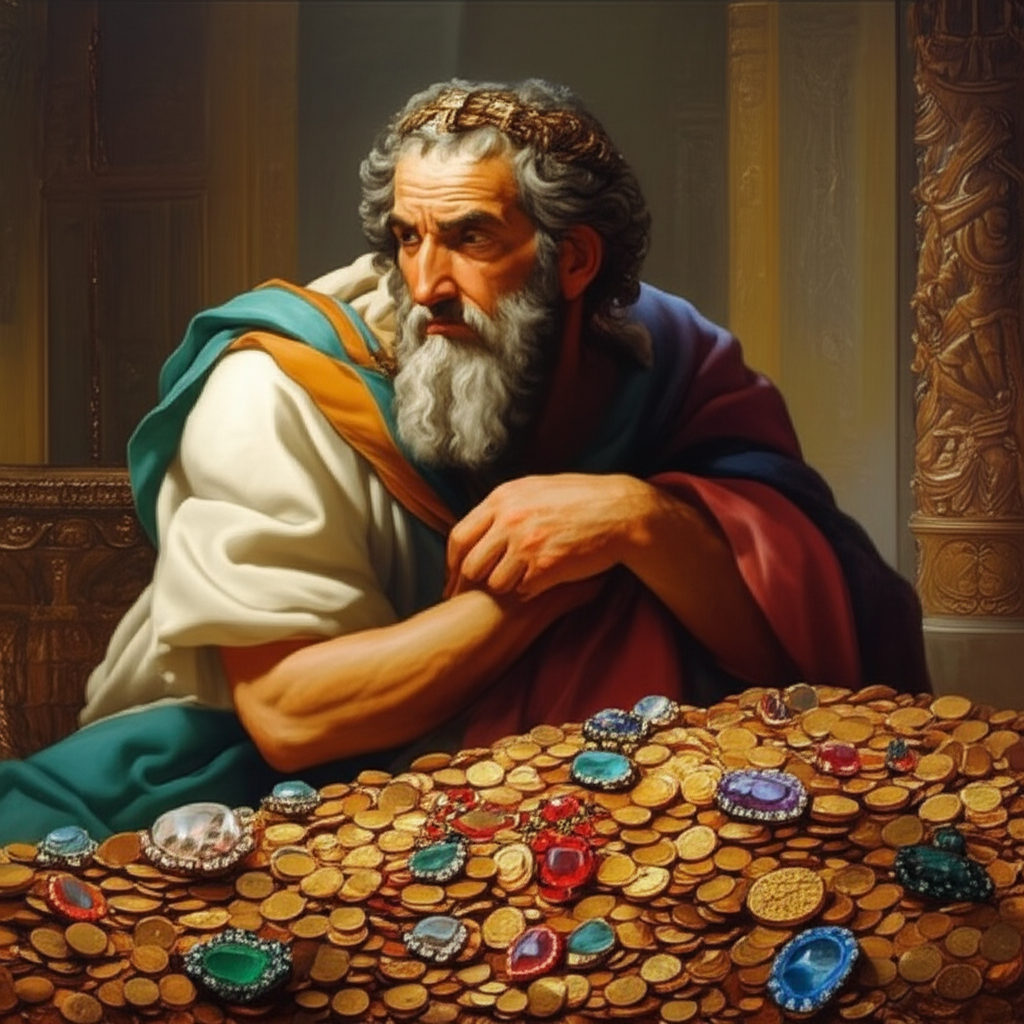
The Moral Compass: Good and Evil in Wealth's Shadow
The connection between wealth and happiness is inextricable from the concepts of good and evil. Wealth itself, arguably, is morally neutral—a tool. Its moral character is forged in its acquisition and its application.
- Acquisition: Is wealth gained through just means? Does its pursuit exploit others, or does it contribute to the common good? Adam Smith, while advocating for free markets in The Wealth of Nations, also explored the "moral sentiments" necessary for a functional and ethical society. The accumulation of wealth without ethical considerations can lead to societal imbalance and suffering, which ultimately undermines the collective potential for happiness.
- Application: Once acquired, how is wealth used? Is it hoarded for selfish pleasure, or is it deployed for philanthropic endeavors, community upliftment, or the pursuit of noble causes? A wealthy individual who uses their resources to alleviate suffering or foster knowledge might find a deeper, more enduring happiness than one who lives in isolated luxury. Conversely, wealth can amplify destructive tendencies, enabling greater acts of evil through corruption, oppression, or indulgence in vice.
The moral philosopher asks: Does the desire for wealth corrupt the soul, or merely reveal its existing inclinations towards good or evil? The Great Books remind us that true flourishing is often linked to justice, temperance, and wisdom—virtues that can be cultivated regardless of one's material standing, and which can imbue wealth with moral purpose.
Beyond Material Accumulation: A Path to Flourishing
Ultimately, the philosophical journey through the connection between wealth and happiness reveals a complex landscape. While a certain level of material security is undoubtedly conducive to well-being, providing the freedom from basic anxieties necessary for higher pursuits, the endless accumulation of wealth rarely delivers on its promise of ultimate happiness.
The wisdom gleaned from the Great Books suggests that true flourishing – eudaimonia – is cultivated internally, through:
- Virtuous Living: Developing character, acting justly, and exercising prudence.
- Meaningful Relationships: Fostering genuine connections with others.
- Purposeful Engagement: Contributing to something larger than oneself.
- Self-Knowledge and Reflection: Understanding one's own desires and limitations.
In this light, wealth can be seen as a potential enabler or a formidable distraction. It is not the source of happiness, but rather a tool whose ethical deployment can either support or undermine a life well-lived. To truly understand the connection, we must look beyond the gleaming facade of gold and delve into the depths of human desire, the nuances of good and evil, and the enduring quest for a life of genuine happiness.
Further Exploration:
-
📹 Related Video: ARISTOTLE ON: The Nicomachean Ethics
Video by: The School of Life
💡 Want different videos? Search YouTube for: ""Aristotle Nicomachean Ethics happiness wealth""
-
📹 Related Video: STOICISM: The Philosophy of Happiness
Video by: The School of Life
💡 Want different videos? Search YouTube for: ""Stoicism wealth desire happiness""