

The pursuit of wealth is often conflated with the pursuit of happiness, yet the annals of Western thought, particularly within the Great Books, reveal a much more nuanced and often contradictory relationship. Far from a simple equation, the connection between wealth and happiness is a complex philosophical terrain, explored by thinkers from Plato to the Stoics, and onward through the Enlightenment. This article delves into how these intellectual giants understood the role of material possessions in achieving a fulfilling life, examining the nature of desire, the definition of good and evil in relation to fortune, and ultimately, what truly constitutes happiness.
The Enduring Question: Does Money Buy Joy?
From the earliest philosophical inquiries, humanity has grappled with the role of material possessions in a well-lived life. Is wealth a prerequisite for happiness, a mere convenience, or a potential impediment to genuine flourishing? The Great Books of the Western World offer a rich tapestry of perspectives that challenge simplistic assumptions, urging us to look beyond immediate gratification to deeper truths about human nature and the good life.
Philosophical Perspectives on Wealth and Happiness
Different philosophical schools have approached the relationship between wealth and happiness with distinct lenses, often highlighting the pitfalls of unchecked desire and the importance of virtue.
Ancient Greek Insights: Virtue vs. Fortune
- Plato: In the Republic, Plato illustrates the dangers of a society driven by desire for material gain. He argues that an excessive focus on wealth corrupts the soul, leading to injustice and internal discord. True happiness, for Plato, stems from a just soul, where reason governs the spirited and appetitive parts, rather than from external possessions. The pursuit of the Good, which transcends mere material accumulation, is paramount.
- Aristotle: In the Nicomachean Ethics, Aristotle introduces the concept of Eudaimonia, often translated as flourishing or living well, which is his definition of true happiness. While he acknowledges that certain external goods, including a moderate amount of wealth, are necessary for a virtuous life (e.g., to perform acts of generosity), he emphatically states that happiness itself is an activity of the soul in accordance with virtue. Wealth is a means, an instrumental good, not an end in itself. Too much desire for it can distract from the cultivation of virtue, leading one astray from the good.
The Stoic Stance: Indifference to Externals
- Epictetus & Marcus Aurelius: The Stoics took a radical stance, viewing wealth as an "indifferent" – something neither inherently good nor evil. True happiness (or ataraxia, tranquility) is found in living in accordance with nature and reason, accepting what is beyond one's control, and mastering one's internal reactions. Desire for wealth or fear of poverty are seen as sources of disturbance. For a Stoic, possessing wealth is permissible, but one must be indifferent to losing it, as true good resides only in one's character and choices.
Medieval Morality: The Soul's True Treasure
- Augustine of Hippo: In Confessions and City of God, Augustine argues that true happiness cannot be found in worldly wealth or pleasure, which are fleeting and ultimately unsatisfying. The ultimate Good and source of happiness is God. Desire for earthly possessions is a form of concupiscence, distracting the soul from its divine purpose. Wealth, if possessed, should be used charitably and for the good of others, not for selfish accumulation.
- Thomas Aquinas: Building on Aristotle, Aquinas also viewed wealth as an instrumental good. While necessary for physical well-being and acts of charity, it cannot be the ultimate good or source of happiness. Happiness lies in the contemplation of God, the highest good. The unbridled desire for wealth can lead to avarice, a sin, and thus a turning away from the good.
Modern Dilemmas: Desire, Scarcity, and the Social Contract
While later thinkers like John Locke and Adam Smith explored the creation and distribution of wealth in emerging economic systems, the underlying philosophical question of its connection to happiness remained. Locke's theories on property and labor, for instance, lay groundwork for modern capitalism, but the philosophical underpinnings still grapple with how these systems align with human flourishing and the common good.
The Role of Desire: A Double-Edged Sword
Central to the discussion of wealth and happiness is the concept of desire. Philosophers consistently highlight that it is not wealth itself, but our desire for it, and what that desire entails, that determines its impact on our lives.
- Unchecked Desire: The desire for wealth can easily become insatiable, leading to a cycle of acquisition that never truly satisfies. This is the "hedonic treadmill," where more wealth only leads to a higher baseline of desire, never to lasting happiness. This unchecked desire is often seen as leading to evil – greed, envy, exploitation.
- Rightly Ordered Desire: When desire is rational and aligned with virtue, wealth can be a tool for good. It can provide security, enable generosity, support intellectual pursuits, and contribute to a just society. Aristotle's emphasis on moderation applies here: desiring enough wealth to live well, but not so much that it consumes one's life.
Wealth as a Means, Not an End
Across the spectrum of the Great Books, a consistent theme emerges: wealth is almost universally seen as an instrumental good, a means to an end, rather than an end in itself.
| Philosopher/School | View on Wealth | Role in Happiness |
|---|---|---|
| Plato | Potential corruptor; external good. | Distracts from true happiness (justice of the soul). |
| Aristotle | Instrumental good; external good. | Necessary but not sufficient for Eudaimonia (virtue is key). |
| Stoics | Indifferent. | Irrelevant to true happiness (ataraxia); focus on internal control. |
| Augustine | Earthly, fleeting; potential for sin. | Cannot provide true happiness (found in God). |
| Aquinas | Instrumental good; external good. | Cannot provide true happiness (found in contemplation of God). |
This table illustrates a fundamental agreement: true happiness is not bought, but cultivated through internal states, virtuous action, or divine connection.
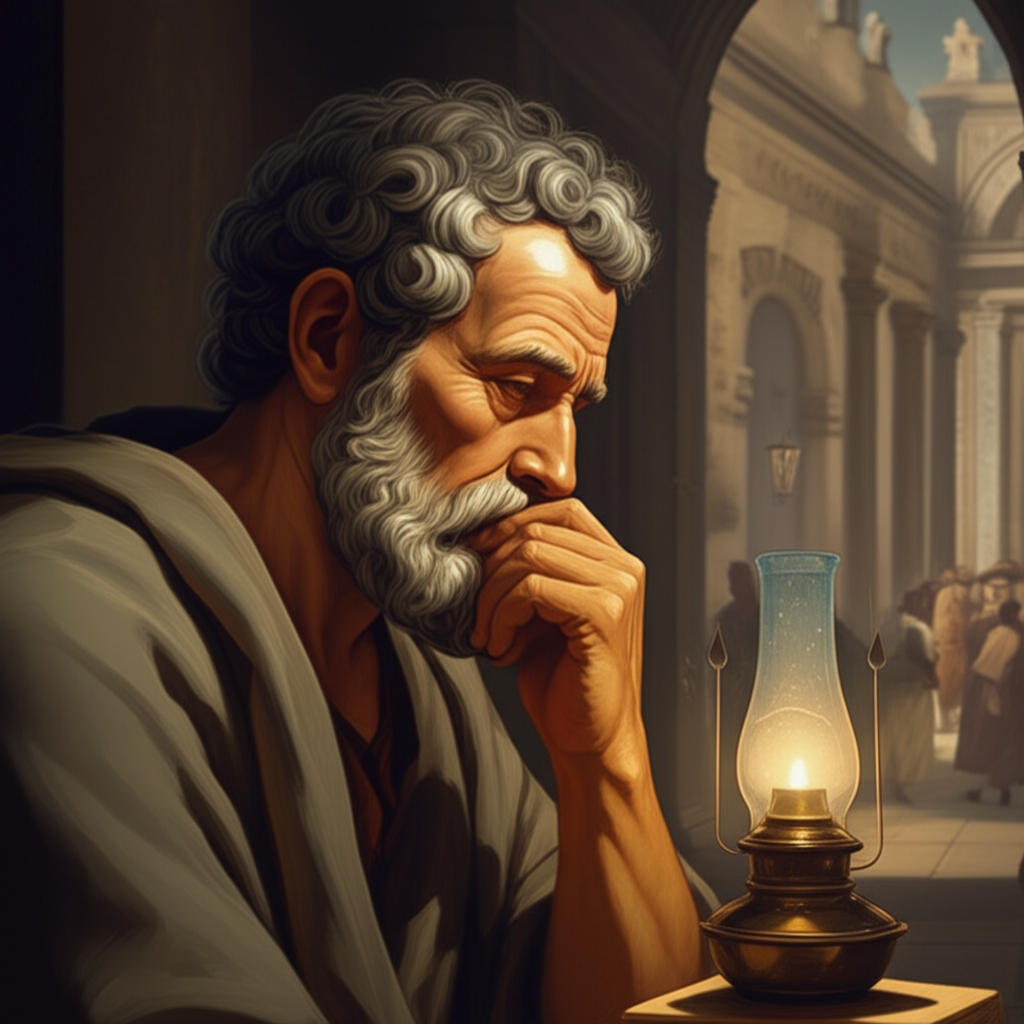
Defining True Happiness: Beyond Material Accumulation
Ultimately, the Great Books compel us to redefine happiness itself. It is not merely a fleeting emotion or the acquisition of possessions.
- For the ancient Greeks, happiness was often Eudaimonia – a state of flourishing, living well, and acting virtuously.
- For the Stoics, it was ataraxia – tranquility, peace of mind achieved through reason and acceptance.
- For medieval Christian thinkers, it was beatitude – the ultimate union with God.
In all these traditions, wealth serves, at best, as a supporting actor, and at worst, as a dangerous antagonist. The true battle for happiness is waged within the soul, against unruly desire and the temptations of superficial good and evil.
Conclusion: A Philosophical Imperative
The connection between wealth and happiness is not a straightforward correlation but a profound philosophical challenge. The Great Books of the Western World provide a timeless framework for understanding that while wealth can offer comfort and opportunity, it is rarely, if ever, the direct source of lasting happiness. Instead, true flourishing arises from the cultivation of virtue, the mastery of desire, and a clear understanding of what constitutes genuine good and evil. To truly understand this connection, we must engage in deep introspection, questioning our own assumptions and seeking wisdom from those who have pondered these questions for millennia.
📹 Related Video: ARISTOTLE ON: The Nicomachean Ethics
Video by: The School of Life
💡 Want different videos? Search YouTube for: ""Aristotle Nicomachean Ethics Eudaimonia Wealth""
📹 Related Video: STOICISM: The Philosophy of Happiness
Video by: The School of Life
💡 Want different videos? Search YouTube for: ""Stoic Philosophy on Money and Possessions""