

The Intertwined Fates: Exploring the Connection Between Tyranny and Oligarchy
The study of Government forms, a cornerstone of Western philosophy, reveals a profound and often unsettling connection between Oligarchy and Tyranny. Far from being isolated pathologies, these two systems frequently emerge from similar societal dysfunctions, feed into one another, or even serve as direct catalysts for the other's rise. As explored extensively in the Great Books of the Western World, particularly by Plato and Aristotle, understanding this connection is crucial for comprehending the fragility of just governance and the enduring challenges to political stability.
Defining the Terms: Oligarchy and Tyranny
To fully appreciate their connection, we must first delineate the distinct characteristics of each form of Government.
What is Oligarchy?
An Oligarchy is, at its core, a form of Government where power is concentrated in the hands of a small, privileged group. While this group might be defined by birth, military strength, or religious authority, the most common and historically impactful form, as analyzed by ancient philosophers, is one based on wealth.
- Rule by the Wealthy: As Plato describes in The Republic, an oligarchy arises when a state is "governed by men of property; property is the qualification for office." The rich rule, and they do so primarily to protect and expand their own riches.
- Exclusionary Principle: Aristotle, in Politics, further clarifies that oligarchy is characterized by the rule of the wealthy for their own benefit, in contrast to an aristocracy, which might be rule by the best for the common good. It is inherently discriminatory, disenfranchising those without significant property.
- Key Characteristics of Oligarchy:
- Wealth as the Basis of Power: Political rights are tied to economic status.
- Self-Interest: Policies are designed to benefit the ruling elite.
- Economic Inequality: Often exacerbates the gap between rich and poor.
- Suppression of the Poor: The concerns and needs of the majority are ignored or actively suppressed.
What is Tyranny?
Tyranny, on the other hand, represents the absolute rule of a single individual, often seized by force or deception, and maintained through fear and oppression, rather than law or consent.
- Absolute Power of One: Plato depicts the tyrant as an individual consumed by insatiable desires, who enslaves the state and its citizens to his own whims.
- Rule by Force and Fear: Aristotle defines tyranny as a perversion of monarchy, where the ruler governs solely for his own benefit, employing spies, promoting distrust, and disarming the populace to maintain his grip on power.
- Key Characteristics of Tyranny:
- Concentration of Power: All authority resides in a single ruler.
- Lack of Legal Restraint: The tyrant operates above the law.
- Oppression and Fear: Rule is maintained through intimidation, violence, and suppression of dissent.
- Self-Serving Governance: The well-being of the ruler, not the state, is paramount.
- Erosion of Liberties: Individual freedoms are severely curtailed or eliminated.
The Inescapable Connection: How Oligarchy Breeds Tyranny (and Vice Versa)
The connection between Oligarchy and Tyranny is not merely incidental; it is often a causal relationship, a cyclical pattern of political decay observed and warned against by the classical philosophers.
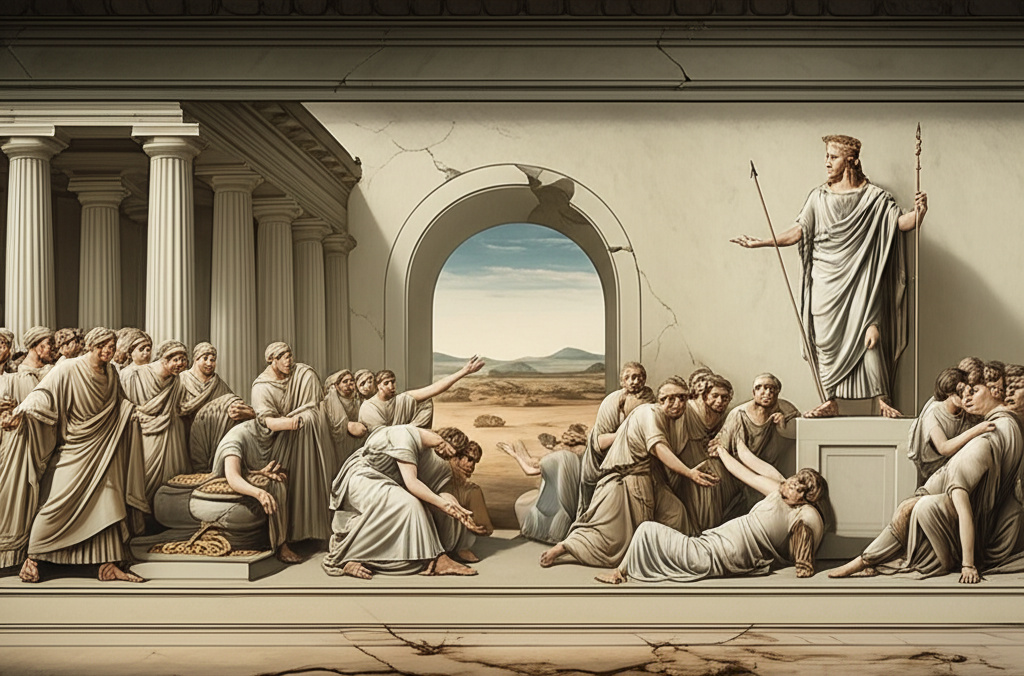
From the Few to the One: Oligarchy's Perilous Path
The most common path from Oligarchy to Tyranny arises from the inherent instability of the former.
- Exacerbated Inequality: An oligarchy by its nature fosters extreme economic disparity. The wealthy few grow richer, while the majority languish in poverty. This creates deep-seated resentment and social unrest.
- Internal Strife: The ruling oligarchs themselves may fall into disputes over wealth and power, leading to factionalism and weakening their collective grip on Government.
- Fear and Repression: Fearing a revolt from the impoverished masses, the oligarchs often resort to increasingly repressive measures, further alienating the populace.
- The Rise of the Demagogue: In this volatile environment, a charismatic leader—often a former oligarch or someone who appeals to the dispossessed—emerges. This demagogue promises to dismantle the oligarchy, redistribute wealth, and restore justice.
- Seizure of Power: By mobilizing the aggrieved populace, this leader can overthrow the oligarchy. However, once in power, instead of establishing a just Government, they often consolidate absolute authority, becoming a tyrant themselves, ruling through fear and maintaining power by playing different factions against each other. Plato vividly describes this transition in The Republic, where the excessive freedom and eventual chaos of democracy (often fueled by underlying oligarchic tensions) can lead to the rise of a tyrant who promises order.
The Tyrant as Protector of the Few
Conversely, a tyrant can also emerge or maintain power by aligning with and protecting the interests of an oligarchic class.
- Mutual Benefit: A tyrant may rely on the financial and logistical support of wealthy elites to seize or maintain power. In return, the tyrant ensures that the oligarchs' property and privileges are protected, often at the expense of the wider populace.
- Suppression of Opposition: The tyrant's apparatus of control—spies, military, propaganda—can be effectively used to suppress any popular movements or political challenges that threaten the oligarchic structure.
- Concentration of Economic Power: Under a tyranny, the tyrant and his favored few can further consolidate economic control, stripping assets from opponents and enriching themselves, thereby solidifying both tyranny and oligarchy simultaneously.
Mechanisms of Interplay
The connection is forged through several mechanisms that underscore the similar pathologies of these forms of Government:
| Mechanism | Oligarchy | Tyranny |
|---|---|---|
| Concentration of Power | Power in the hands of a wealthy few. | Power in the hands of a single ruler. |
| Economic Basis | Wealth is the primary qualification for rule. | Often relies on wealth confiscation or patronage. |
| Suppression of Dissent | Suppresses the poor to maintain economic advantage. | Suppresses all opposition to maintain absolute rule. |
| Self-Interest | Governs for the benefit of the rich. | Governs for the benefit of the ruler. |
| Erosion of Liberties | Limits political participation for the majority. | Eliminates most individual and political freedoms. |
| Fear as a Tool | Uses fear of poverty/disorder against the masses. | Uses fear of punishment/violence against everyone. |
Both Oligarchy and Tyranny represent a deviation from the ideal of Government serving the common good. They prioritize private interests—be it the wealth of the few or the power of the one—over the welfare of the many, leading to instability, injustice, and ultimately, the decay of the state. The Great Books serve as a timeless warning that societies must guard against the insidious rise of concentrated power, whether it be in the hands of a few wealthy elites or a single domineering ruler, as the connection between them often proves to be a destructive cycle.
YouTube:
- Plato's Republic Political Cycle Explained
- Aristotle Politics Forms of Government Analysis
📹 Related Video: What is Philosophy?
Video by: The School of Life
💡 Want different videos? Search YouTube for: "The Connection Between Tyranny and Oligarchy philosophy"