

The Unbreakable Bond: Exploring the Connection Between Revolution and Justice
Summary
The relationship between revolution and justice is one of the most profound and contentious subjects in political philosophy. This article posits that revolution, while often violent and disruptive, frequently emerges from a deep-seated demand for justice when the existing State fails to uphold fundamental principles of fairness, equality, and human dignity. Drawing upon the rich tapestry of thought found in the Great Books of the Western World, we explore how philosophers have grappled with the conditions that justify overturning established order and the often-elusive quest for a more just society that follows. The connection is not merely incidental but foundational, suggesting that revolutions are, at their core, radical reconfigurations of the social contract driven by a yearning for rectified justice.
The Genesis of Discontent: Justice and the State
From ancient Athens to the Enlightenment and beyond, thinkers have pondered the ideal State and its obligations to its citizens. Plato, in his Republic, envisioned a state where justice was the harmonious functioning of its parts, each performing its proper role. Aristotle, too, saw justice as central to the well-being of the polis, defining it in terms of both distributive (fair allocation of resources) and corrective (rectification of wrongs) principles. For these classical philosophers, a just State was one that fostered virtue and allowed its citizens to flourish.
However, the reality often falls short of the ideal. When the State becomes tyrannical, corrupt, or systematically oppressive, the very foundation of its legitimacy is questioned. The social contract, implicitly or explicitly agreed upon, is breached. Thinkers like John Locke argued that when a government acts contrary to the trust placed in it by the people, especially by violating natural rights to life, liberty, and property, the people retain the right to revolution. This profound idea established a moral framework for rebellion, linking the breakdown of justice directly to the potential for revolutionary upheaval.
The Call for Change: When Revolution Becomes Inevitable
The connection between a perceived lack of justice and the impetus for revolution is a recurring theme in human history and philosophical discourse. When individuals or groups feel perpetually wronged, systematically disenfranchised, or subjected to arbitrary power, the seeds of discontent begin to sprout.
Consider the following triggers for revolutionary sentiment, often rooted in a perceived absence of justice:
- Systemic Inequality: Gross disparities in wealth, opportunity, or legal standing that are seen as unfair and immutable.
- Oppression and Tyranny: The arbitrary exercise of power by the State, leading to the suppression of liberties, violence, or persecution.
- Failure of Representation: When the State no longer genuinely represents the will or interests of its people, leading to a sense of alienation and powerlessness.
- Violation of Natural Rights: As articulated by Enlightenment thinkers, the infringement upon inherent human rights that are believed to precede any governmental authority.
- Moral Outrage: A collective sense of indignation at perceived injustices that violate fundamental ethical principles.
Jean-Jacques Rousseau, in The Social Contract, explored the concept of the "general will," suggesting that legitimate government derives its authority from the collective good. When a State deviates from this general will, pursuing particular interests over the common good, its legitimacy wanes, opening the door for a radical re-evaluation of its existence. Similarly, Karl Marx famously posited that history is a history of class struggle, where revolution is the inevitable outcome of the inherent contradictions and injustices within capitalist systems. For Marx, the connection was deterministic: economic injustice would necessarily lead to proletarian revolution.
The Double-Edged Sword: Revolutionary Justice
While revolution is often born of a yearning for justice, the path to achieving it is rarely straightforward or clean. The act of overthrowing an existing order often involves violence, chaos, and the potential for new injustices to emerge. The very definition of justice itself can become a battleground during revolutionary periods.
- The Promise: Revolutionaries often articulate grand visions of a more just society—one free from oppression, inequality, or corruption. They promise a redistribution of power, wealth, and rights, aiming to correct historical wrongs and establish a new, fairer social order. This ideal of revolutionary justice acts as a powerful unifying force.
- The Peril: Yet, the pursuit of this ideal can lead to its own forms of injustice. The "reign of terror" during the French Revolution, for instance, illustrates how the fervent desire to purge perceived enemies of the revolution can result in widespread executions and a suspension of due process. The question then becomes: Can a revolution truly deliver justice if it employs unjust means? This ethical dilemma highlights the complex connection between means and ends in revolutionary movements. Philosophers like Edmund Burke, while not denying the need for reform, cautioned against the radical upheaval of revolution, fearing that it often destroyed more than it built, leading to new forms of tyranny in the name of liberty.
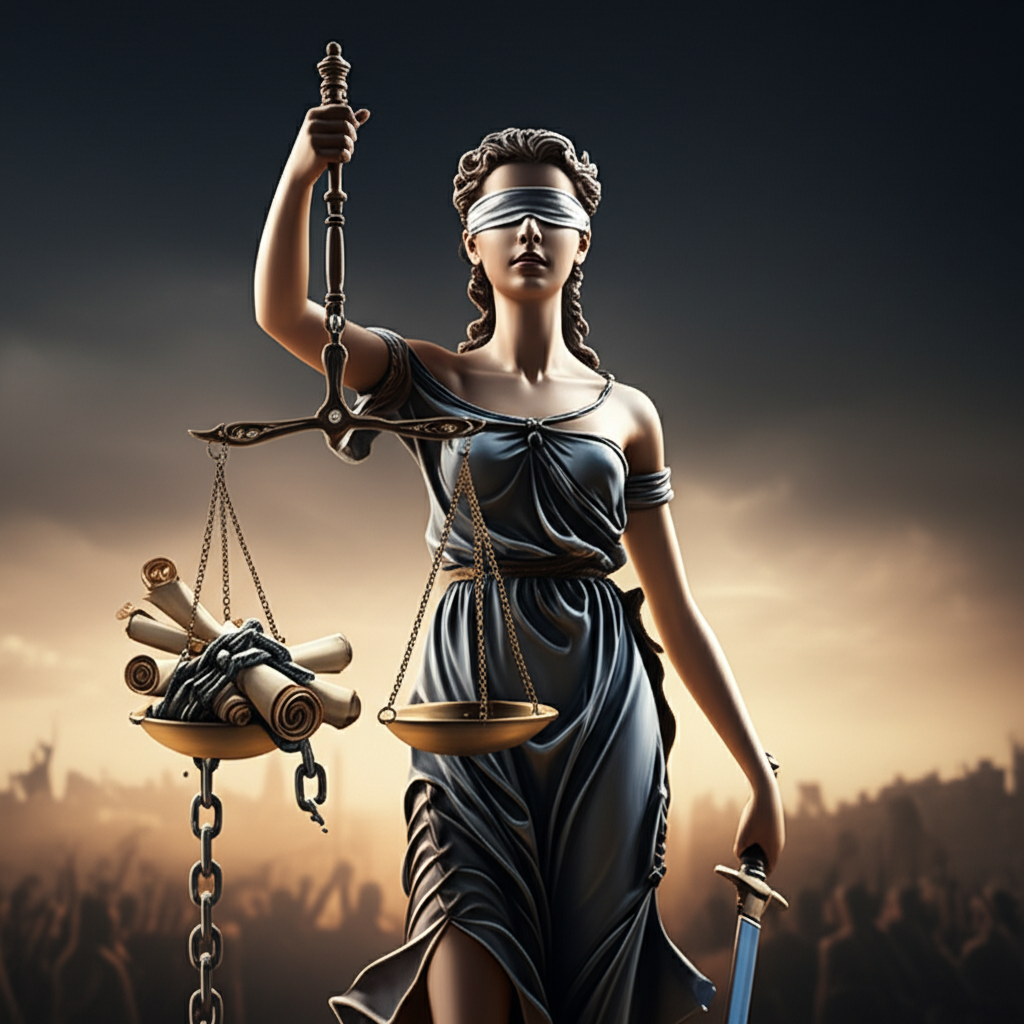
The connection between revolution and justice is thus not a simple cause-and-effect but a dynamic interplay. Revolution is often a desperate, last-resort attempt to re-establish justice when all other avenues have failed. However, the outcome is never guaranteed, and the process itself can be fraught with moral compromises.
Reimagining the State: The Aftermath
Once a revolution has succeeded in dismantling the old State, the monumental task of building a new, more just one begins. This phase is critical for determining whether the revolution truly delivered on its promise of justice. The new State must grapple with:
- Establishing New Laws: Crafting a legal framework that embodies the principles of justice for which the revolution was fought.
- Redistributing Power and Resources: Implementing policies that address the systemic inequalities that fueled the revolution.
- Healing Divisions: Reconciling the disparate factions and wounds inflicted during the revolutionary period.
- Preventing New Tyranny: Instituting checks and balances to ensure that the new power structure does not replicate the injustices of the old.
The enduring connection between revolution and justice lies in this continuous struggle. Revolutions are not merely historical events but profound philosophical statements about the nature of legitimate governance and the inherent human yearning for a world where fairness and dignity prevail. They serve as potent reminders that when the State fails to uphold justice, the demand for change can become an irresistible force, forever altering the course of history in its quest for a more equitable order.
📹 Related Video: PLATO ON: The Allegory of the Cave
Video by: The School of Life
💡 Want different videos? Search YouTube for: ""Plato's Republic Justice" or "John Locke Right to Revolution""