

The Chains of Accumulation: Unpacking the Link Between Wealth and Slavery
Summary: The history of human civilization reveals an uncomfortable, yet undeniable, connection between the pursuit and accumulation of wealth and the institution of slavery. From ancient philosophical justifications for forced labor to the economic engines of chattel slavery and contemporary forms of exploitation, the desire for material prosperity has often come at the cost of human freedom. This article explores how philosophers throughout history have grappled with this profound relationship, urging us to consider the ethical implications for justice in our economic systems.
The Unsettling Truth: Wealth's Shadow
To speak of wealth is often to conjure images of prosperity, innovation, and societal advancement. Yet, to speak of slavery is to confront humanity's darkest chapters: exploitation, dehumanization, and the brutal suppression of freedom. What, then, is the thread that so often binds these two seemingly disparate concepts? A deep dive into the annals of philosophy and history, particularly as illuminated by the foundational texts in the Great Books of the Western World, reveals a persistent and disturbing connection: the accumulation of wealth has, throughout much of human history, been predicated upon the forced labor of others. This is not merely a historical footnote but a philosophical challenge that demands our ongoing reflection on what constitutes a just society.
Ancient Echoes: The Philosophical Roots of Labor and Domination
The earliest philosophical inquiries into the nature of society and economy often grappled with the role of labor and the inherent hierarchies that facilitated the accumulation of wealth.
Aristotle on "Natural Slavery" and Household Economy
In his Politics, Aristotle presents a framework for the well-ordered household and, by extension, the state. Within this structure, he posits a controversial concept of "natural slavery," arguing that some individuals are inherently suited to be instruments of others, performing the manual labor necessary for the master's leisure and the household's prosperity. This perspective, while deeply troubling to modern sensibilities, illustrates how early philosophical thought could rationalize the subjugation of human beings as a necessary component for the creation and maintenance of wealth and the flourishing of the free citizen class. The slave, in this view, was a "living tool," essential for the economic engine of the ancient world.
Plato's Republic and the Division of Labor
While Plato’s Republic does not explicitly endorse chattel slavery in the same manner as Aristotle, his ideal state relies heavily on a rigid class structure and a strict division of labor. The artisan and worker classes are expected to fulfill specific roles, providing the material goods and services that allow the philosopher-kings and guardians to pursue intellectual and civic duties. This hierarchical organization, though not direct ownership, still describes a system where the productive capacity of one group directly enables the leisure and political power (a form of wealth) of another, raising questions about freedom and autonomy within such a structure.
The Economic Engine of Human Bondage
Beyond philosophical justifications, the practical economics of slavery reveal its undeniable role in wealth creation. Historically, the most direct path to significant wealth accumulation often involved controlling vast resources or land, which in turn required an abundant and cheap labor force.
Consider the following historical mechanisms:
- Agricultural Empires: The colossal agricultural outputs of ancient Egypt, Rome, and later, the plantation economies of the Americas, were overwhelmingly dependent on slave labor. The cotton, sugar, and tobacco that fueled global trade and enriched empires were cultivated by the unfree.
- Resource Extraction: From mining precious metals in ancient Greece to the diamond mines of colonial Africa, the most dangerous and arduous tasks, yielding immense wealth for owners, were frequently performed by slaves or indentured laborers.
- Trade and Commerce: Slaves themselves were commodities, a form of capital that could be bought, sold, and inherited, generating immense profits for traders and owners. The transatlantic slave trade is a stark example of how human beings became the very currency of wealth.
In these contexts, slavery was not merely an unfortunate social practice; it was often the foundational economic model, a brutal but effective means of maximizing production and minimizing costs, thereby accelerating the accumulation of wealth for a select few.
Beyond Chattel: Modern Manifestations of Unfree Labor
While chattel slavery has been largely abolished legally, the philosophical connection between wealth and various forms of unfree labor persists.
Wage Slavery and the Industrial Revolution
The Industrial Revolution, while heralded as an era of progress, also saw the rise of critiques concerning "wage slavery." Philosophers and social theorists, drawing from the intellectual currents found in the Great Books, argued that workers, stripped of land and traditional means of production, were forced by economic necessity to sell their labor for wages that barely sustained them. This created a new form of dependence, where the accumulation of immense industrial wealth by factory owners was often built upon the precarious existence and exploitative conditions of the working class. The "freedom" to starve, for many, was no freedom at all, blurring the lines between economic necessity and outright coercion.
Contemporary Exploitation and Global Supply Chains
Today, the globalized economy, driven by the relentless pursuit of profit and wealth, continues to grapple with issues of forced labor and exploitation. From sweatshops producing consumer goods to human trafficking for various industries, millions worldwide are trapped in conditions that mirror historical slavery. These practices, often hidden deep within complex global supply chains, enable corporations and individuals to accumulate immense wealth through the cheap labor of vulnerable populations, demonstrating that the ethical dilemmas surrounding wealth and freedom are far from resolved.
The Moral Imperative: Justice in the Face of Exploitation
The enduring connection between wealth and slavery poses a profound challenge to our understanding of justice. If wealth is accumulated through the systematic denial of freedom and dignity, can such wealth ever be considered truly just?
Philosophers throughout history, from the Stoics to Enlightenment thinkers like Locke and Rousseau, to modern ethicists, have consistently argued that true justice demands respect for individual autonomy and the inherent rights of every human being. The concept of slavery, in any form, stands in direct opposition to these ideals.
Key Philosophical Stances on Justice vs. Slavery:
- Natural Rights: The idea that all individuals possess inherent rights, including the right to liberty, which cannot be legitimately alienated or purchased.
- Social Contract Theory: The notion that legitimate governance arises from the consent of the governed, implying that no individual can justly be made the property of another.
- Distributive Justice: Principles concerned with the fair allocation of resources and opportunities, which are fundamentally violated when wealth is amassed through the forced deprivation of others' labor.
- Human Dignity: The intrinsic worth of every person, which is utterly negated by the institution of slavery.
The ongoing philosophical task is to continually examine the mechanisms of wealth creation, questioning whether they uphold or undermine the principles of justice. This requires not only legal prohibitions against slavery but also a deep ethical scrutiny of economic systems that might, in subtle or overt ways, foster exploitation.
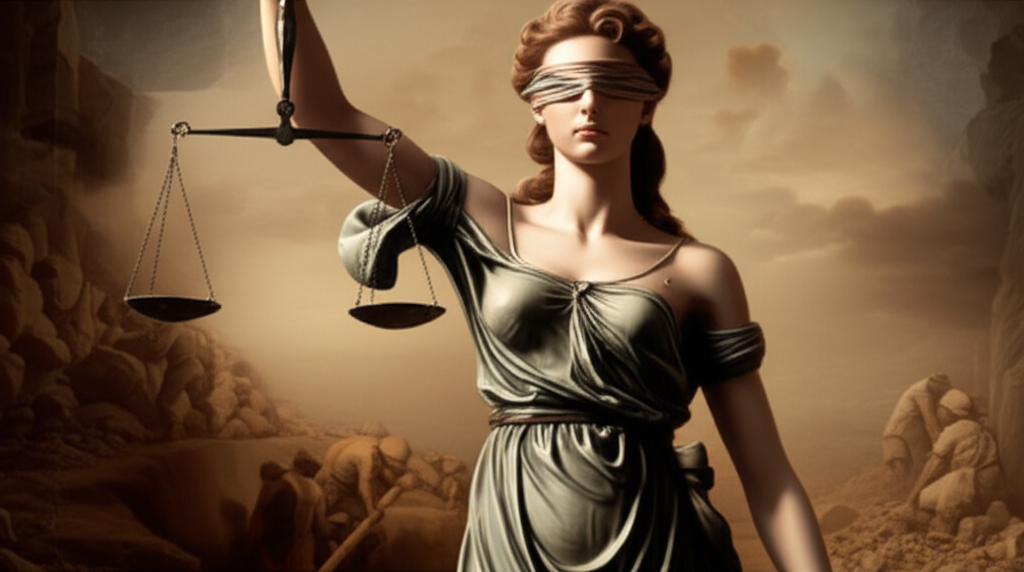
The connection between wealth and slavery is a complex and often uncomfortable truth that permeates human history and philosophy. It reminds us that the pursuit of prosperity, unchecked by ethical considerations and a robust commitment to justice, can lead to the gravest forms of human exploitation. As we navigate the complexities of modern economies, the lessons from the past, illuminated by the enduring wisdom of the Great Books, compel us to constantly re-evaluate the foundations of our wealth and strive for a world where true justice prevails, and no one is subjected to the chains of unfree labor.
📹 Related Video: What is Philosophy?
Video by: The School of Life
💡 Want different videos? Search YouTube for: ""The Philosophy of Slavery: Ancient Greece to Modern Day""
📹 Related Video: ARISTOTLE ON: The Nicomachean Ethics
Video by: The School of Life
💡 Want different videos? Search YouTube for: ""Justice and Economic Inequality: A Philosophical Debate""