

The Inextricable Tapestry: Weaving Mind and Language
The human experience, in its profound depth and dizzying complexity, is fundamentally shaped by two interconnected forces: the Mind and Language. Far from being mere tools for expression, language acts as the very crucible in which our thoughts are forged, our Knowledge accumulated, and our understanding of reality constructed. To explore this connection is to peel back layers of what it means to be human, revealing how our internal world is perpetually in dialogue with the external, mediated by the astonishing power of words, Sign and Symbol.
The Mind's Architectural Blueprint: Language as Thought's Foundation
At its core, the Mind does not simply use language; it is, to a significant degree, formed by it. Imagine a world without the intricate structures of grammar, the nuances of vocabulary, or the shared understanding that allows us to articulate abstract concepts. Would our thoughts be anything more than fleeting sensory impressions? From the earliest philosophers grappling with the nature of being to modern cognitive science, the consensus grows: language provides the framework, the very scaffolding, upon which complex thought is built.
Consider the act of reasoning. When we construct an argument, we are, in essence, manipulating linguistic units – propositions, premises, conclusions – in a logical sequence. The precision required for such an endeavor is a direct product of language's capacity to define, categorize, and relate. Without words, how would we articulate the differences between justice and injustice, or the principles governing cause and effect?
Key Characteristics of Language's Influence on Mind:
- Conceptual Formation: Language provides the labels and categories that allow us to organize sensory input into coherent concepts.
- Abstract Thought: It enables us to move beyond concrete objects to ponder ideas like freedom, time, or infinity.
- Memory and Recall: Linguistic structures aid in encoding and retrieving information, shaping how we remember and recount experiences.
- Self-Reflection: The ability to narrate our own internal states and experiences to ourselves is a deeply linguistic act.
Language: The Grand Architect of Knowledge
If the mind is the builder, Language is the shared blueprint that allows for the construction and transmission of Knowledge across individuals and generations. Individual insights, no matter how brilliant, remain isolated until they are articulated and shared through language. The vast repository of human learning – from scientific discoveries to philosophical treatises, from historical accounts to artistic expressions – exists because it has been codified in linguistic forms.
Through language, we inherit the wisdom of the ancients and contribute to the ongoing human conversation. Aristotle's meticulous categorizations, Plato's dialogues exploring the nature of truth, and Locke's inquiries into human understanding – all these monumental contributions to Knowledge are accessible to us because they were meticulously rendered in language. It allows us to learn from experiences we haven't had, to understand ideas we haven't personally conceived, and to build upon the intellectual foundations laid by others.
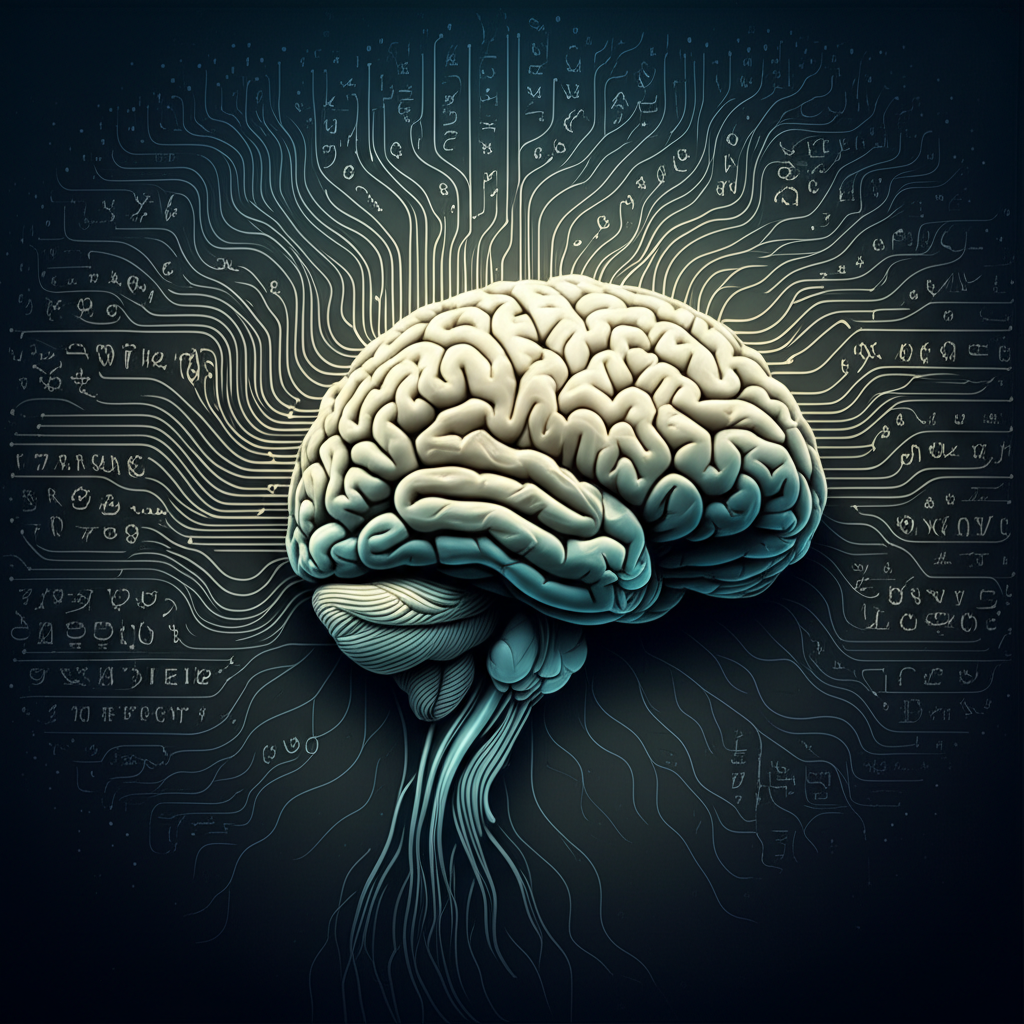 that intertwine and connect, suggesting the organic and inseparable link between thought and communication.)
The Dual Nature: Sign and Symbol in Linguistic Understanding
Central to understanding how language functions is distinguishing between, and appreciating the interplay of, Sign and Symbol. These are the fundamental units through which meaning is conveyed.
-
Signs: A sign typically has a direct, often natural, connection to what it signifies. Smoke is a sign of fire. A fever is a sign of illness. The connection is largely unmediated by human convention. They point to something immediately present or directly inferable.
-
Symbols: A symbol, on the other hand, derives its meaning from convention, agreement, and cultural context. Words are the quintessential examples of symbols. There is no inherent "dog-ness" in the sound or written form of the word "dog." Its meaning is entirely arbitrary and relies on a shared understanding within a linguistic community.
Language operates primarily through symbols. This symbolic nature is precisely what gives it its immense power and flexibility. Because symbols are not tethered to direct experience, they can represent abstract ideas, past events, future possibilities, and even things that do not exist in the physical world (like unicorns or perfect justice). The complex interplay of these conventional Sign and Symbol systems allows for the nuanced expression of thought, the transfer of intricate Knowledge, and the creation of shared realities that bind societies together. Our ability to process and create meaning from these symbolic representations is a hallmark of the human Mind.
The Philosophical Journey: Echoes from the Great Books
The connection between mind and language has been a perennial theme throughout the Great Books of the Western World. From Plato's Cratylus, which debates whether names have a natural or conventional relation to their objects, to Augustine's reflections on how we learn language and come to understand God, philosophers have continually grappled with this profound link. John Locke, in his An Essay Concerning Human Understanding, extensively discusses how words serve as Sign and Symbol for our ideas, and the potential for misunderstanding when these connections are not clear. These foundational texts remind us that the human quest for Knowledge is inextricably tied to our capacity to articulate, question, and refine our thoughts through the medium of Language.
The ongoing exploration of this connection continues to yield insights into how we perceive, how we learn, and how we construct our shared world. To understand language is, in a very real sense, to understand the Mind itself.
YouTube Video Suggestions:
-
📹 Related Video: PLATO ON: The Allegory of the Cave
Video by: The School of Life
💡 Want different videos? Search YouTube for: "Noam Chomsky language mind connection"
-
📹 Related Video: What is Philosophy?
Video by: The School of Life
💡 Want different videos? Search YouTube for: "Wittgenstein philosophy of language explained"