

The Inseparable Weave: Mind, Language, and the Fabric of Knowledge
The human experience is profoundly shaped by two fundamental capacities: the ability to think and the ability to communicate those thoughts. At planksip.org, we often delve into the deep currents of philosophical inquiry, and few connections are as foundational as that between the Mind and Language. Far from being mere tools the mind employs, language is an intrinsic part of how the mind itself operates, structures reality, and builds Knowledge. To speak of one without the other is to tell an incomplete story of human consciousness and our unique place in the cosmos of understanding.
The Inner Dialogue and the Outer World: A Symbiotic Relationship
From our earliest moments, we learn to navigate the world not just through sensory input, but through the labels and narratives that Language provides. Consider the infant, whose burgeoning Mind begins to categorize and comprehend its surroundings. This process is rapidly accelerated and refined once words enter the picture. Is thought truly possible without some form of internal language, a silent articulation of concepts and relations? Many philosophers, spanning centuries and traditions within the Great Books of the Western World, have grappled with this question, often concluding that our capacity for abstract thought, for reason itself, is inextricably linked to our linguistic faculties.
Language doesn't just express thought; it shapes it. The very structure of our native tongue can influence how we perceive time, space, and causality. Concepts that are easily articulated in one language might be cumbersome in another, suggesting that our linguistic framework acts as a lens through which the Mind apprehends reality. This isn't to say that the unspoken thought doesn't exist, but rather that its articulation and refinement into coherent Knowledge often requires the scaffold of Language.
Decoding Reality: The Power of Sign and Symbol
At the heart of Language lies the Sign and Symbol. These are the fundamental units through which we encode and decode meaning, transforming raw experience into communicable Knowledge. A sign, in its simplest form, points to something else – smoke is a sign of fire. A symbol, however, carries a deeper, often arbitrary, cultural meaning. The word "tree" is not a tree; it is a symbol that our Mind associates with a specific botanical entity, a symbol that allows us to discuss, categorize, and build Knowledge about trees even in their absence.
Philosophers from Aristotle, who meticulously cataloged categories of being and speech, to Ferdinand de Saussure, whose work on semiotics revolutionized our understanding of language, have explored how these Sign and Symbol systems operate. They are not merely labels; they are the very mechanisms by which we organize our thoughts, form concepts, and create shared realities. Without the agreed-upon meanings inherent in Sign and Symbol, the collective accumulation and transmission of Knowledge would be impossible, consigning each individual Mind to an isolated, unsharable understanding.
Key Components of Linguistic Meaning:
- Signifier: The form the Sign and Symbol takes (e.g., the word "love," a red heart emoji).
- Signified: The concept or idea it represents (e.g., the emotion of love, affection).
- Referent: The actual thing in the world (e.g., a loving act, a person experiencing love).
The intricate interplay between these components allows our Mind to construct a rich tapestry of meaning, enabling us to move beyond immediate perception to abstract reasoning and philosophical inquiry.
Language as the Crucible of Knowledge
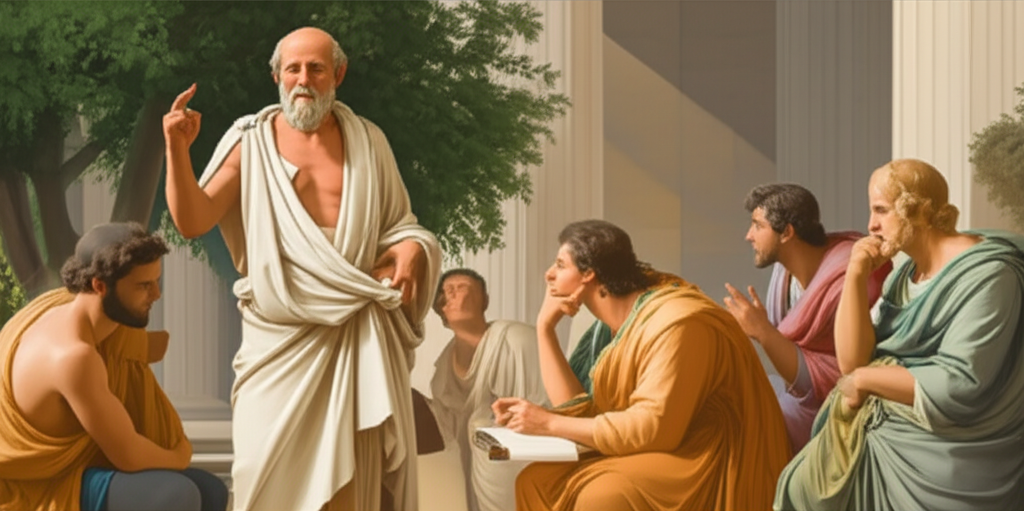
How does a society accumulate Knowledge across generations? How do individuals learn complex ideas that transcend their direct experience? The answer, overwhelmingly, lies in Language. From the oral traditions of ancient cultures, preserved through epic poems and sagas, to the meticulously cataloged libraries of Alexandria and the digital databases of today, Language serves as the primary vessel for Knowledge transmission.
Without Language, the insights of Plato on the Forms, the logical frameworks of Aristotle, the ethical deliberations of Kant, or the existential ponderings of Kierkegaard, all found within the Great Books, would remain locked within the individual Mind of their originators. It is through the written and spoken word that these complex ideas are articulated, debated, refined, and passed down, forming the bedrock of human intellectual heritage.
Consider the following ways Language facilitates Knowledge:
- Articulation: It provides the framework for expressing intricate thoughts and abstract concepts.
- Storage: Written language allows Knowledge to be recorded and preserved beyond the lifespan of an individual.
- Transmission: It enables the sharing of Knowledge across geographical distances and generations.
- Critique and Refinement: Through dialogue and debate, expressed linguistically, ideas are tested, challenged, and improved.
- Categorization: Language offers systems for classifying and organizing information, making it accessible and understandable.
Philosophical Echoes: Voices from the Great Books
The profound link between Mind and Language has been a recurrent theme in Western philosophy:
- Plato: In dialogues like Cratylus, Plato explores whether words have an inherent connection to their meaning or are merely conventional. His theory of Forms suggests that language, when used correctly, can point us towards deeper, eternal truths that the Mind can grasp.
- Aristotle: His work on Logic (the Organon) is fundamentally about the structure of arguments and propositions, demonstrating how Language provides the framework for rational thought and the systematic pursuit of Knowledge. His categories of substance, quantity, quality, etc., are linguistic categories that reflect the categories of being.
- John Locke: In An Essay Concerning Human Understanding, Locke posits that words are "sensible marks of ideas," serving to communicate our private thoughts to others. For Locke, language is a tool to convey the ideas formed in the Mind, highlighting its instrumental role in sharing Knowledge.
- Ludwig Wittgenstein: Particularly in his later work, Wittgenstein famously argued that "meaning is use." Our understanding of concepts is tied to the "language-games" we play, emphasizing that the Mind's grasp of reality is deeply embedded within social and linguistic practices.
These thinkers, among many others, illuminate the multifaceted ways in which Language is not just a mirror reflecting the Mind, but an active participant in its construction and an indispensable vehicle for the advancement of Knowledge.
Conclusion: The Unfolding Dialogue
The connection between the Mind and Language is a dynamic, reciprocal relationship. Our Mind creates Language, yet Language in turn shapes our Mind, enabling us to think, reason, and understand in ways that would otherwise be impossible. Through the intricate dance of Sign and Symbol, we transform raw experience into meaningful Knowledge, which is then shared, debated, and built upon, forming the ever-expanding edifice of human understanding. To truly comprehend the depths of human consciousness is to appreciate the profound, inseparable weave of these two fundamental pillars of our existence.
YouTube Video Suggestions:
-
📹 Related Video: KANT ON: What is Enlightenment?
Video by: The School of Life
💡 Want different videos? Search YouTube for: ""Wittgenstein Language Games Explained""
2. ## 📹 Related Video: What is Philosophy?
Video by: The School of Life
💡 Want different videos? Search YouTube for: ""Saussure Signifier Signified Explained Philosophy""